Overlooked toll of climate change on migrant children in the Americas
Published in Earth & Environment





This work began not as a formal research project, but as a set of conversations about lived experience, responsibility, and absence.
As someone with relatives who have directly coped with climate related displacement, food insecurity, and health instability, I was already aware that climate change does not arrive as an abstract future risk. It arrives unevenly, often quietly, and most acutely for children who have little control over where they live or the systems meant to protect them. Yet when I began engaging more deeply with the climate and health literature, I was struck by how rarely migrant children in the Americas were centered in these discussions.
This realization became the foundation for this paper.
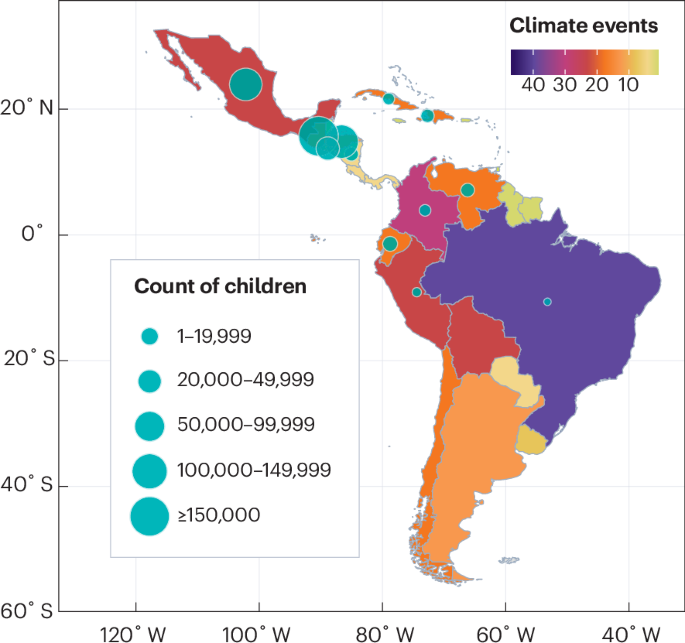
The project emerged through the Health Disparities Think Tank, where a small group of undergraduate students from Stanford and Harvard began asking a simple question: If climate change is increasingly driving migration across the Americas, why are the health impacts on migrant children so poorly integrated into climate and health policy conversations? While there is a growing body of work on climate related migration and on pediatric climate vulnerability, these literatures often exist in parallel rather than in dialogue.
What we saw instead was a fragmented narrative. Climate change was discussed as an environmental issue. Migration was discussed as a political issue. Child health was discussed as a clinical issue. Rarely were these realities examined together, despite the fact that children from Latin America and the Caribbean are experiencing all three simultaneously.
As we reviewed the literature, it became clear that migrant children face compounded health risks across every stage of displacement: in their countries of origin, along migration routes, and after arrival in destination countries. These risks include heat stress, malnutrition, infectious disease exposure, mental health trauma, and barriers to healthcare access that are often intensified by immigration status. Yet policy responses and healthcare frameworks have struggled to keep pace with this reality.
What makes this project especially meaningful to me is that it began as a student driven collaboration. This paper was conceptualized, drafted, and developed by a small group of undergraduate researchers who shared a commitment to equity and evidence based policy. Along the way, we were fortunate to receive mentorship and guidance that helped transform an initial question into a peer reviewed contribution.
Throughout the process, our goal was not only to describe harm, but to identify where health systems and policies can respond more effectively and compassionately. We wanted to highlight that migrant children are not simply vulnerable because of climate change, but because of the systems that fail to recognize and protect them in the face of it.
This work feels particularly urgent now. As political discourse around migration becomes more polarized and protections for migrant communities grow increasingly fragile, grounding these conversations in data and public health evidence is essential. Climate change is already reshaping patterns of displacement, and children are bearing the consequences in ways that will echo across lifetimes.
We hope this paper helps bridge silos between climate science, migration policy, and pediatric health, and encourages more integrated approaches that reflect the lived realities of migrant children in the Americas.
For me, this paper represents both a personal and collective effort to ensure that these stories, risks, and responsibilities are no longer overlooked.

Follow the Topic
-
Nature Climate Change
A monthly journal dedicated to publishing the most significant and cutting-edge research on the nature, underlying causes or impacts of global climate change and its implications for the economy, policy and the world at large.