Quantum Skyrmions reject noise
Published in Physics
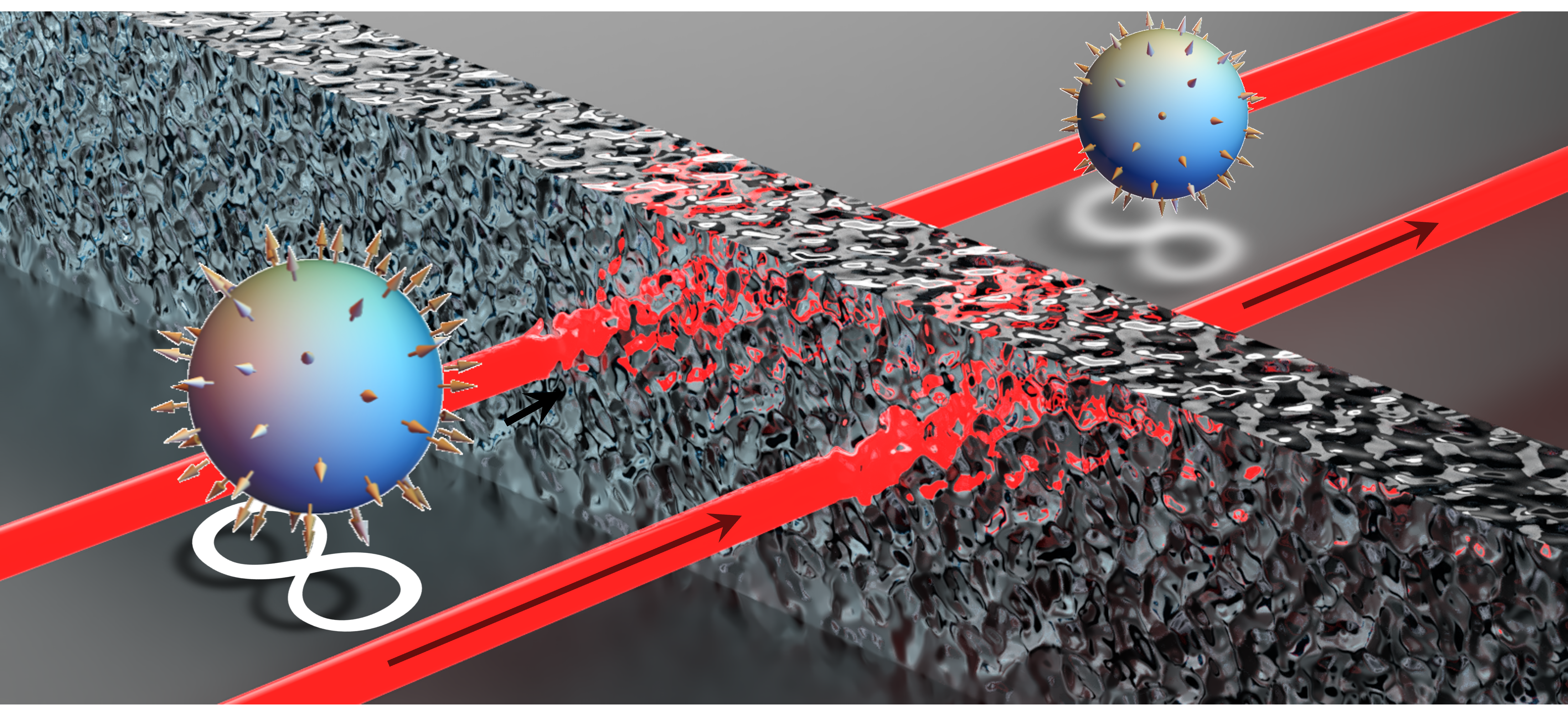





An open challenge in the context of quantum information processing and communication is preserving quantum information in the presence of noise from the environment, which can easily disrupt its fragile state thus compromising its utility as a resource for future quantum technologies and protocols. A promising new approach involves a concept called non-local topology, which has recently gained attention as a potential solution. However, the robustness of such features is often assumed without evidence supporting such claims in the context of real-world scenarios. In this work, we provide the first demonstration that non-local quantum Skyrmion topology can withstand the effects of real-world noise. We tested their resilience against noise characterizing a variety of disruptions, such as imperfections in state generation and faulty detectors. Our findings highlight non-local topology as a promising candidate for quantum information processing.
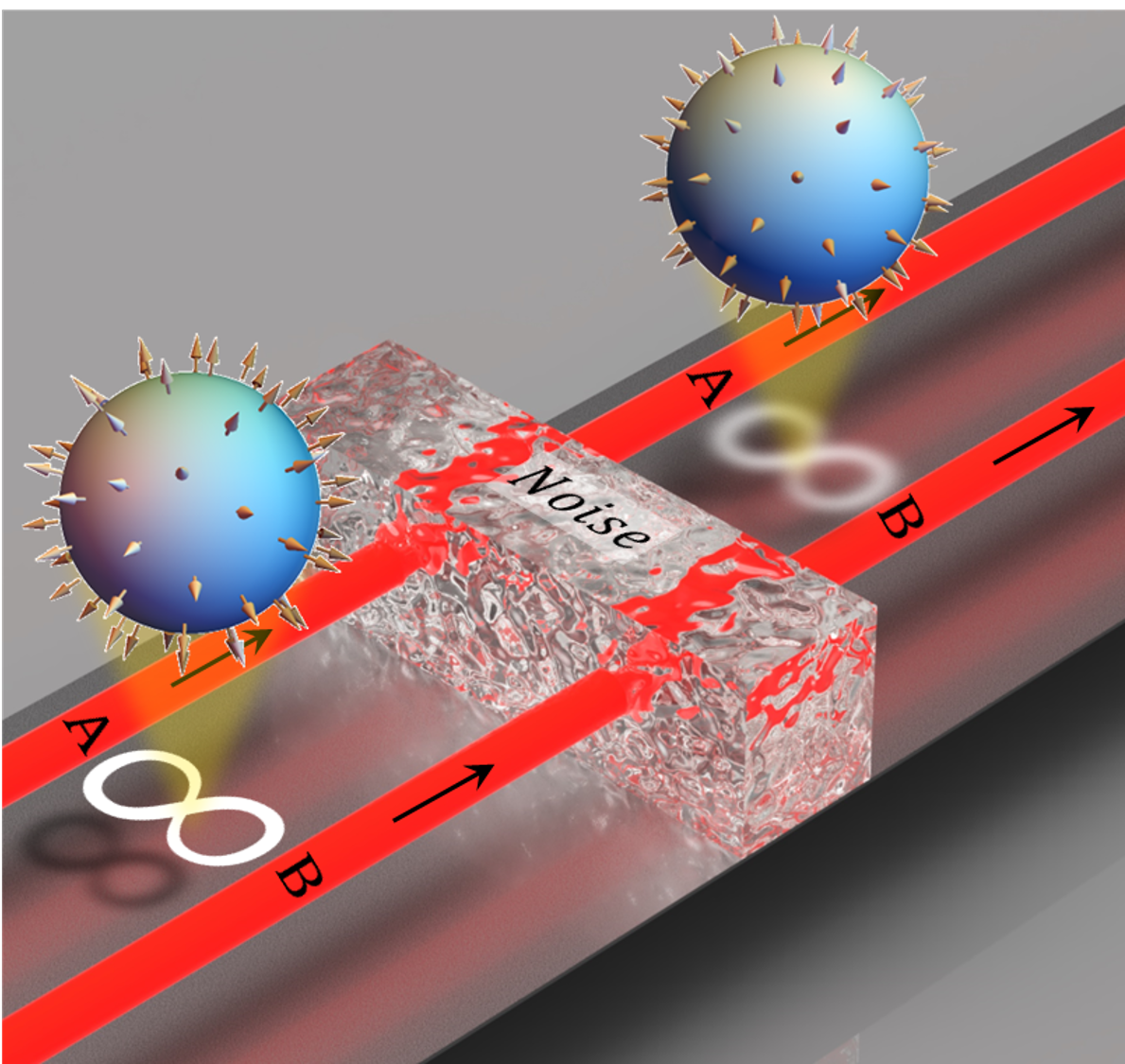
Figure 1: Conceptualization of a quantum state, consisting of a pair of entangled photons, passing through a noisy channel. While the entangled state degrades after passing through the noise the topology of the state is left unperturbed.
Evidence for topological resilience
We tested how well these quantum states, and their topology can withstand noise by introducing a generic noise source that reduces the signal quality, ultimately degrading the state. This kind of noise is prevalent in many real-world systems that include imperfections in the communication channel and the detectors. Examples include unwanted extra photons, electronic noise in detectors, background light (such as sunlight), and photon loss.
Figure 2(a) shows a summary of the results demonstrating the robustness of different topological observables in the presence of increasing noise (quantified by the quantum contrast, Qc) only vanishing when there was no detectable signal in the system. This is in stark contrast to the degradation of the state captured by the decay of conventional entanglement measures, as shown in Figure 2(b).
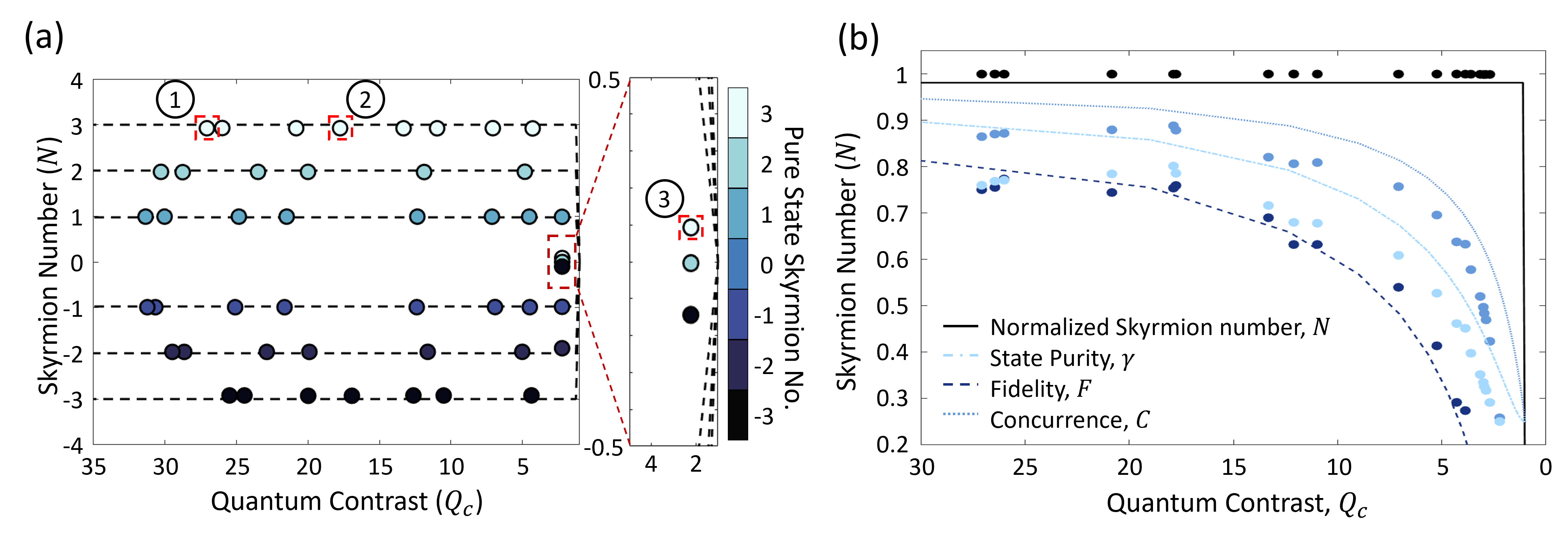
Figure 2: (a) The invariance of the quantum Skyrmion number for states of varying orders against the signal-to-noise ratio measured by the quantum contrast. (b) The state decay characterized by a decline in the usual entanglement measures of the state.
Interpretation of topological resilience to noise
An important goal of this work was to not only demonstrate the robustness of quantum Skyrmions through noise, but to also develop an intuition behind this robustness thereby inspiring future studies focused on providing evidence for topological robustness.
One way to visualize this is by thinking about how the quantum state of one photon maps points in space onto the state space of the other. This relationship can be represented as a sphere, as shown on the left side of Figure 3. When noise is introduced, it gradually shrinks the sphere, eventually reducing it to a single point—representing a situation where only noise remains, and no signal is left. However, even as the sphere shrinks, its fundamental shape remains unchanged. This provides an intuitive way to understand why the state’s topology remains resilient: while noise can distort the geometry (by making the sphere smaller), it doesn’t change the fact that it’s still a sphere, preserving its essential topological properties.
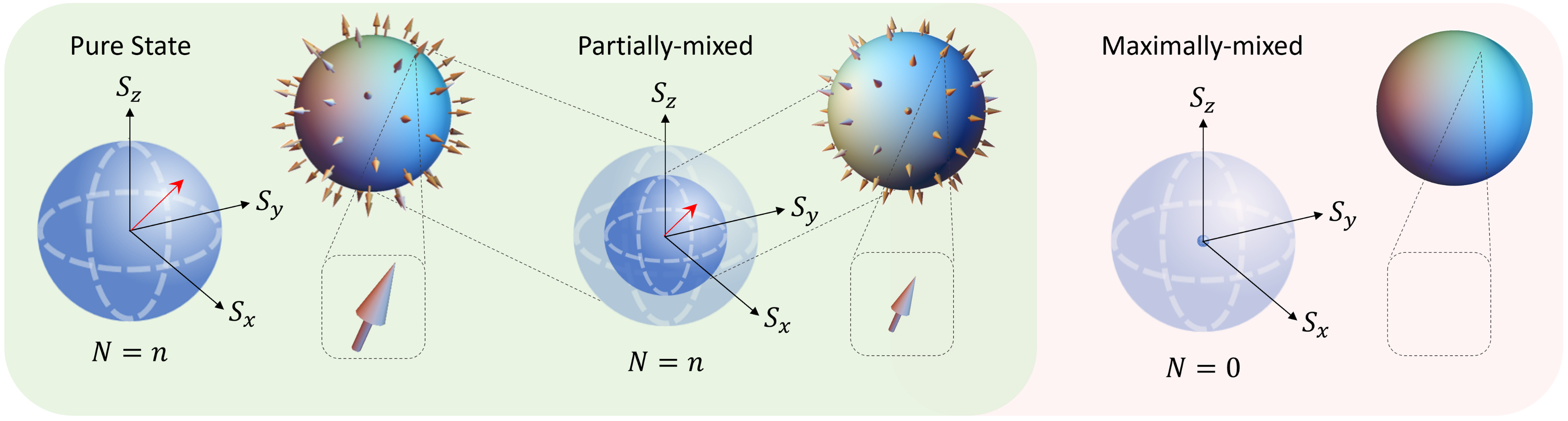
Figure 3: The effect of isotropic noise on the state. In the absence of noise, a pure state is represented by a sphere of unit radius. In the presence of noise, the state becomes partially mixed represented by a sphere with a radius < 1 and if noise dominates the system, the state is maximally mixed represented by a point with zero radius.
Our work introduces a new approach to quantum information processing and communication in noisy environments. By taking advantage of the state's topological properties—which remain unaffected by noise—we demonstrate a way to maintain quantum information without relying on complex noise-correction methods.

Follow the Topic
-
Nature Communications
An open access, multidisciplinary journal dedicated to publishing high-quality research in all areas of the biological, health, physical, chemical and Earth sciences.

Related Collections
With Collections, you can get published faster and increase your visibility.
Women's Health
Publishing Model: Hybrid
Deadline: Ongoing
Tumor Microenvironment Crosstalk and Therapeutic Implications
Publishing Model: Hybrid
Deadline: Nov 02, 2026