Quarterly Highlights from the Health & Clinical Research and Life Sciences Communities
Published in Cancer, Microbiology, and Protocols & Methods

Welcome to the first quarterly round‑up of 2026 from the Health & Clinical Research and Life Sciences Research Communities!
This round‑up highlights five contributions that particularly captured our attention this quarter. These posts include reflections on disease outbreaks and global health priorities, innovative tools for data visualisation and ambitious field research, and showcase the diversity and creativity of the research conversations taking place across the community.
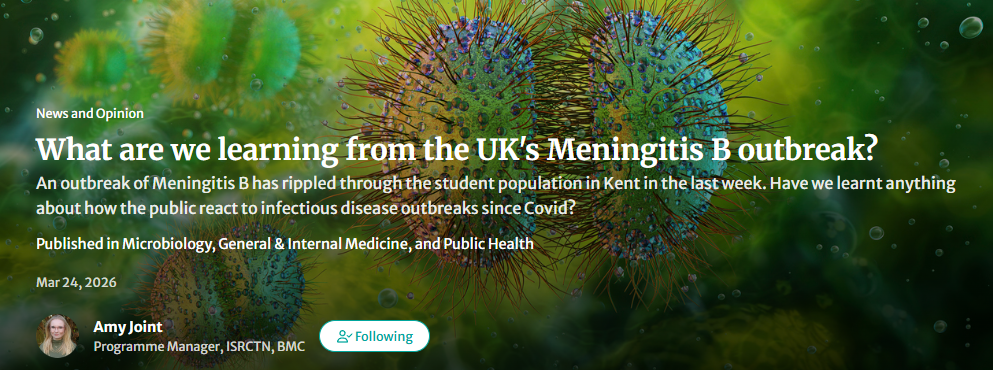
Lessons from the UK’s meningitis B outbreak
Meningitis B remains a serious public health concern, particularly when outbreaks occur in communities where rapid understanding and response are critical.
In this News and Opinion post, @Amy Joint reflects on key lessons that are emerging from the UK’s recent Meningitis B outbreak. She explores how epidemiological surveillance, vaccine strategy and real‑world data have shaped our understanding of transmission dynamics, risk factors and outbreak control. The post also highlights the challenges of responding to meningitis outbreaks in real time and what this means for future prevention efforts.
Read the full post to discover how insights from this outbreak are informing public health policy and improving preparedness for meningococcal disease.
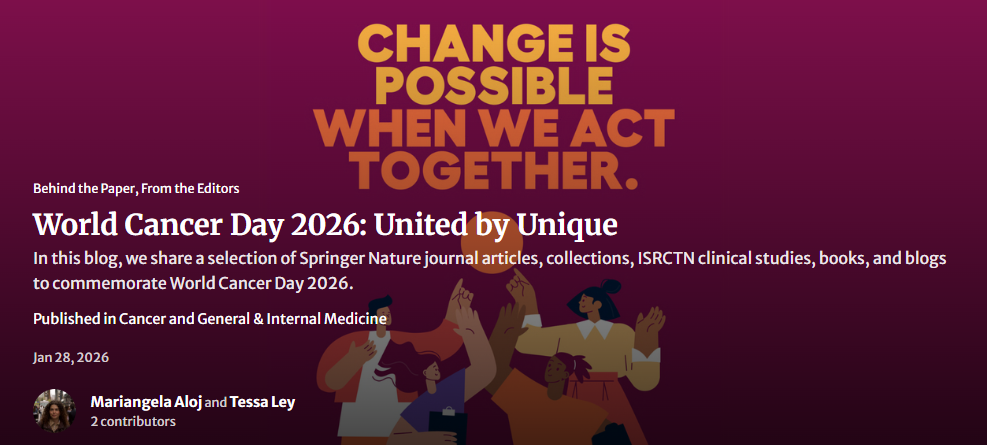
World Cancer Day 2026
World Cancer Day 2026 provides an opportunity to reflect on both the shared challenges of cancer and the distinct experiences of individuals affected by it worldwide.
@Mariangela Aloj and @Tessa Ley have marked World Cancer Day by highlighting the theme ‘United by Unique’, drawing on research and perspectives published across a number of Springer Nature journals. They explore how personalised approaches to cancer prevention and how diagnosis and treatment can coexist with collective global action. It underscores the importance of equity, patient‑centred care and inclusive research in shaping future cancer outcomes.
Read the full post to learn how acknowledging individual cancer journeys can strengthen global efforts to reduce cancer’s impact.
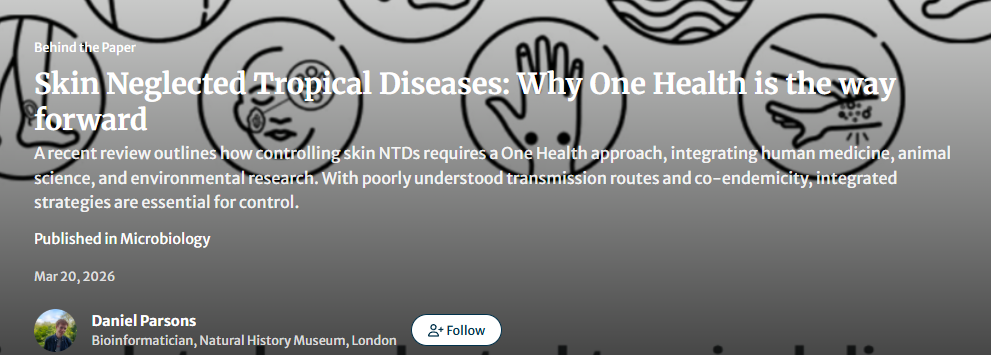
Why One Health is the way forward for skin neglected tropical diseases
Skin‑related neglected tropical diseases (NTDs) affect millions globally yet often remain under‑diagnosed and under‑resourced despite their significant physical and psychosocial impacts.
In this post drawing on their article in Nature Communications, @Daniel Parsons, argues that a One Health approach is essential for tackling skin NTDs effectively. They discuss how integrating human, animal and environmental health perspectives can improve surveillance, diagnosis and long‑term control, particularly in endemic regions where healthcare access is limited.
Read the full Behind the Paper post to discover how breaking down disciplinary silos could transform the prevention and management of skin NTDs.
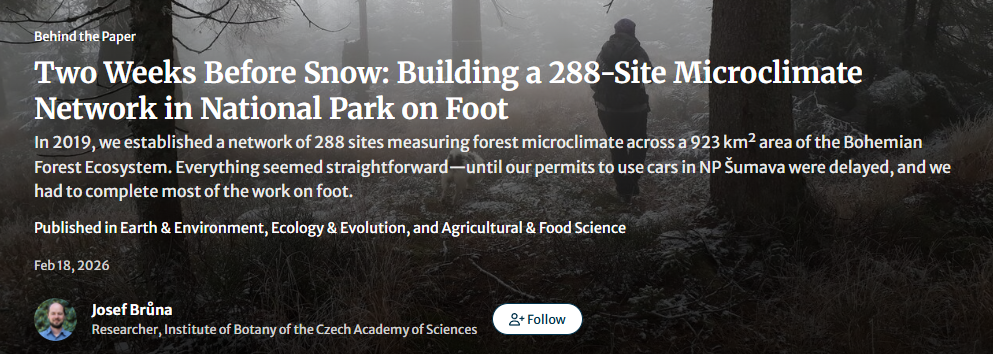
How to DIY a microclimate
Collecting environmental data at scale often requires creativity, adaptability and a lot of physical effort, especially in challenging terrain.
@Josef Brůna shares the story behind their research published in Scientific Data, documenting the rapid deployment of a 288‑site microclimate monitoring network in a national park just weeks before snowfall. It is a fantastic reflection on the logistical challenges of fieldwork, the importance of fine‑scale climate data, and what such datasets can reveal about ecological change.
Read the full post for a behind‑the‑scenes look at ambitious field science and the realities of data collection in extreme conditions.
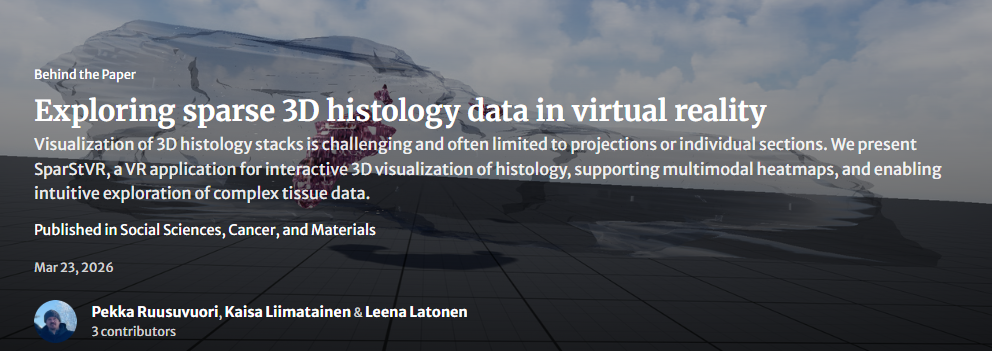
Histology comes to VR
As biological datasets become increasingly complex, new tools are needed to help researchers visualise and interpret them effectively.
In this Behind the Paper post, @Pekka Ruusuvuori, @Kaisa Liimatainen & @Leena Latonen discuss SparsTVR, a virtual‑reality platform introduced in their article published in Communications Engineering. Their post explains how VR can be used to explore sparse 3D histology data, enabling researchers to better understand spatial relationships within tissues that are difficult to capture using traditional 2D methods.
Read the full post to see how immersive technologies like virtual reality are opening new possibilities for data exploration in biomedical research.
These posts offer a snapshot of the ideas, challenges and innovations that stood out to us during the first quarter of 2026. They reflect the breadth of research being shared across the Health & Clinical Research and Life Sciences Communities, as well as the value of behind‑the‑scenes perspectives, cross‑disciplinary thinking and thoughtful reflection on real‑world impact.
We hope this round‑up encourages you to explore these posts in full and sparks further discussion within the community. As always, thank you to everyone who continues to contribute research stories, insights and experiences. We look forward to seeing what the coming months will bring!
Explore more:
- October to December 2025 - Quarterly Highlights from Health & Clinical Research and Life Sciences Communities
- January 2026 - Highlights from Health & Clinical Research and Life Sciences Communities
- February 2026 - Highlights from Health & Clinical Research and Life Sciences Communities
- March 2026 - Highlights from Health & Clinical Research and Life Sciences Communities

Helping researchers connect, collaborate, and communicate their work. Specialising in Medicine and Life Science and passionate about making science more visible and accessible.
Follow the Topic
-
Nature Communications
An open access, multidisciplinary journal dedicated to publishing high-quality research in all areas of the biological, health, physical, chemical and Earth sciences.
-
Scientific Data
A peer-reviewed, open-access journal for descriptions of datasets, and research that advances the sharing and reuse of scientific data.
-
Communications Engineering
A selective open access journal from Nature Portfolio publishing high-quality research, reviews and commentary in all areas of engineering.



Related Collections
With Collections, you can get published faster and increase your visibility.
Women's Health
Publishing Model: Hybrid
Deadline: Ongoing
Scalable solutions for circularity in the built environment
Publishing Model: Open Access
Deadline: Mar 31, 2027