Quarterly Highlights from the Medicine and Life Sciences Communities
Published in Cancer, Ecology & Evolution, and Microbiology

Welcome to the last Medicine and Life Sciences Communities round-up post for 2025. Over the past three months, researchers, editors and readers have engaged with a diverse range of posts spanning global health, research integrity, infectious disease, biodiversity and women’s health.
In this round-up, we spotlight five posts that captured particular attention from the community this quarter.
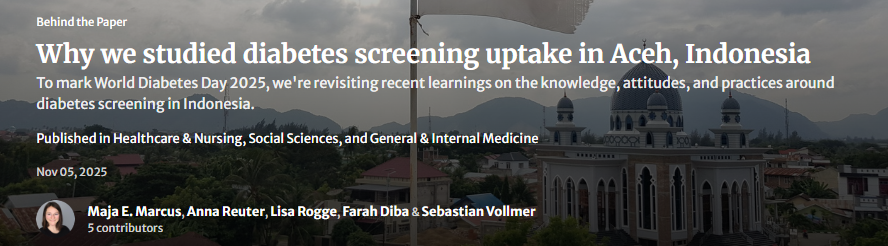
Why we studied diabetes screening uptake in Aceh, Indonesia
Diabetes is a growing global health challenge, yet screening and early diagnosis remain uneven, particularly in low- and middle-income settings. Understanding why people do or do not engage with screening programmes is essential for improving prevention and care.
In this Behind the Paper post from their BMC Global and Public Health article, @Maja E. Marcus, @Anna Reuter, @Lisa Rogge, @Farah Diba and @Sebastian Vollmer explain the motivation behind their study of diabetes screening uptake in Aceh, Indonesia. They explore how social, economic and health-system factors influence participation, shedding light on barriers such as access, awareness and trust in healthcare services.
Read the full post to learn how context-specific evidence can help design more effective screening strategies and improve outcomes for communities at risk of diabetes.
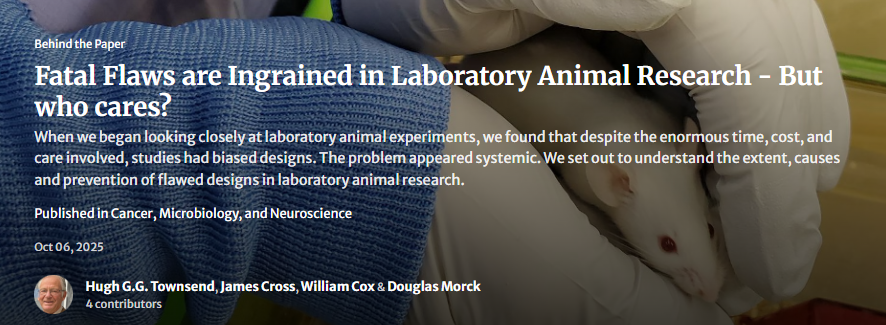
Fatal flaws are ingrained in laboratory animal research – but who cares?
Laboratory animal research has long been central to biomedical science, yet concerns about its reliability, ethics and reproducibility continue to grow.
In this provocative and reflective post, @Hugh G.G. Townsend, @James Cross, @William Cox and @Douglas Morck argue that structural flaws are deeply embedded in how animal research is designed, conducted and rewarded. From their original article in Scientific Reports, the authors question why these issues persist despite decades of critique, pointing to incentives, institutional inertia and gaps in accountability.
Read the full piece for a candid examination of a system under strain, and a call for more meaningful reform in how animal research is evaluated and valued.
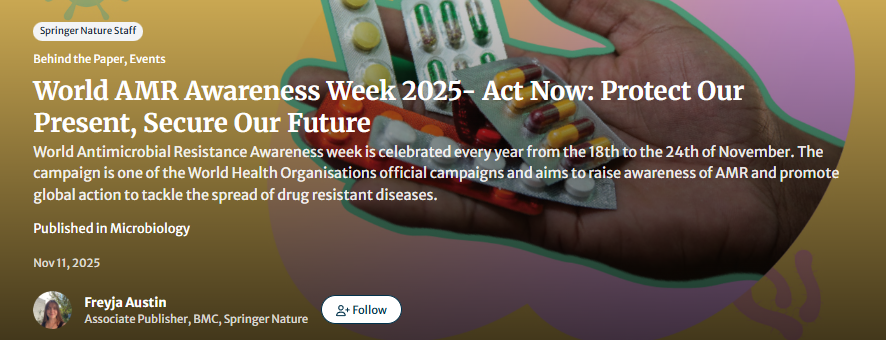
World AMR Awareness Week 2025
Antimicrobial resistance (AMR) remains one of the most urgent threats to global health, with consequences for modern medicine, food security and health equity.
Marking World AMR Awareness Week 2025, this timely post by @Freyja Austin highlighted why immediate, coordinated action is essential. The piece explores the scale of the AMR crisis, the drivers accelerating resistance, and the steps needed across policy, research and public engagement to slow its spread.
Read the full post to learn why tackling AMR requires action now, not in the future, and how collective responsibility is key to safeguarding health worldwide.
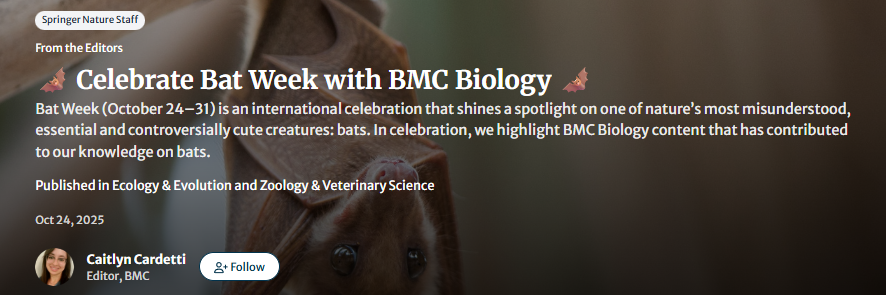
Bat Week with BMC Biology
Bats play critical roles in ecosystems around the world, from pollination and seed dispersal to insect control, yet they are often misunderstood or overlooked.
In this engaging From the Editors post, @Caitlyn Cardetti celebrated Bat Week by highlighting bat-related research published in BMC Biology. The post showcases recent studies that deepen our understanding of bat biology, behaviour and evolution, while also emphasising their importance for biodiversity and ecosystem health.
Read the full post to explore fascinating bat research and discover why protecting these remarkable mammals matters more than ever.
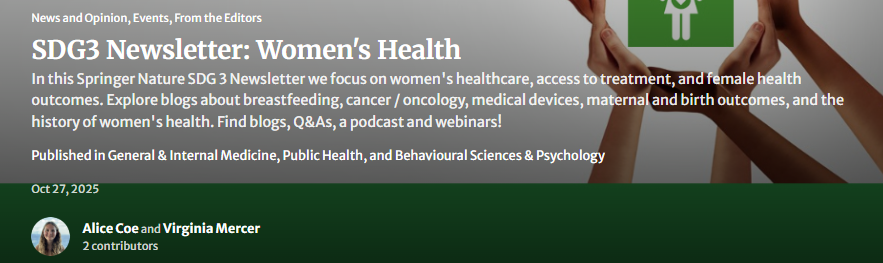
SDG3 Newsletter: Women’s Health
Women’s health remains central to achieving Sustainable Development Goal 3: Good Health and Well-being, yet persistent gaps in research, care and policy continue to affect outcomes worldwide.
In this SDG3 Newsletter, @Alice Coe and @Virginia Mercer bring together recent research, initiatives and community content focused on women’s health. The post highlights key themes, ongoing challenges and areas where targeted research and collaboration can make a real difference.
Read the full newsletter to stay up to date with developments in women’s health research and how the community is contributing to progress towards SDG3.
These blogs offer just a snapshot of the research stories, reflections and conversations that resonated with readers this quarter. Together, they highlight the breadth of topics and the global perspectives shared across the Medicine and Life Sciences Communities. I hope you enjoy exploring these posts as much as I did.
Further readings:

Helping researchers connect, collaborate, and communicate their work. Specialising in Medicine and Life Science and passionate about making science more visible and accessible.
Follow the Topic
-
BMC Global and Public Health
An open access, transparent peer review journal publishing outstanding and influential research and opinion of broad interest to all professional communities involved in global and public health research, policy-making, implementation and delivery worldwide.
-
Scientific Reports
An open access journal publishing original research from across all areas of the natural sciences, psychology, medicine and engineering.
-
BMC Biology
This is an open access journal publishing outstanding research in all areas of biology, with a publication policy that combines selection for broad interest and importance with a commitment to serving authors well.



Related Collections
With Collections, you can get published faster and increase your visibility.
Food security, nutrition, and dietary trends
BMC Global and Public Health is calling for submissions to our Collection on food security, nutrition, and dietary trends. These are interconnected elements that profoundly impact global health and well-being. As the world grapples with rapid population growth, climate change, and economic disparities, the challenges surrounding food access, quality, and sustainability have intensified. This Collection aims to gather diverse research that examines these complex relationships, focusing on how dietary patterns, food availability, and nutritional status influence overall health outcomes. By exploring the multifaceted nature of food systems, this Collection seeks to showcase pathways to achieve improved food security and nutritional health worldwide.
The goal of this Collection is to build a comprehensive body of knowledge that informs policy and practice. We encourage submissions that investigate:
Impact of dietary patterns on health outcomes
Addressing food insecurity through policy
Role of ultra-processed foods in nutrition
Personalized nutrition and dietary therapy
Nutritional supplements for malnutrition
This Collection supports and amplifies research related to SDG 2: Zero Hunger and SDG 3: Good Health and Well-Being.
We encourage work from local, regional, national, and global partnerships and collaboration among multidisciplinary scientists using multiple methodologies. We ask that authors be careful to use non-stigmatizing/preferred language in their manuscripts as outlined in relevant language guidelines for their respective fields.
All manuscripts submitted to this journal, including those submitted to collections and special issues, are assessed in line with our editorial policies and the journal’s peer-review process. Reviewers and editors are required to declare competing interests and can be excluded from the peer review process if a competing interest exists.
Publishing Model: Open Access
Deadline: Nov 28, 2026
Epigenetic therapies
BMC Biology is calling for submissions to our Collection on Epigenetic Therapies. Epigenetic therapies have emerged as a revolutionary approach to treating a wide range of diseases, particularly cancer and neurodegenerative disorders, as well as imprinting disorders. These therapies target the epigenetic modifications that regulate gene expression, offering a potential means to reverse pathological states without altering the underlying DNA sequence. Techniques such as histone modification and DNA methylation manipulation are at the forefront of this growing field. As research progresses, a deeper understanding of how epigenetic alterations influence cellular function and disease progression across these diverse disorders is essential for the development of effective therapeutic interventions.
Advancements in epigenetic therapies have the potential to reshape our approach to treatment paradigms in multiple disease states. Recent breakthroughs, such as the successful use of histone deacetylase inhibitors and bromodomain inhibitors in clinical trials, illustrate the promise of these targeted therapies. Moreover, the integration of epigenetic modifiers with existing treatment modalities holds the potential for synergistic effects, enhancing treatment efficacy and minimizing side effects. This ongoing research is crucial for paving the way toward personalized medicine and improved patient outcomes. We welcome submissions representing advances in biological understanding of:
- Mechanisms of action of histone deacetylase inhibitors
- Role of DNA methylation in disease
- Biology of emerging epigenetic drugs in clinical trials
- Therapeutic applications of histone modification
- Epigenetic mechanisms underlying imprinting disorders
- Therapeutic strategies targeting allele‑specific gene regulation
Researchers are invited to submit their work to this Collection, which will showcase research on the mechanisms, applications, and future directions of epigenetic therapies, contributing to the understanding and treatment of various diseases. Submissions of a purely clinical or medical nature without strong grounding and advance in biology will not be considered.
This Collection supports and amplifies research related to SDG 3 (Good Health and Well-being).
All manuscripts submitted to this journal, including those submitted to collections and special issues, are assessed in line with our editorial policies and the journal’s peer review process. Reviewers and editors are required to declare competing interests and can be excluded from the peer review process if a competing interest exists.
Publishing Model: Open Access
Deadline: Dec 23, 2026