Quarterly Highlights from the Humanities and Social Sciences Communities
Published in Social Sciences, Sustainability, and Behavioural Sciences & Psychology

As we look back at the final quarter of 2025, members of the Humanities and Social Sciences Communities shared posts that connects research to real-world questions, from women’s health and post-war recovery to the psychology behind our choices, what students reward in the classroom, and how research can influence policy.
When Literature Meets Women’s Health
@Virginia Mercer
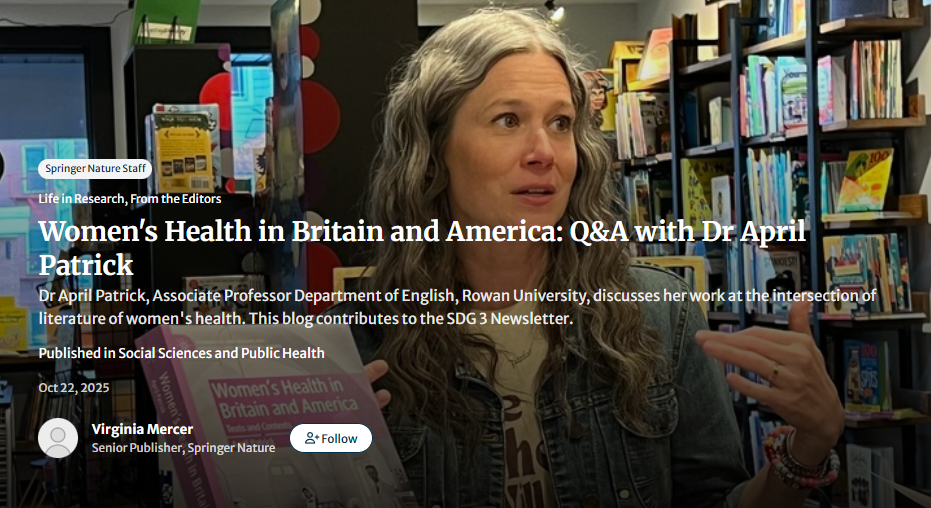
In this Q&A, Dr. April Patrick explains how her work in narrative medicine grew from witnessing whose stories were excluded from care and how literature can help us listen better. She draws striking parallels between past and present debates around pregnancy and childbirth, showing how fear, risk, and disbelief of women’s concerns still shape care today. She also shares her current project indexing women’s magazines to track how 'wellness' advice has influenced women’s bodies and health choices over time.
Read the full interview post to see how humanities methods, especially narrative medicine and close reading, can strengthen listening, trust, and advocacy in women’s healthcare.
Who Gets Left Behind After War?
@Hafte Gebreselassie Gebrihet @Yibrah Hagos Gebresilassie
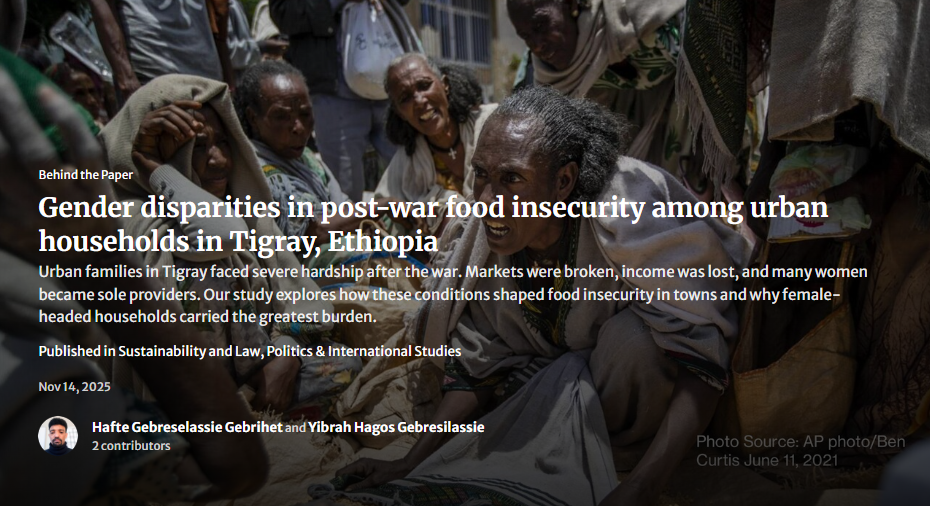
After war disrupts markets and livelihoods, who goes hungry first and why do female-headed households carry the heaviest burden in cities? This Behind the Paper post examines post-war urban hunger in Tigray and shows that when banks, roads, and markets break down, cash-based city life makes food insecurity spread fast. Drawing on a mid-2024 survey of 740 households across six urban centers, the authors find that female-headed households are significantly more likely to face hunger, with only a small minority of households fully food secure. The post also reflects on what the survey can’t fully show – how care burdens, unequal decision-making power and aid access shape women’s experiences of recovery.
Read the full post to see how the study connects gender, conflict recovery, and policy solutions, including improving women’s access to employment, microfinance, and education to rebuild equality.
Your Face Reveals What You Like
@Liron Amihai @Yael Hanein @Hila Man
Can your face reveal what you like before you’ve made up your mind? In this Behind the Paper post, the authors test a simple idea: during conversation, does facial mimicry predict what we end up choosing? Using small wearable sensors that measure subtle facial muscle activity during paired interactions, the authors find that positive mimicry predicts listeners’ choices better than listeners’ facial expressions alone. The effect even holds when people only hear an unfamiliar actress, so even without seeing someone, we can still detect emotion from their voice alone.
Read the full post to find out how the team links mimicry to embodied decision-making, and why 'mirroring a smile’ might be more than social politeness.
Does Empathy Matter in Teaching Evaluations?
@Loreto Barrios
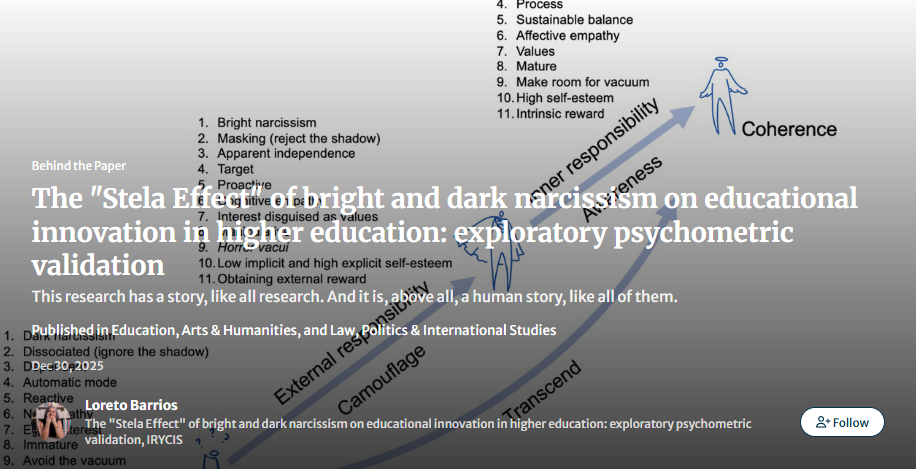
In this Behind the Paper story, Loreto Barrios traces a deeply personal, cross-disciplinary route, from architecture and teaching to psychology to explore teachers’ emotional competencies. While analysing survey data from schools in Spain, she uncovered a paradox: lower-empathy attitudes in teachers appeared linked to more favourable student evaluations, which became the starting point for what she calls the ‘Stela Effect’. The post also highlights the long road to publication, years of learning statistics, and multiple journal rejections before the paper was finally accepted.
Read the full post for the human story behind the research and how one unexpected finding became a stronger, validated research direction.
Turning Research Into Impact
@Nicola Jones
This post introduces a new Springer Nature and Overton report mapping how research is used in real-world policymaking, with a focus on the UN Sustainable Development Goals (SDGs). It finds that SDG-linked policy documents are more likely to cite scholarly research than non-SDG policy, and highlights the role of think tanks, NGOs, and IGOs as key ‘knowledge brokers’ connecting evidence to decision-making. The analysis also shows that open access articles are cited more often and sooner in SDG policy, while journal selectivity doesn’t significantly change policy citation rates and that accessible formats like reviews, letters, and news are highly cited in policy.
Read the full post and report for key ways to boost policy reach. For even more hands-on guidance, don’t miss the post 'Ten practical tips to get your research in front of policymakers'.
Together, these posts capture some of the ideas that shaped the final months of 2025 across the HSS Communities. Read the full posts, and if one sparks a question or connection, like or leave a comment for the authors. More highlights from across 2025 are coming soon!
Further readings:
Quarterly Highlights from Humanities and Social Sciences Communities
Quarterly Highlights from Medicine and Life Sciences Communities
Quarterly Highlights from Mathematics, Physical & Applied Sciences Communities

Supporting Humanities and Social Sciences research area on the Research Communities platform. I’d love to hear from you and connect!
Follow the Topic
-
Communications Psychology
An open-access journal from Nature Portfolio publishing high-quality research, reviews and commentary. The scope of the journal includes all of the psychological sciences.
-
Discover Psychology
This is an international, open access journal that publishes research in behavioral sciences and related fields, including health, environment, neuroscience, business, economics, ergonomics, linguistics, and education.
-
Discover Food
This is a transdisciplinary, open access journal that provides a leading platform for the rapid dissemination of knowledge and advances covering the research and innovation that is taking place across the food sector.



📢 Introducing: # Mental Health
Mental Health is a Topic created to increase visibility and impact of research in this area and facilitate exchange amongst researchers.
Continue reading announcementRelated Collections
With Collections, you can get published faster and increase your visibility.
Innovations in Food Microbiology, Ingredients, Preservation, and Safety: Advancing Quality Assurance
The global food industry faces increasingly complex challenges in ensuring food safety, preserving quality, and enhancing nutritional value—all while meeting rising consumer expectations for sustainability, transparency, and minimal processing. What sets this topic collection apart is its interdisciplinary focus, bridging food microbiology, ingredient functionality, preservation technologies, and regulatory frameworks to offer a holistic perspective on food quality and safety.
Current international concerns—such as transnational food fraud incidents, the harmonization of food safety regulations across regions, and the implementation of Codex Alimentarius standards—underscore the global urgency of coordinated, science-based solutions. These issues highlight the need for integrated research that not only advances scientific understanding but also informs policy and industry practices worldwide.
This Collection of Discover Food invites contributions that explore cutting-edge scientific advancements and technological innovations that collectively address the full spectrum of food system challenges—from microbial ecology and ingredient interactions to preservation strategies and regulatory compliance. By integrating microbiological, technological, and policy-oriented research, this collection aims to foster a systems-level understanding of how to produce safer, higher-quality, and more trustworthy food.
We welcome original research, reviews, and case studies addressing the following themes:
• Food Microbiology: Investigations into the role of microorganisms in food safety and quality, including microbial contamination, spoilage, fermentation, and probiotics. Studies on microbial community dynamics, detection of foodborne pathogens, and the influence of microbes on shelf life and sensory characteristics are especially encouraged.
• Food Ingredients and Additives: Research on the function, safety, and health impact of food additives and ingredients, both natural and synthetic. Topics may include clean-label alternatives, bioactive compounds, and ingredient innovations that support both product quality and consumer acceptance.
• Food Preservation Technologies: Advances in preservation methods such as high-pressure processing, cold plasma, biopreservation, and antimicrobial packaging. We are particularly interested in studies that evaluate the effects of these technologies on microbial safety, nutrient stability, and environmental sustainability.
• Food Safety and Quality Control: Development and implementation of innovative tools and frameworks for ensuring food safety across the supply chain. This includes rapid pathogen detection, risk assessment models, traceability systems, and the integration of international regulatory standards.
By showcasing interdisciplinary research that connects microbial science with technological innovation and regulatory insight, this Collection seeks to inform and inspire the development of more resilient, sustainable, and consumer-focused food systems on a global scale.
Keywords:
Food Microbiology; Functional Food Ingredients; Food Safety; Sustainable Food Systems; Food Preservation Technologies; Probiotics; Foodborne Pathogens; Shelf-life Extension; Natural Additives; Quality Control
This Collection supports and amplifies research related to SDG 2, SDG 3, SDG 9, SDG 12, SDG 13 and SDG 17.
Publishing Model: Open Access
Deadline: Jan 31, 2027
Advancing the Understanding of Food Structure and Processing in Sensory Perception, Eating Behaviour, and Nutrient Retention
The structure and processing of food are critical in shaping sensory perception, influencing satiety, guiding eating behaviour, and determining nutrient retention. As global food systems evolve, understanding these complex interactions is crucial for developing products that are not only appealing to consumers but also promote health and well-being. This area of study is increasingly significant in the context of personalised nutrition, where tailoring food structures and processing techniques can optimise health outcomes.
This topical collection invites researchers, scholars, and industry professionals to contribute their latest findings on the interplay between food structure, oral processing, and their effects on sensory perception, eating behavior, and nutrient retention. To differentiate this collection and ensure it provides fresh and valuable insights, we encourage submissions that focus on specific emerging trends, innovative approaches, and cutting-edge methodologies. Topics of interest include, but are not limited to:
• The potential use of artificial intelligence and machine learning to optimise food structure and processing for enhanced sensory experiences, satiety, and nutrient retention.
• Application of state-of-the-art imaging (e.g., MRI, CT, and electron microscopy) and analytical methods to study food microstructures and their transformations during food processing as well as oral processing.
• Novel approaches to creating food matrices that modulate sensory properties, digestion, and nutrient release.
• Exploration of the role of texture and rheology in oral processing and its impact on sensory perception and satiety.
• Investigations into how emerging processing methods (e.g., pulsed electric field, high-pressure processing) influence nutrient retention, bioaccessibility, and functional properties of foods.
• Research focused on food structures and formulations tailored for demographic groups with unique nutritional needs, such as elderly populations or individuals with specific metabolic conditions.
Through highlighting novel approaches and innovative technologies in the study of food structure and processing, this collection aims to provide a platform for groundbreaking research that pushes the boundaries of current knowledge. We encourage contributions that explore these cutting-edge areas and offer new perspectives that are not widely covered in existing literature.
Keywords:
• Food structure
• Sensory perception
• Oral processing
• Nutrient bioavailability
• Satiety
• Eating behaviour
• Food matrix design
• Texture and rheology
Publishing Model: Open Access
Deadline: Dec 31, 2026