Quarterly Highlights from the Humanities & Social Sciences Communities
Published in Social Sciences, Computational Sciences, and Genetics & Genomics





As we move through April, it’s a good moment to look back at some popular blog posts shared in the first quarter of 2026 across the Humanities & Social Sciences Communities, from deep historical insights and philosophical reflections to the realities of academic life and practical guidance for publishing.
Here are a few highlights from the past few months. If a piece resonates with you, don’t forget to like and share your thoughts in the comments!
What Feathers Can Reveal
@George Olah @Bastien Llamas @Izumi Shimada @Rafael Segura Llanos @Pere Bover
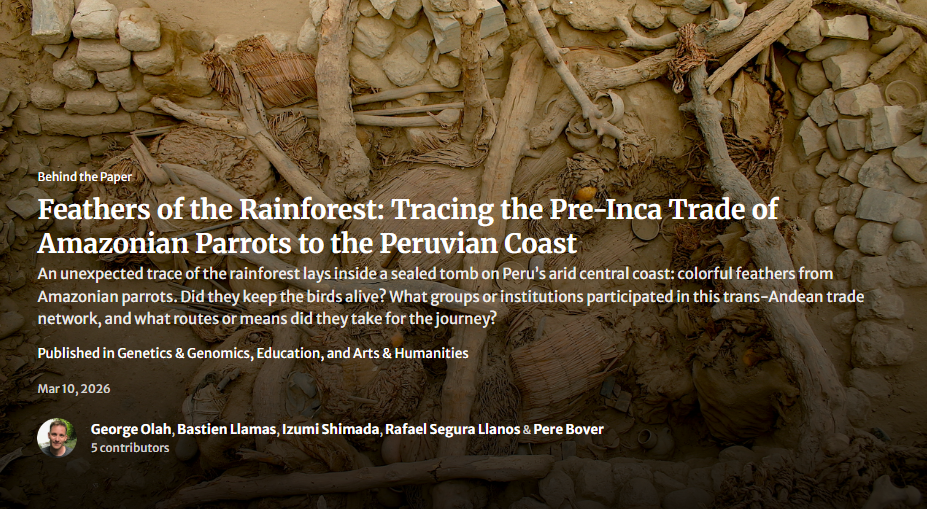
This Behind the Paper post starts with a surprising discovery of colorful parrot feathers buried in a desert tomb on Peru’s coast and uncovers a much bigger story. By combining ancient DNA and archaeology, the research reveals that these birds were transported across the Andes Mountains from the Amazon long before the Inca Empire, pointing to complex trade networks and connections.
Read the full blog to follow the journey behind these feathers.
Rethinking How We Trust AI
@Olivia Ruhil
This thought-provoking post uses Florence + The Machine’s song “No Light, No Light”as a metaphor for how we interact with AI systems – trusting outcomes without knowing how they are made. It explores how algorithms that we don’t fully understand can reshape moral responsibility, blur accountability, and gradually shift human decision-making from judgment to compliance.
Read the full blog to reflect on what it means to rely on AI in uncertain conditions.
What Comes After the PhD
@Susan Elizabeth Rockey
Completing a PhD is often seen as a milestone but what comes next is far less certain. Despite strong research and positive feedback, the author describes facing limited opportunities, lack of funding, and a system where early career researchers often struggle to find a place.
Read the full blog to explore the gap between expectation and reality after the PhD.
If you are an early career researcher, join the conversation in the ECR Hub!
Supporting Researchers in Publishing
Alongside these reflections, several posts focused on practical support for researchers navigating the publishing landscape. Whether you’re preparing your paper or simply trying to make sense of the process, these pieces might offer some insight.
Making Publishing Feel Manageable
@Alice Taylor
This practical guide brings together a set of useful writing and publishing resources for researchers at different stages of the process. From writing a stronger abstract and Data Availability Statement to preparing a cover letter, handling rejection, and pitching a Review, the post breaks publication down into clear, manageable steps. It’s a helpful starting point for anyone looking to communicate their research more effectively and navigate publishing with greater confidence.
Read the full post to explore practical tips for getting your research ready for publication.
Staying Clear of Paper Mills
@Jo Appleford-Cook @Alessia Ricchiuti
Publishing isn’t just about getting your work out there but it’s also about navigating the landscape responsibly. This post takes a closer look at paper mills and other questionable practices that can undermine research integrity. Through a clear and accessible approach, it encourages researchers to stay alert, ask the right questions, and make informed decisions when choosing where and how to publish.
Read the full post to learn how to recognize and avoid common publishing pitfalls.
 For more resources and guidance, you can explore the Topic pages #Research Integrity and #Publishing Toolkit, and the Empower Your Research Channel, which bring together practical advice and insights to support researchers at different stages of their journey.
What would you like to know about the publishing process? Share your questions and thoughts in the discussion here!
Together, these highlights offer a glimpse into the different questions researchers are exploring – from understanding the past to navigating the present and shaping future research practices.
If something here catches your interest, do take a closer look and feel free to join the conversation and leave your comment!
Further readings:
- March Highlights from Humanities and Social Sciences Communities
- February Highlights from Humanities and Social Sciences Communities
- January Highlights from the Humanities & Social Sciences Communities
- Highlights from Health & Clinical and Life Sciences Research Communities
- Highlights from the Mathematics, Physical & Applied Sciences Communities

Supporting Humanities and Social Sciences research area on the Research Communities platform. I’d love to hear from you and connect!
Follow the Topic
-
Nature Communications
An open access, multidisciplinary journal dedicated to publishing high-quality research in all areas of the biological, health, physical, chemical and Earth sciences.
-
AI and Ethics
This journal seeks to promote informed debate and discussion of the ethical, regulatory, and policy implications that arise from the development of AI. It focuses on how AI techniques, tools, and technologies are developing, including consideration of where these developments may lead in the future.


Related Collections
With Collections, you can get published faster and increase your visibility.
Women's Health
Publishing Model: Hybrid
Deadline: Ongoing
Biosensing
Publishing Model: Hybrid
Deadline: Jun 30, 2026




Please sign in or register for FREE
If you are a registered user on Research Communities by Springer Nature, please sign in