Revolutionizing Liver Recovery: My Journey with hAAMs in Regenerative Medicine
Published in Cell & Molecular Biology

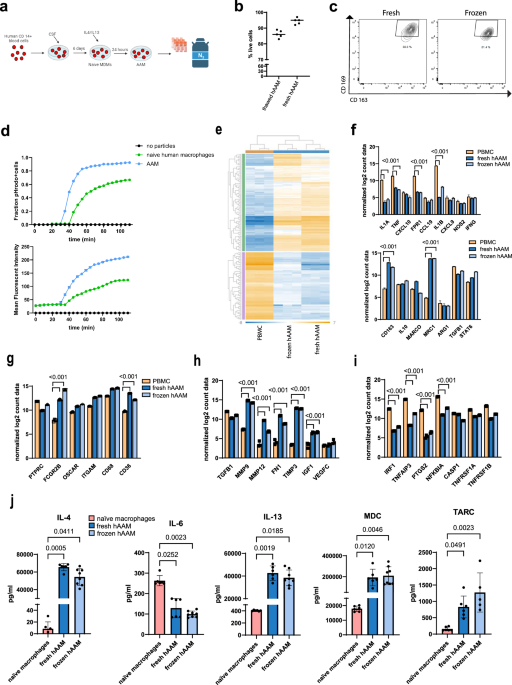

The liver’s capacity to regenerate is remarkable, yet acute injuries—such as those caused by acetaminophen overdose—can overwhelm its natural healing mechanisms. Our research aimed to address this critical issue by using cryopreserved hAAMs, which retain their anti-inflammatory and regenerative functions post-thaw.
The journey wasn’t without its challenges. One key hurdle was ensuring the functional stability of hAAMs after cryopreservation, as this would determine their clinical applicability.
Using advanced molecular techniques, including Nanostring analysis, we confirmed that hAAMs maintained their gene expression profiles and therapeutic capabilities. These findings were a pivotal moment for us, validating the potential of an “off-the-shelf” cell therapy product. Conducting the experiments was only part of the story. Navigating the publication process was an equally enriching experience. From addressing insightful reviewer comments to conducting additional analyses, I learned the value of persistence and adaptability in science.
Reflecting on this research, I’m reached by the collaborative nature of science. It took a multidisciplinary team and cutting-edge methodologies to bring this work to the final result. More importantly, this study lays the basis for future clinical applications of hAAMs in treating liver failure. I’m excited to see how this research evolves and contributes to improving patient outcomes in regenerative medicine.
For those starting on their scientific journeys, I encourage you to embrace the challenges and stay curious. Science is a team effort, and every step forward—no matter how small—brings us closer to breakthroughs that can change lives.
https://www.nature.com/articles/s41536-025-00393-3#article-info

Follow the Topic
-
npj Regenerative Medicine
This journal is an open access, online-only, peer-reviewed journal dedicated to publishing high-quality research on ways to help the human body repair, replace and regenerate damaged tissues and organs.

Related Collections
With Collections, you can get published faster and increase your visibility.
Repairing and Regenerating the Vascular Code Across Tissues and Time
Publishing Model: Open Access
Deadline: Jul 18, 2026
Cellular and Genetic Tools in Regenerative Medicine
Publishing Model: Open Access
Deadline: Sep 11, 2026


Please sign in or register for FREE
If you are a registered user on Research Communities by Springer Nature, please sign in