School Violence and the Efficacy of the Action Plan Against Violence: A School Counselor Perspective
Published in Behavioural Sciences & Psychology and Education



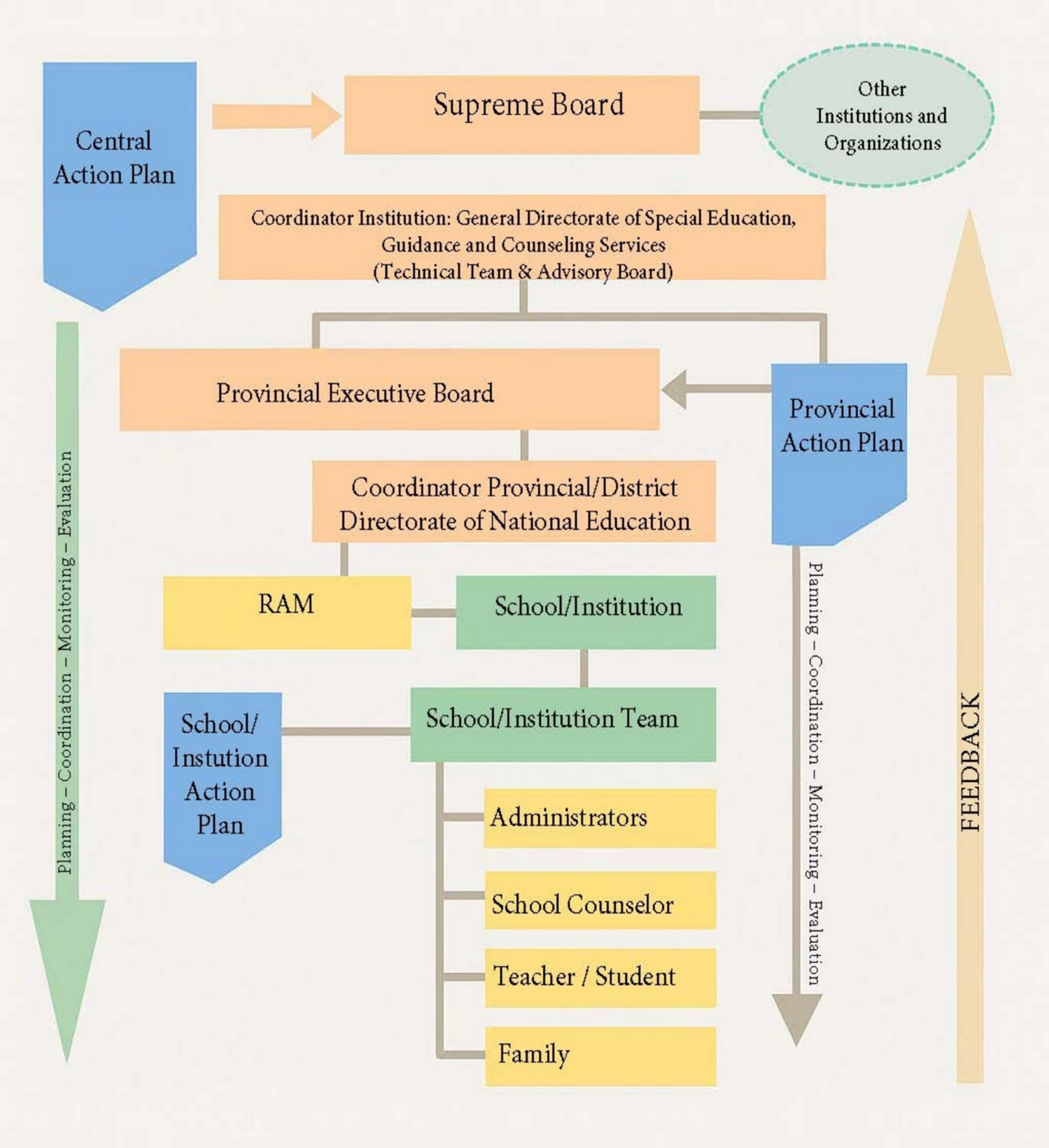

National education policies often promise safety, coordination, and prevention. On paper, they outline structured workflows, defined responsibilities, and multi-level collaboration mechanisms. Yet policies do not operate in abstraction. Their meaning and effectiveness emerge through everyday interpretation, negotiation, and practice within schools.
Our study, recently published in School Mental Health, examines how Türkiye’s Action Plan Against Violence (APAV) is interpreted and implemented by school counselors (SCs) working in socioeconomically diverse public schools. Rather than asking whether APAV exists or what it prescribes, we asked a different question: What does this national violence prevention framework look like from the perspective of those expected to enact it?
Our study is available here:
https://doi.org/10.1007/s12310-026-09851-9
From Research Curiosity to Policy Inquiry
This project began during a graduate seminar. Initially, I was interested in studying relationship violence. During discussions with my co-author and supervisor, Dr. Meltem Çengel Schoville, we turned our attention to a national framework that already existed but had generated limited qualitative research from practitioners’ perspectives: APAV. The realization that a centralized violence prevention plan had been in place for years, yet remained underexplored in terms of implementation, shaped the direction of this study.
If SCs are positioned as key actors within APAV, how do they actually experience this responsibility? What institutional conditions enable or constrain their work? These questions became the foundation of our qualitative multiple-case design.
Why an Ecological Perspective?
School violence is rarely a single-level phenomenon. Drawing on Bronfenbrenner’s ecological systems theory (1979), we conceptualized violence and prevention efforts across interconnected layers:
-
Microsystem: daily interactions in classrooms and counseling spaces
-
Mesosystem: collaboration among teachers, administrators, and families
-
Exosystem: external institutions, training systems, and inter-agency coordination
-
Macrosystem: centralized education policy and national governance structures
This framework allowed us to move beyond isolated incidents and instead examine how institutional context shapes both the forms of violence encountered and the implementation of prevention policies.
Listening to School Counselors Across SES Contexts
We conducted semi-structured interviews with 15 school counselors working in seven public schools in Aydın, Türkiye. Using an embedded multiple-case design, we grouped schools into low, middle, and high-socioeconomic status (SES) contexts based on contextual indicators and counselor descriptions.
In low-SES schools
SCs described frequent and severe physical incidents, including weapon-related threats and large-scale fights. Their work was predominantly crisis-driven. APAV, in these contexts, was often overshadowed by immediate response demands. Structural constraints, including overcrowding, limited collaboration, and weak inter-agency support, meant that prevention frequently gave way to reaction.
In middle-SES schools
Violence appeared more frequently in verbal and digital forms. SCs described moderate collaboration and some flexibility in adapting APAV to local needs. Implementation was neither fully symbolic nor fully structured; rather, it was selective and context-sensitive. SCs often relied on peer networks rather than formal training structures to navigate policy expectations.
In high-SES schools
Violence was reported primarily in psychological and relational forms, including exclusion, social marginalization, emotional harm. Yet paradoxically, APAV implementation was often described as routine-based or symbolic. Because physical violence was less visible, the perceived urgency of structured prevention was reduced. Here, policy compliance existed, but active engagement was limited.
Across all contexts, one theme recurred: role ambiguity and constrained agency.
The Policy-Practice Gap
APAV positions SCs as central coordinators of violence prevention. However, SCs reported limited autonomy, insufficient training aligned with real school conditions, and weak institutional collaboration structures.
At the mesosystem level, collaboration varied dramatically. In low-SES schools, SCs often described carrying the burden alone. In middle-SES settings, collaboration was partial but inconsistent. In high-SES contexts, low perceived risk limited collective engagement.
At the exosystem level, many counselors highlighted insufficient coordination with external agencies and a lack of practice-oriented professional development.
At the macrosystem level, Türkiye’s centralized educational governance structure emerged as a defining factor. Although APAV delegates responsibilities to schools, decision-making authority remains largely centralized. This structural imbalance creates a situation in which responsibilities are decentralized, but discretion is not.
The result is uneven implementation: crisis-driven in some contexts, adaptive but fragmented in others, and symbolic elsewhere.
Beyond Uniform Frameworks
One of the central insights of our study is that a standardized national policy does not produce standardized outcomes. Instead, implementation is mediated by SES-based institutional conditions, school culture, perceived risk, and the professional positioning of counselors.
Importantly, the absence of visible structural barriers in high-SES schools should not be interpreted as full policy effectiveness. Rather, different forms of violence may be under-recognized when they do not fit overt or physical profiles.
Effective violence prevention requires more than procedural compliance. It requires:
-
Context-sensitive adaptation
-
Strengthened counselor agency
-
Multi-level institutional coordination
-
Alignment between training and lived school realities
Without these elements, prevention risks becoming documentation rather than transformation.
Reflecting on the Research Process
Throughout this study, I found myself returning to a persistent question: Does policy reform meaningfully alter everyday school realities? As interviews accumulated, patterns became visible, but complexity also became increasingly apparent. Violence did not follow a single logic, nor did policy implementation.
The research did not produce simple solutions. Instead, it clarified where tensions lie: between centralization and autonomy, between formal frameworks and lived constraints, between visible and invisible forms of harm.
If APAV is to move beyond symbolic engagement, policy design must recognize schools not as uniform units but as ecologically embedded institutions shaped by structural inequalities.
SCs stand at the intersection of policy and practice. They translate national directives into everyday interventions. However, their capacity to do so depends on institutional context, collaboration structures, and the level of decision-making authority available to them.
By foregrounding practitioners’ perspectives, this study seeks to inform more responsive and contextually grounded violence prevention policies in Türkiye as well as in other centralized education systems facing similar challenges.
Conflict of Interest: The authors report no conflicts of interest.

I’m Ayşe Yavuz from Türkiye. I have completed my master and PhD in Curriculum and Instruction, Educational Sciences at Aydın Adnan Menderes University (2025), with a background in Psychological Counseling and Guidance.
Follow the Topic
-
School Mental Health
This is a forum for the latest research related to prevention, treatment, and assessment practices that are associated with the Pre-K to 12th-grade education system and focuses on children and adolescents with emotional and behavioral disorders.