Searching for bio-essential sugars in a sample of Bennu acquired by NASA’s OSIRIS-REx mission
Published in Astronomy and Earth & Environment





OSIRIS-REx and the building blocks of life
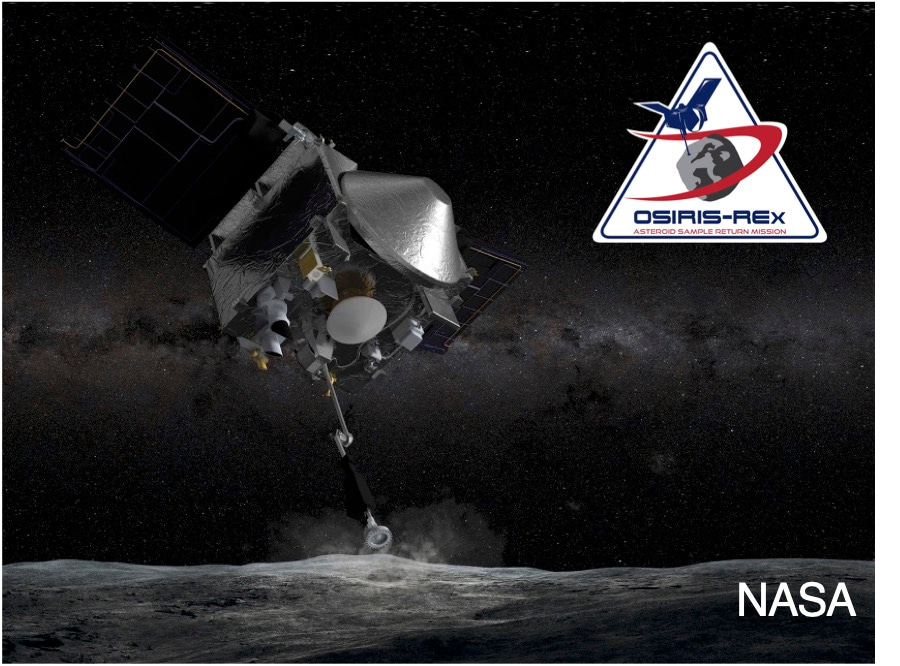
Sugars are essential building blocks of life; they are a component of the backbone of nucleic acids (DNA and RNA) and are used to acquire energy through metabolism. However, our understanding of the formation of sugars in space is limited compared to that of amino acids and nucleobases, which are also key chemical building blocks of life. Amino acids and nucleobases have been found in samples of Ryugu, another carbonaceous asteroid, acquired by the Japanese sample-return mission Hayabusa2 (Naraoka et al., 2023). I have investigated sugars in astromaterial samples to understand the possible contributions of extraterrestrial sugars to the origin of life. In a previous study, we found the RNA sugar, ribose, in carbon-rich meteorites (Furukawa et al., 2019). However, this analysis required approximately 1 g of meteorite sample at that time. This amount is impractical for investigating sugars in the Ryugu sample because it would constitute a substantial fraction of the total material acquired (5.4 g). Fortunately, the OSIRIS-REx spacecraft returned a larger quantity of material (121.6 g; Lauretta & Connolly et al., 2024) from the surface of asteroid Bennu.
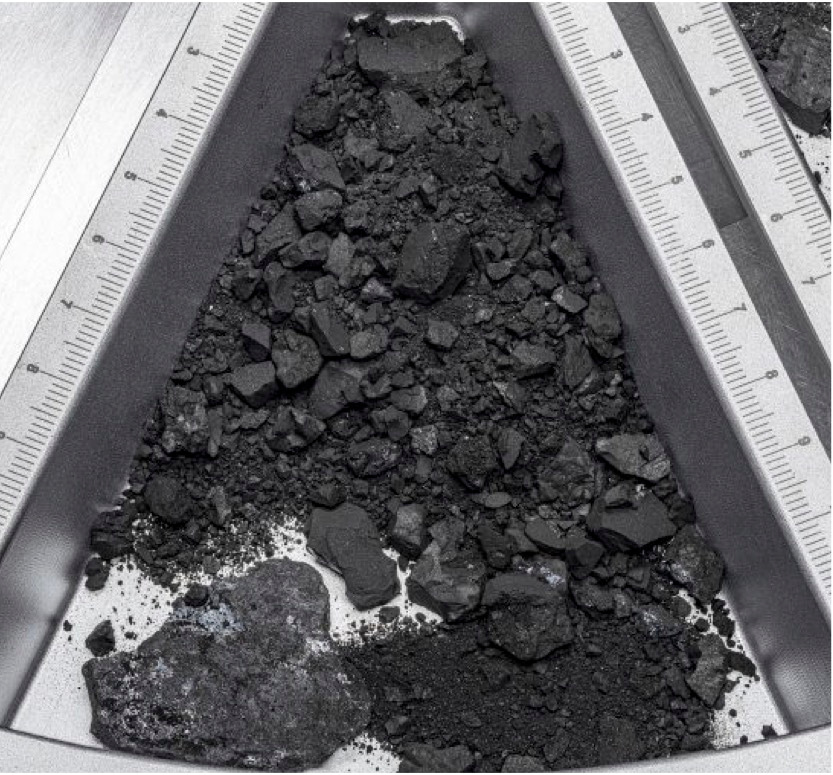
Bennu sample used for sugar analysis in a tray. Credit: NASA
Challenge in finding sugars
Although the OSIRIS-REx mission successfully collected a large amount of sample from Bennu, I was concerned about whether we could detect sugars because the abundance of sugar in the Bennu sample was unknown and could be much lower than in the meteorites we previously investigated. To improve the robustness of the analysis, I worked to optimize the protocol to enhance sensitivity and reproducibility until the Bennu sample arrived at my lab. I recruited a graduate student, Sako Sunami, who was investigating sugars in meteorites in my lab at the time. We continued preparing to investigate the Bennu sample. The sensitivity for the analysis of sugars was improved significantly. However, the success of the analysis still depended on the abundance of potentially interfering compounds, which was not clear to us beforehand.
Finding sugars in the Bennu sample
The OSIRIS-REx spacecraft sample return capsule landed successfully on September 23, 2024, in Utah, USA. The sample was transported to Houston, Texas, where it is carefully curated at the NASA Johnson Space Center (JSC). Prior analyses of the sample found a variety of amino acids (including 14 of the 20 standard protein amino acids used in terrestrial biology), carboxylic acids, and all five nucleobases in DNA and RNA (Glavin & Dworkin et al., 2025), as well as phosphates (Lauretta & Connolly et al., 2024; McCoy & Russell et al., 2025). Thus, if ribose were found, the sample would have all the building blocks needed for RNA.
Fine homogenized powders of Bennu (603.4 mg), prepared from a larger sample mass at NASA JSC, arrived at my lab at Tohoku University in July 2024. I began extracting sugars with early career scientists Sako Sunami, Toshiki Koga, and Yuta Hirakawa. We carefully progressed through the many steps of sample extraction, purification, derivatization, and analysis using gas chromatography mass spectrometry. A part of the extract was used to investigate nucleobases, and the solid residue that remained after extraction was used to investigate insoluble organic matter at the Carnegie Institution for Science.
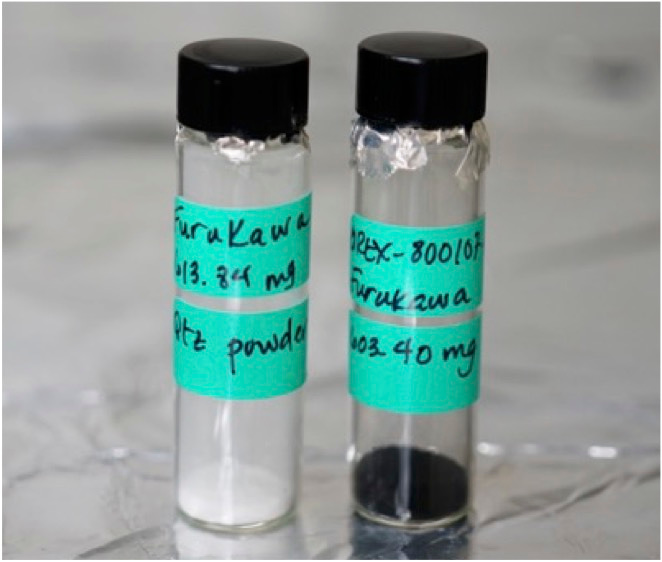
Bennu sample and a procedural blank prepared at NASA-JSC
Yoshinori Takano and co-workers at HORIBA analyzed a water extract from another small Bennu sample to determine the pH of the fluid which the Bennu sugar experienced, and found that the pH was mildly alkaline.
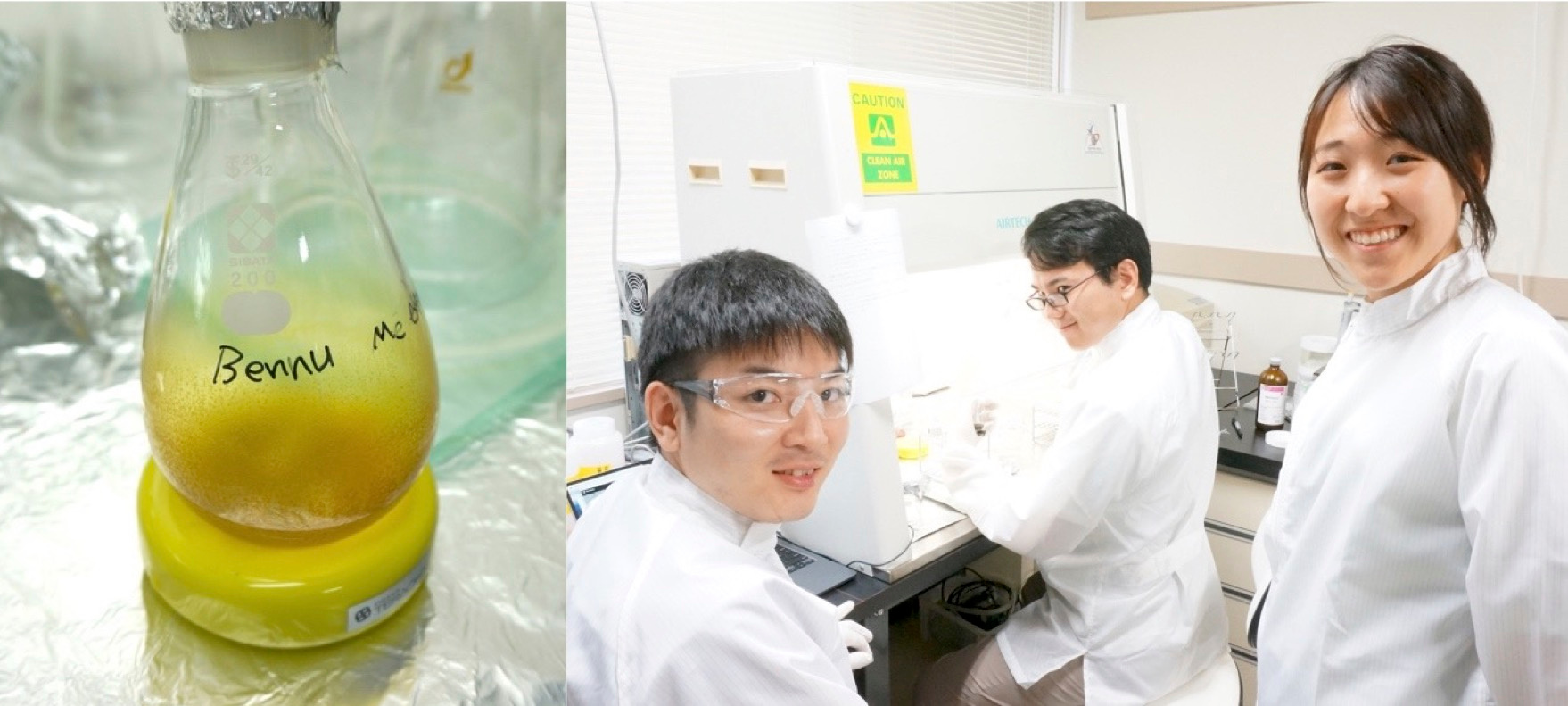
Extract of Bennu sample and Early career researchers handling the Bennu sample.
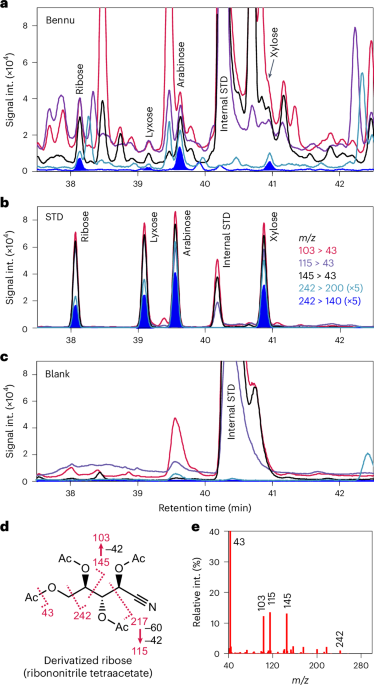
We found that the Bennu sample contained sugars including ribose (needed for RNA) and glucose (needed for metabolism). The interfering compounds that we were originally concerned about were present, but fortunately, they were not abundant enough to overwhelm the Bennu sugar signals. Once the results were clear, we were excited and somewhat relieved to no longer be under pressure to investigate the precious sample. We also analyzed the sample using additional instruments and confirmed the results. Based on the abundances and compositions of the sugars found in the Bennu sample, as well as the pH of the extract, the sugars in the Bennu sample were most likely formed in ancient alkaline fluids in Bennu’s parent body. To evaluate the conditions needed for sugar formation in Bennu’s parent body, our previous investigation, conducted by a former graduate student in my lab, was very helpful (Ono et al., 2024).
The team
I participated in the OSIRIS-REx Sample Organic Analysis Working Group (SOAWG), which was led by our coauthors Daniel P. Glavin and Jason P. Dworkin. The working group included many researchers, from early career to senior scientists, who investigated different types of organic compounds. Under their leadership, we discussed and prepared a coordinated sample analysis plan. Additionally, the entire OSIRIS-REx sample analysis team was well organized under the leadership of the Principal Investigator, Dante S. Lauretta, and the Mission Sample Scientist, Harold C. Connolly, Jr. The team provided members substantial support with sample documentation, and, in particular, the team editor, Cat Wolner, provided extensive editorial support. I learned a lot through this team experience about approaches, perspectives, and leadership, and I am grateful to have been part of this historic mission.
Looking ahead
We developed a new protocol for analyzing sugars in a small sample for the OSIRIS-REx mission. We are now using the same approach to investigate sugars in meteorites and determine how sugars in asteroids were formed. Many researchers have developed different methods for the analysis of this precious sample and for the Ryugu sample acquired by Hayabusa2. These analyses will be applied again to meteorites and to future samples acquired by robotic spacecraft and human missions. JAXA is planning an international space mission, MMX (Martian Moons eXploration), scheduled to launch in 2026 and return a sample from the Martian moon Phobos in 2031. The methods developed during the OSIRIS-REx and Hayabusa2 sample-return missions will significantly contribute to future findings and advance our understanding of the origins and early evolution of the solar system and life.


Follow the Topic
-
Nature Geoscience
A monthly multi-disciplinary journal aimed at bringing together top-quality research across the entire spectrum of the Earth Sciences along with relevant work in related areas.