Teaching Cancer Prevention Where It Matters: Inside the CARES4You Study

Our recently published study in the Journal of Cancer Education describes a different approach: co-designing a cancer prevention curriculum with middle school teachers, embedding it directly into science education, and grounding it in students’ lived experiences. This work served as the foundation for the CARES4You (Cancer Risk Education in Schools for Youth and Families) Study, funded by the National Cancer Institute’s Persistent Poverty Initiative (Grant Number U54 CA280808).
Why Middle School—and Why Teachers?
Adolescence is a critical window for cancer prevention. It’s when lifelong behaviors begin to form and when environmental and social exposures can have lasting biological effects. Yet studies consistently show that adolescents have low awareness of cancer risk factors, particularly those tied to social and environmental conditions. Schools are among the few settings where we can reach nearly all adolescents—but only if what we introduce is feasible, relevant, and sustainable. Rather than designing a curriculum in isolation, we partnered with:
- Middle school teachers and administrators from NYC public schools
- Math for America (MƒA) STEM teaching fellows
- An interdisciplinary research team spanning medicine, cancer epidemiology, nutrition, and education
Teachers weren’t just participants—they were co-designers.
Listening First: What Teachers Told Us
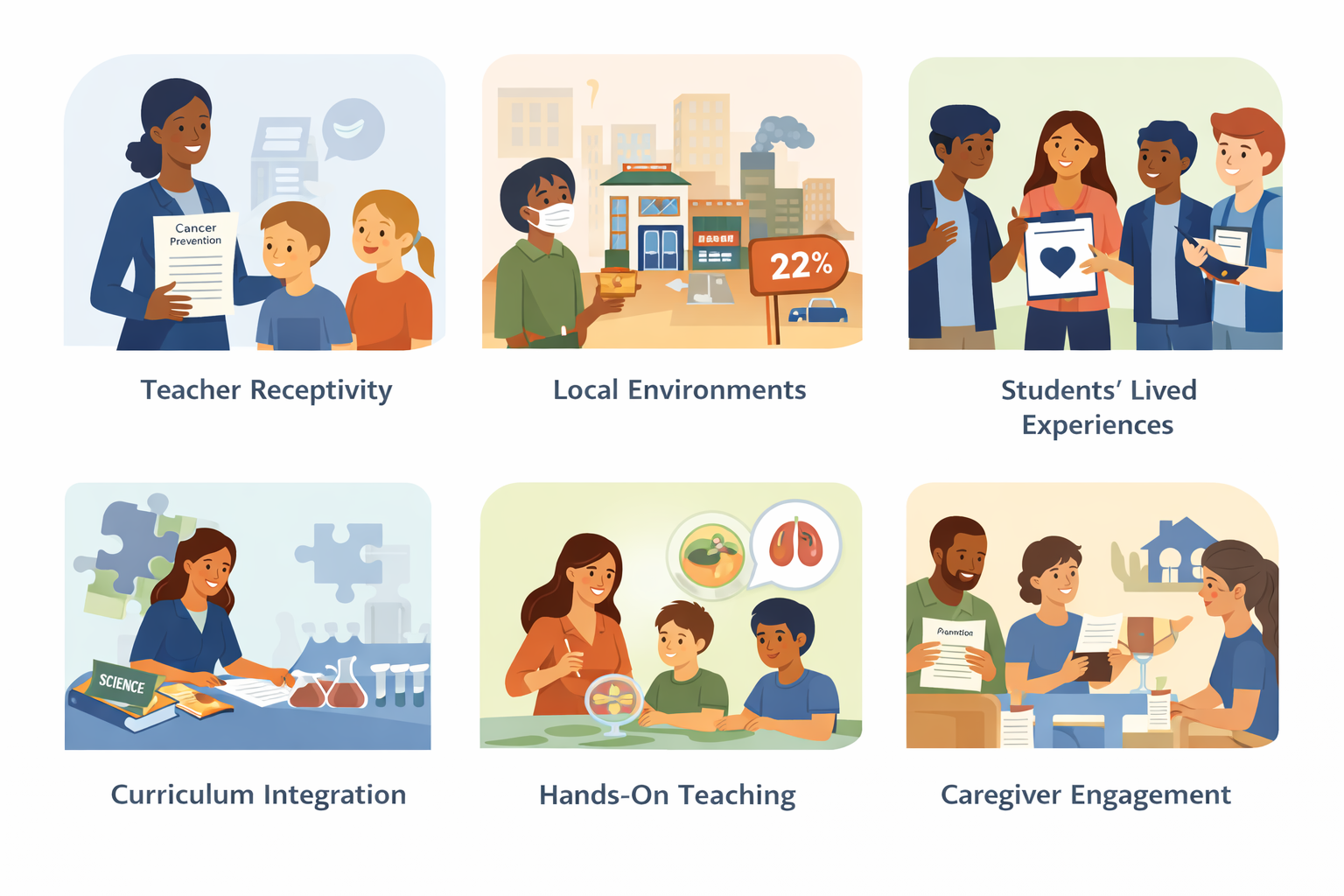
Through focus groups, classroom observations, and curriculum field testing, teachers shared what works—and what doesn’t—in real classrooms. Six themes consistently emerged:
- Strong teacher receptivity to cancer prevention content
- The influence of local environments, from air quality to tobacco retail density
- The importance of connecting lessons to students’ lived experiences
- Challenges—and opportunities—for curriculum integration
- A clear preference for hands-on, inquiry-based teaching
- The need for realistic approaches to caregiver engagement
From Feedback to Curriculum: What CARES4You Looks Like
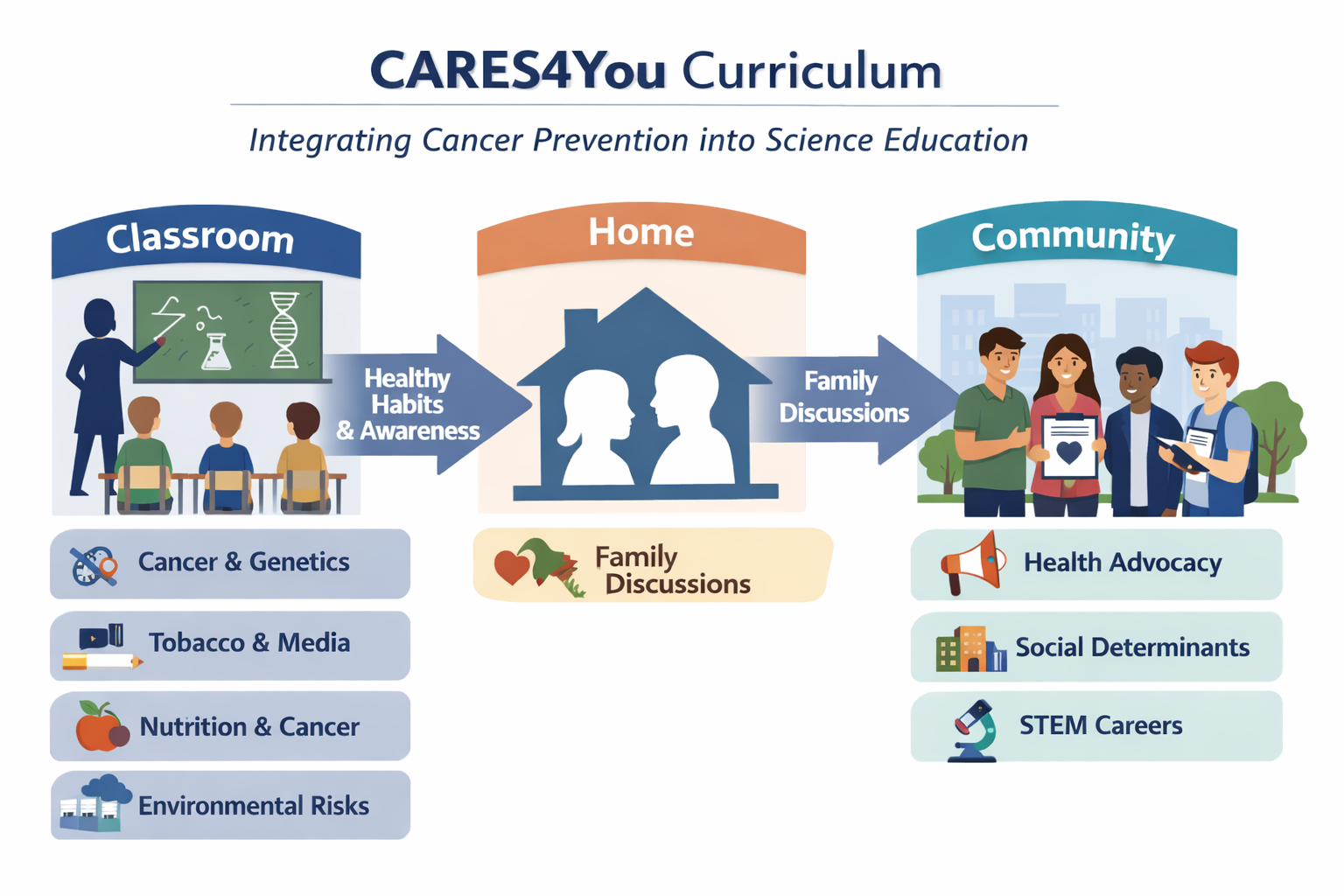
Teacher feedback directly reshaped the curriculum. What began as 18 lessons was refined to 14 modular, flexible lessons across six units. Lessons were designed to:
- Align with Next Generation Science Standards
- Work in resource-variable classrooms
- Support multilingual learners
- Incorporate STEM career connections, including salary ranges and real-world applications
Beyond the Classroom: Why This Matters
Most school-based cancer education programs are short-term, behavior-specific, or delivered by outside facilitators. CARES4You takes a different path by:
- Embedding cancer prevention within core science instruction
- Framing risk through epidemiology and social context
- Including intergenerational activities that encourage conversations at home
Teachers consistently told us that students were eager to talk about cancer—not abstractly, but in relation to their families, neighborhoods, and futures.
What’s Next?
This paper reports on the formative development phase of CARES4You. The next phase—already underway—will evaluate the curriculum’s impact on:
- Students’ intentions to engage in health-promoting behaviors
- Cancer risk communication within households
- Caregiver awareness and behavior change
If effective, CARES4You could serve as a scalable model for school-based cancer prevention, reaching adolescents at a time when prevention can make a meaningful difference.
Final Thoughts
Cancer prevention doesn’t have to wait until adulthood—and it doesn’t have to live outside the classroom. By partnering with teachers, respecting classroom realities, and connecting science to students’ lived experiences, CARES4You shows what’s possible when prevention starts early, locally, and collaboratively.

I’m a researcher focused on health disparities and cancer prevention. My work explores how to integrate cancer risk awareness into school science curricula and community settings to support healthier behaviors early in life. I’m passionate about evidence-based teaching, youth advocacy, and translating research into practice that empowers communities.
Follow the Topic
-
Journal of Cancer Education
The Journal of Cancer Education is an international journal dedicated to enhancing effective education about cancer related issues. Articles featured include reports of original results of educational research, as well as discussions of current problems and techniques in cancer education.