The relationship between lifestyle habits and obesity among students in the Eastern province of Saudi Arabia: using the Arab Teens Lifestyle (ATLS) questionnaire
Published in Healthcare & Nursing, General & Internal Medicine, and Public Health

With one of the youngest populations in the world, where 51% of the 33.4 million people are under 25 years of age, Kingdom of Saudi Arabia has one of the highest obesity and overweight prevalence rates. Considering obesity, the national survey (2021) of Saudi residents (n = 4,709) in the 13 administrative regions of Saudi Arabia found the overall prevalence to be 24.7%. Moreover, in this study, as with a large body of international literature obesity was significantly associated with NCDs such as type 2 diabetes, hypercholesterolemia, hypertension, lung diseases, rheumatoid arthritis, sleep apnoea, colon diseases and thyroid disorders. Females were more obese (25.5%) compared to of males (17.9%).
The Arab Teens Lifestyle Study (ATLS) was an initiative to assess the lifestyle habits influencing obesity rates in the Middle East and North Africa (MENA) region, including PA patterns, sedentary and eating behaviours. Since its implementation, ATLS questionnaire has been used in several studies among different age groups and populations in the MENA region (see for example UAE, Bahrain, Jordan, Oman, Tunisia, Morocco), as well as Riyadh. However, the ATLS questionnaire was not administered among students in the Eastern Province of Saudi Arabia, where the obesity rates are the highest in the country. The Eastern Province is the largest in the KSA by area and one of the most important regions as it is the most industrialised part of the Kingdom and the third-largest oil-producing region in the world. The industrialisation and rapid urbanisation of the Eastern Province have resulted in distinct lifestyle changes of the population. Changes in lifestyles (i.e., unhealthy food consumption and reduced PA) appear to be related to the overall body weight of students in the Eastern Province; with those found to be overweight ranging from 11.7% to 20.5% and obese from 9.5% to 20.5%.
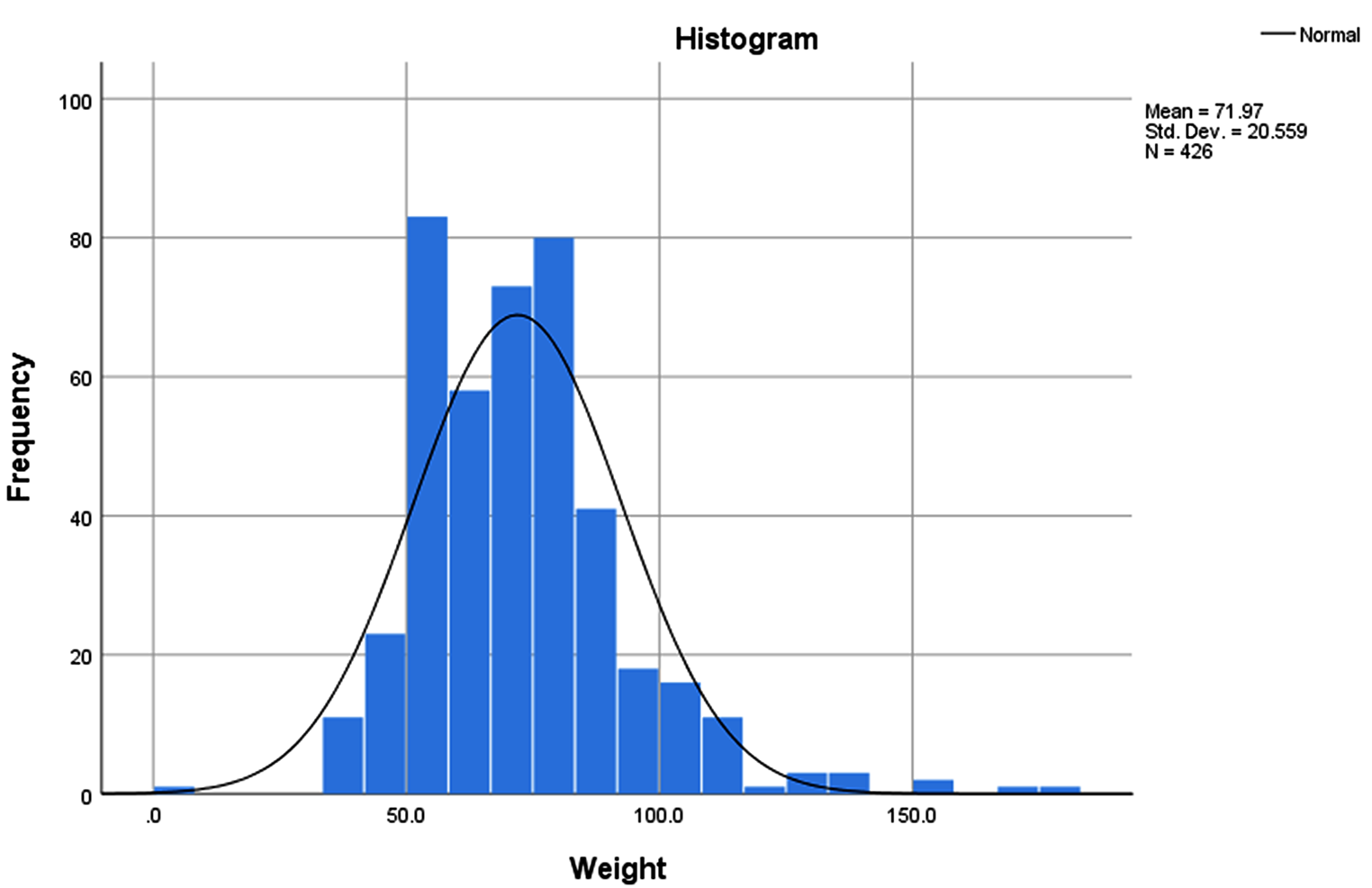
This research has become the first that aimed to identify lifestyle habits influencing the rates of obesity among 18-25-year-old university students in the Eastern Province of the KSA using the ATLS questionnaire, thereby filling the existing knowledge gap. Out of n = 426 participants, n = 200 (47%) were categorised (using body mass index) as normal weight; n = 113 (26.5%) were overweight, and n = 73 (17.1%) were obese. The most frequent three types of PA were using the staircase n = 389 (91.5%), walking n = 320 (75%), and household work n = 261 (61.3%)
The findings showed that most of the nutritional, PA, and sedentary behavioural factors (e.g., screen time) in the questionnaire were not associated with obesity status amongst the participants. It was found that, among females, spending less than two hours of screen time per day had greater odds for obesity. But the association was not significant, even when adjusting for a nutritional factor such as sugar-sweetened drinks intake. These findings seem to confirm previous studies, which have reported no associations between screen time/sedentary behaviour and obesity in both males and females.
This study found no significant association between obesity status and the frequency of specific foods consumption, including fast food. However, in the obese group, more of the males that consumed fruits, French fries, cakes, sweets and doughnuts more than three times per week were likely to be obese, which was not the case for females. Further analysis looked into the frequency of vegetables consumption and its association with obesity status. It showed that the association was not statistically significant, even though nearly significant among females (p = 0.06). Indeed, consuming vegetables less than three times a week had 2.5 times greater odds for obesity among females (23.1% vs. 10.6%, compared to about 18% for both groups in males). On the other hand, this low vegetable-intake profile also had 1.6 times greater odds for obesity among those consuming cakes (and similar items) two or more times a week (23% vs. 16%, compared to about 16% for both groups in lower cake-intake profile). However, the effect modification by gender or cake intake frequency was found to be not significant and an adjusted odds ratio was estimated at about 1.3 after either of these stratifications.
Although it is suggested that generous consumption of fruits and vegetables may help in weight control as they are rich in fibre and water, which provides a satiety effect, this study is consistent with previous findings in the literature, that found no clear associations between fruit and vegetable consumption and a healthy weight. Taking into consideration the evidence on the association of fruit and vegetable consumption with BMI, students' attitudes and preferences regarding fruit and vegetable choice should be explored in future studies, which may add value and shed some light on the existing conflicting literature.
Similar to previous studies that used the ATLS questionnaire, this study raised a number of questions and hypotheses that require further exploration through qualitative research. These questions include exploring barriers and facilitators to physical activity, reasons for skipping or eating breakfast, and perceptions of specific food groups. One of the most appropriate approaches to enrich additional data may be qualitative analysis. Thus, while the quantitative method in this study provides numerical descriptions and estimates of the size and distribution of effects and allows testing of statistical significance, qualitative research, often described as using a naturalistic interpretative approach, will allow for the study of phenomena from the inside and take the perspectives of research participants as a starting point.
The reported lifestyles of the students could potentially lead to long-term negative health effects, which is of concern given the rising rates of overweight, obesity, and obesity-related non-communicable diseases (NCDs) among the Kingdom’s adult and ageing population. Further studies are recommended to explore the knowledge, attitudes, and perceptions of Saudi students in the Eastern Province in relation to PA, sedentary behaviours, and dietary habits, along with their views on how these can be improved.

Follow the Topic
-
BMC Public Health
An open access, peer-reviewed journal that considers articles on the epidemiology of disease and the understanding of all aspects of public health.

Related Collections
With Collections, you can get published faster and increase your visibility.
Monitoring, preventing, and managing type 2 diabetes
BMC Public Health is calling for submissions to our Collection on Monitoring, preventing, and managing diabetes at the population level. With rates of type 2 diabetes rising globally, especially in low- and middle-income countries and underserved communities, prevention strategies are critical. As the disease progresses people with diabetes are at increased risk of complications such as cardiovascular and kidney diseases, neuropathy and visual loss.
This Collection seeks submissions that explore population-level approaches to monitoring rates of diabetes, preventing or delaying the development of type 2 diabetes, and system-wide efforts to improve the management of the disease and reduce rates of complications, with a focus on improving health outcomes and reducing healthcare burdens.
Submissions are encouraged on primary prevention initiatives and culturally adapted, community-level interventions to reduce the risk of diabetes. Research aimed at improving systems for monitoring rates of diabetes and its complications through routinely-collected health data, or for improving management by enhancing patient engagement with healthcare systems or better identifying those in need, are encouraged. Research on diabetes education and support systems is also welcomed, with a focus on empowering individuals to adopt and sustain healthier lifestyles and avoid known causes of diabetes.
Additional topics of interest include (but are not limited to):
Access to healthcare and diabetes management
The impact of food insecurity on diabetes outcomes
Community-based interventions for low-income populations
Interventions to reduce exposure to environmental causes of diabetes
Financial barriers to diabetes medication and treatment
Housing instability, employment status and type 2 diabetes
Health literacy, poverty, and diabetes management
Policies to reduce poverty-related health disparities in diabetes
This Collection supports and amplifies research related to SDG 3: Good Health & Well-Being.
All manuscripts submitted to this journal, including those submitted to collections and special issues, are assessed in line with our editorial policies and the journal’s peer review process. Reviewers and editors are required to declare competing interests and can be excluded from the peer review process if a competing interest exists.
Publishing Model: Open Access
Deadline: Oct 16, 2026
Digital exclusion and health equity
Digital exclusion poses significant barriers to health equity, particularly in the context of an increasingly technology-driven healthcare landscape. Many individuals, especially from underserved communities face challenges in accessing digital health resources, including telehealth services, electronic health records, and health information online, alongside challenges from other social determinants of health. This Collection seeks to explore the intersection of digital health access and health equity, focusing on the disparities that arise from unequal access to digital tools and resources.
Addressing digital health exclusion is critical for promoting health equity and ensuring that all individuals can benefit from advancements in digital health. Recent strides in telehealth and digital health interventions have demonstrated the potential for technology to improve access to care, yet they also reveal significant disparities that must be acknowledged. By understanding the factors that contribute to eHealth disparities, we can develop targeted digital inclusion strategies that address the unique needs of diverse populations, ultimately fostering a more equitable health system.
Topics for submission include but are not limited to:
- Equitable digital health systems: policy, infrastructure, and community engagement
- Digital health access among underserved communities
- Digital literacy and health outcomes across diverse populations
- Innovations and implementation strategies for bridging digital health gaps in underserved communities
- Measuring and monitoring digital health disparities: metrics and methodologies
This Collection supports and amplifies research related to SDG 3 (Good Health and Well Being) and SDG 10: (Reduced Inequalities).
All manuscripts submitted to this journal, including those submitted to collections and special issues, are assessed in line with our editorial policies and the journal’s peer-review process. Reviewers and editors are required to declare competing interests and can be excluded from the peer review process if a competing interest exists.
Publishing Model: Open Access
Deadline: Dec 11, 2026