What do play-fighting and pessimism tell us about pain in calves?
Published in Zoology & Veterinary Science and Behavioural Sciences & Psychology






On commercial farms, it’s common practice to prevent horns from developing by burning the horn buds with a hot iron. Even when pain control is applied, it’s highly likely that they experience significant pain in the hours and days following the procedure. However, asking how calves feel after disbudding is challenging, especially because they may have evolved to hide their pain.
What does calf play say about pain?
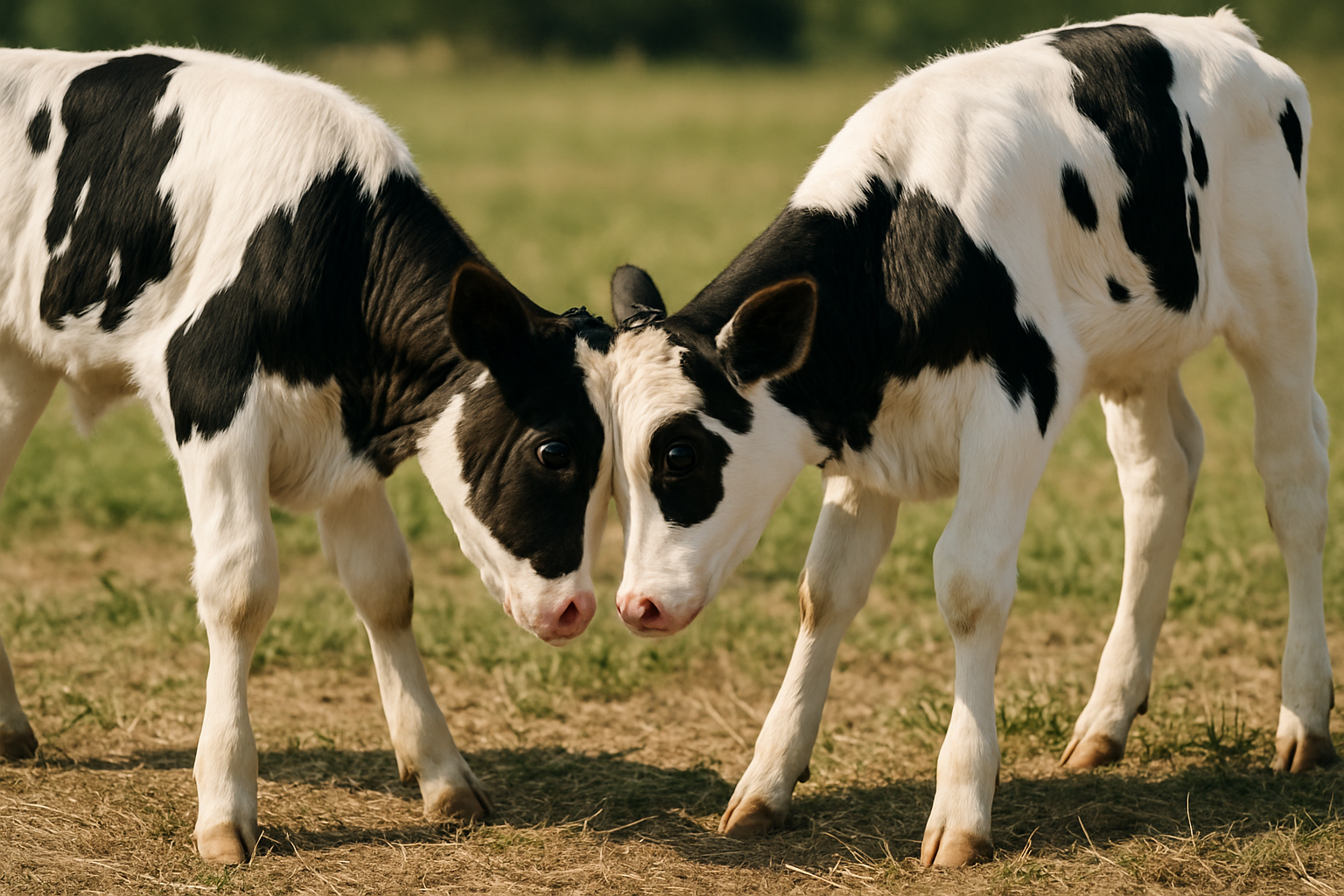
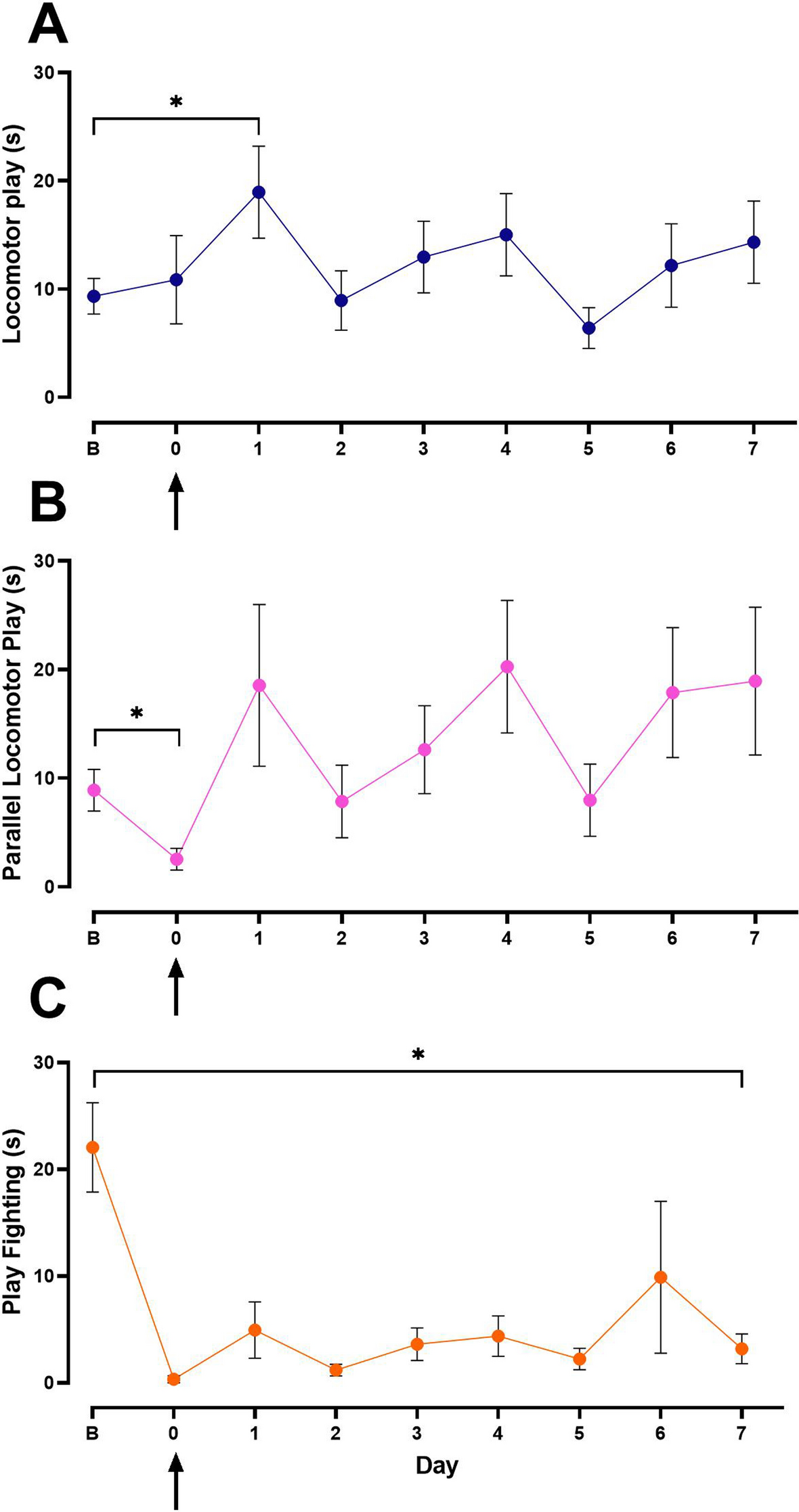
Imagine a group of preschoolers in the playground; you might see some playing tag, while others are rough-and-tumble wrestling. Calves are the same – they run alone, they run together, they jump, they kick, and they play-fight. One way to ask a calf about pain is to observe their play, assuming that the less they play, the worse they feel.
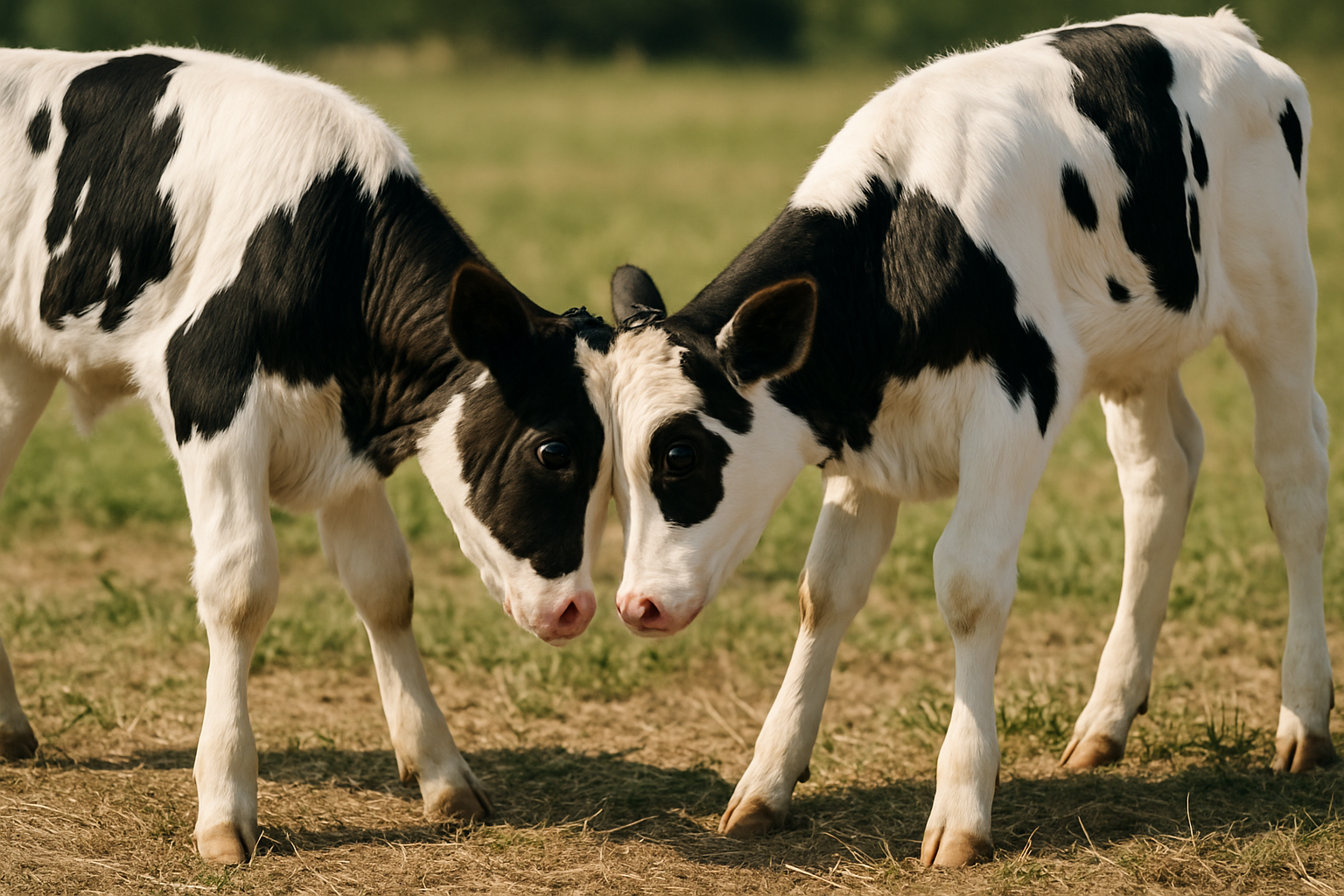
Two calves engaging in play-fighting. Image made with ChatGPT (OpenAI).
In this study, after disbudding, the calves kept running around, but play-fighting was almost eliminated over the next 7 days. Why? Looking at how calves play-fight, this makes sense – calves might avoid banging heads if the disbudding injury is still painful even about 7 days post-disbudding. Or perhaps it hurt once, and they become afraid of play-fighting altogether.
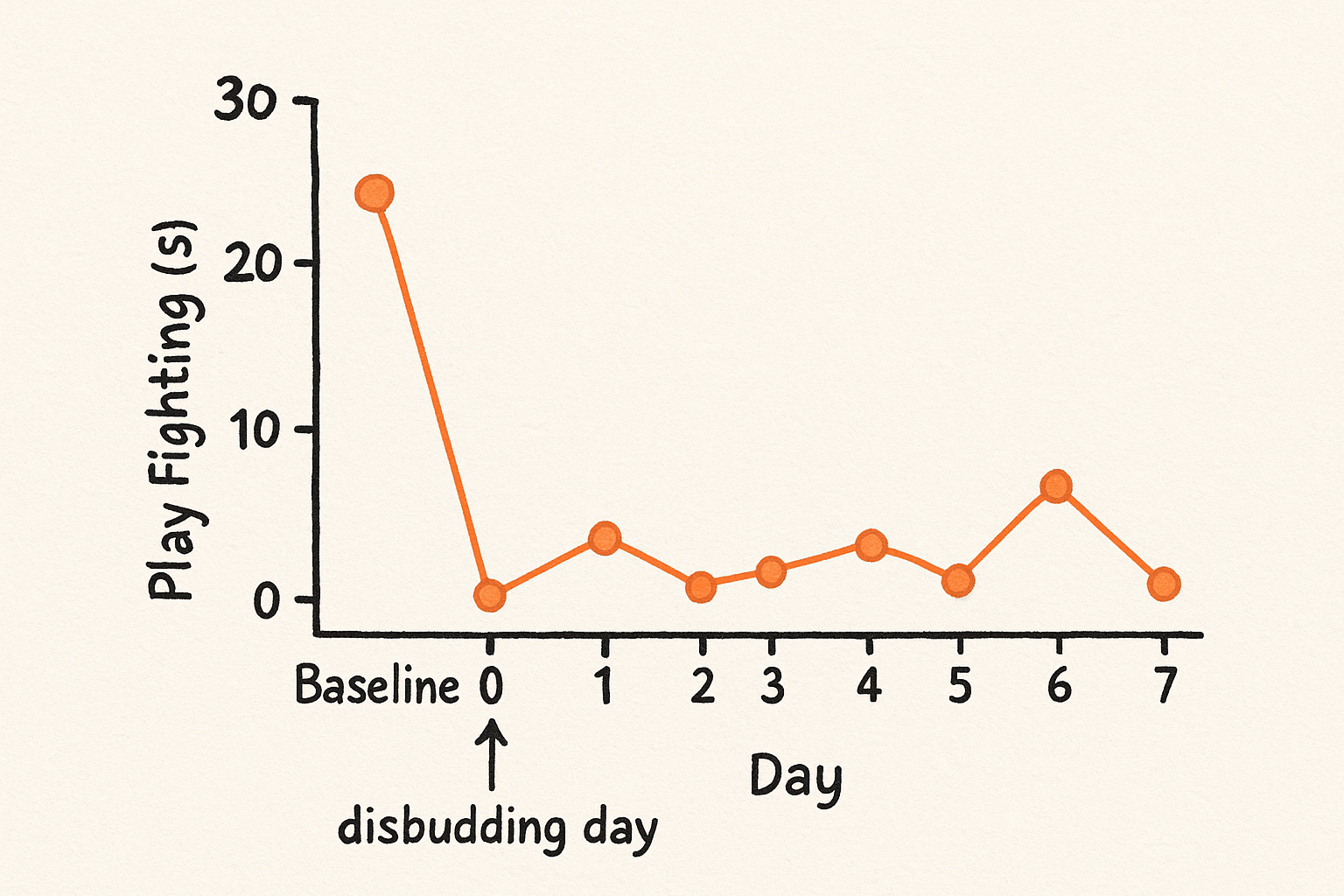
Changes in play-fighting duration from “baseline” (before disbudding) to 7 days after disbudding (seconds of play-fighting per 4 hour daily observation). Adapted from Figure 1 in the paper (doi: 10.1007/s44338-025-00105-7) using ChatGPT (OpenAI).
Is the bucket of milk half empty?
So, calves feel pain after disbudding, but just like people, they likely all handle it differently. This can be related to whether your glass (or bucket of milk) is half full or half empty. Like humans, more pessimistic calves may expect pain to be worse and end up experiencing it more negatively.
All calves, whether pessimist or optimist, stopped play-fighting after disbudding. On the other hand, most of them actually ran around more than before on the day after disbudding, potentially to make up for the lost play-fighting or to cope with stress. But what about the pessimistic ones? They didn’t show quite the same increase in running, suggesting they weren’t recovering in the same way or not at the same pace.
Next steps?
Implication 1: Better or longer pain relief needs to be explored for calves after disbudding.
If calves don’t play-fight for up to a week after disbudding, this likely tells us that they need better pain relief. Unlike us, they can’t reach for paracetamol themselves, so more research is needed on the best schedules of pain treatment to ensure they are free from pain and can play with their friends.
Implication 2: More pessimistic calves may have worse or longer-lasting experiences of pain
It’s easy to accept that “one size doesn’t fit all” for humans, and this idea needs to be extended to non-human animals like calves. We need to better understand how each calf experiences pain so that we can tailor their care to them, much like we would try to do with patients in a hospital.
Interested in the interplay between pain, play, and pessimism in calves? Read the full paper here.
Follow the Topic
-
Discover Animals
This is a fully open access, peer-reviewed journal that supports multidisciplinary research across all fields related to animal science, including animal health, behavior, physiology, ecology and more.

Related Collections
With Collections, you can get published faster and increase your visibility.
Next-Generation Biomonitoring: Leveraging eDNA and Molecular Tools for Animal Conservation
As global biodiversity faces unprecedented pressure, the need for rapid, non-invasive, and scalable monitoring tools has never been greater. This Collection focuses on the transformative role of environmental DNA (eDNA), metabarcoding, and high-throughput sequencing in understanding animal populations. We seek to move beyond simple species detection toward integrating molecular data with ecological modeling.
We invite contributions that explore:
· Standardization of eDNA protocols for terrestrial and aquatic vertebrates.
· Integration of multi-omics to assess population health and genetic diversity.
· The use of non-invasive sampling to monitor elusive or endangered species.
· Advancements in wildlife forensics and the tracking of illegal trade through molecular markers.
Keywords: Environmental DNA; Metabarcoding; Non-invasive monitoring; Conservation genetics; Population genomics; Wildlife forensics.
Publishing Model: Open Access
Deadline: Dec 16, 2026
Animal Habitats in a Changing World: Adaptation, Conservation, and Interactions Across Ecosystems
The natural world is undergoing unprecedented changes due to climate change, habitat loss, and increasing human influence. This Collection aims to gather interdisciplinary research on animal adaptation, biodiversity responses, and conservation strategies for animals and their habitats in a rapidly changing world. We welcome contributions related to animal habitats covering behavioral ecology, genetics, physiology, conservation management, wildlife-human interactions, and novel methodological approaches in animal science.
Keywords: Animal habitat, Animal adaptation, Evolution, Genetic divergence, Biodiversity conservation, Ecosystem interactions, Climate Change, Wildlife management
Publishing Model: Open Access
Deadline: Mar 31, 2027