When a Natural Compound Disrupts an Alzheimer’s Protein
Published in Mathematics
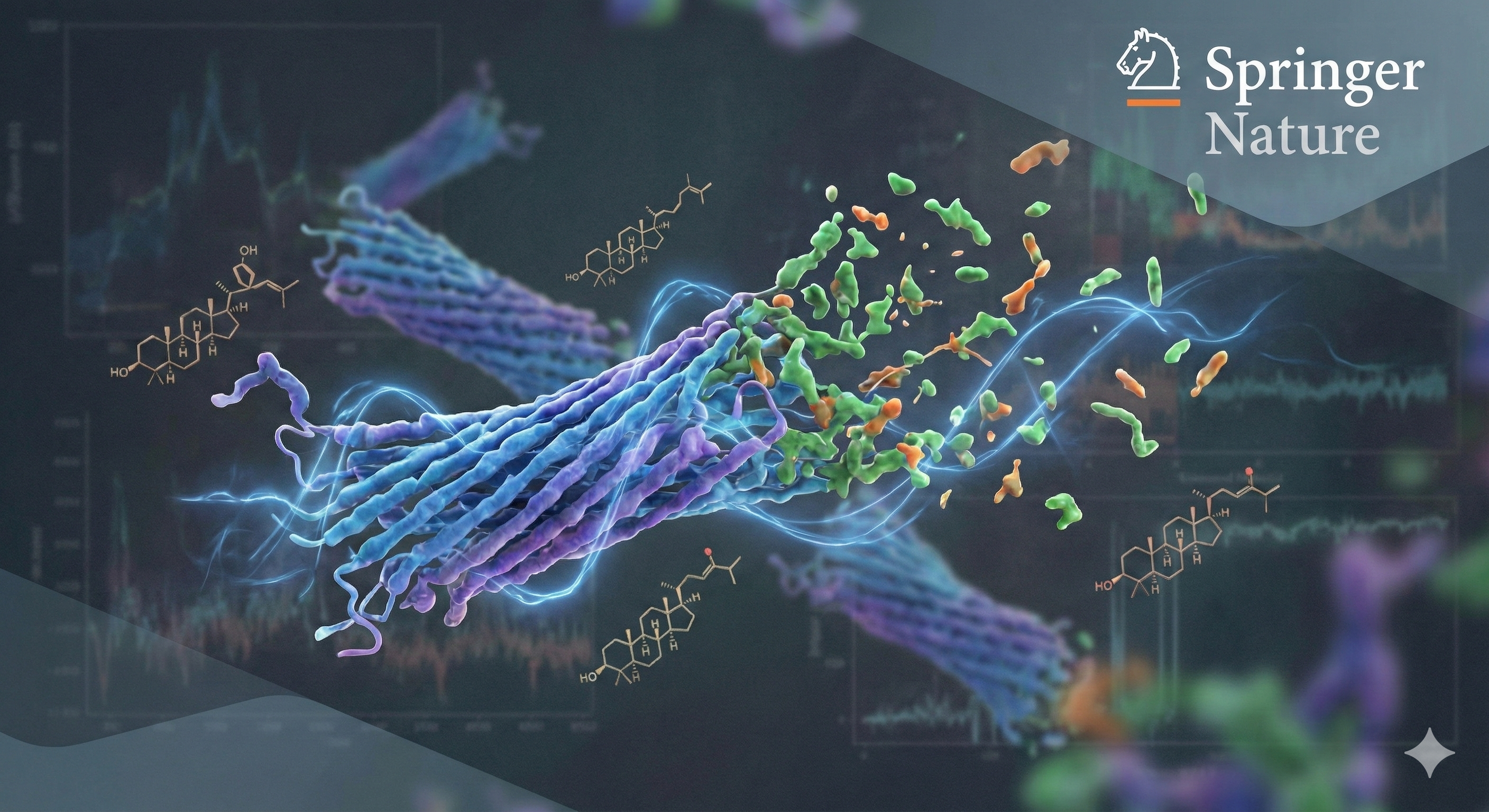





Exploring How a Natural Compound May Disrupt a Key Alzheimer’s Protein
Alzheimer’s disease is often discussed in terms of memory loss and cognitive decline, but at its core, it begins with changes at the molecular level. One of the main contributors to the disease is a small protein called amyloid-beta. When amyloid-beta molecules stick together, they form toxic clusters that interfere with normal brain function.
This research set out to explore a simple question: Can natural compounds interfere with the formation or stability of these harmful protein clusters?
Looking to Nature for Clues
Natural products have inspired many modern medicines, and compounds from Panax ginseng have long been associated with brain health. These compounds, called ginsenosides, are widely studied for their biological activity and relatively low toxicity.
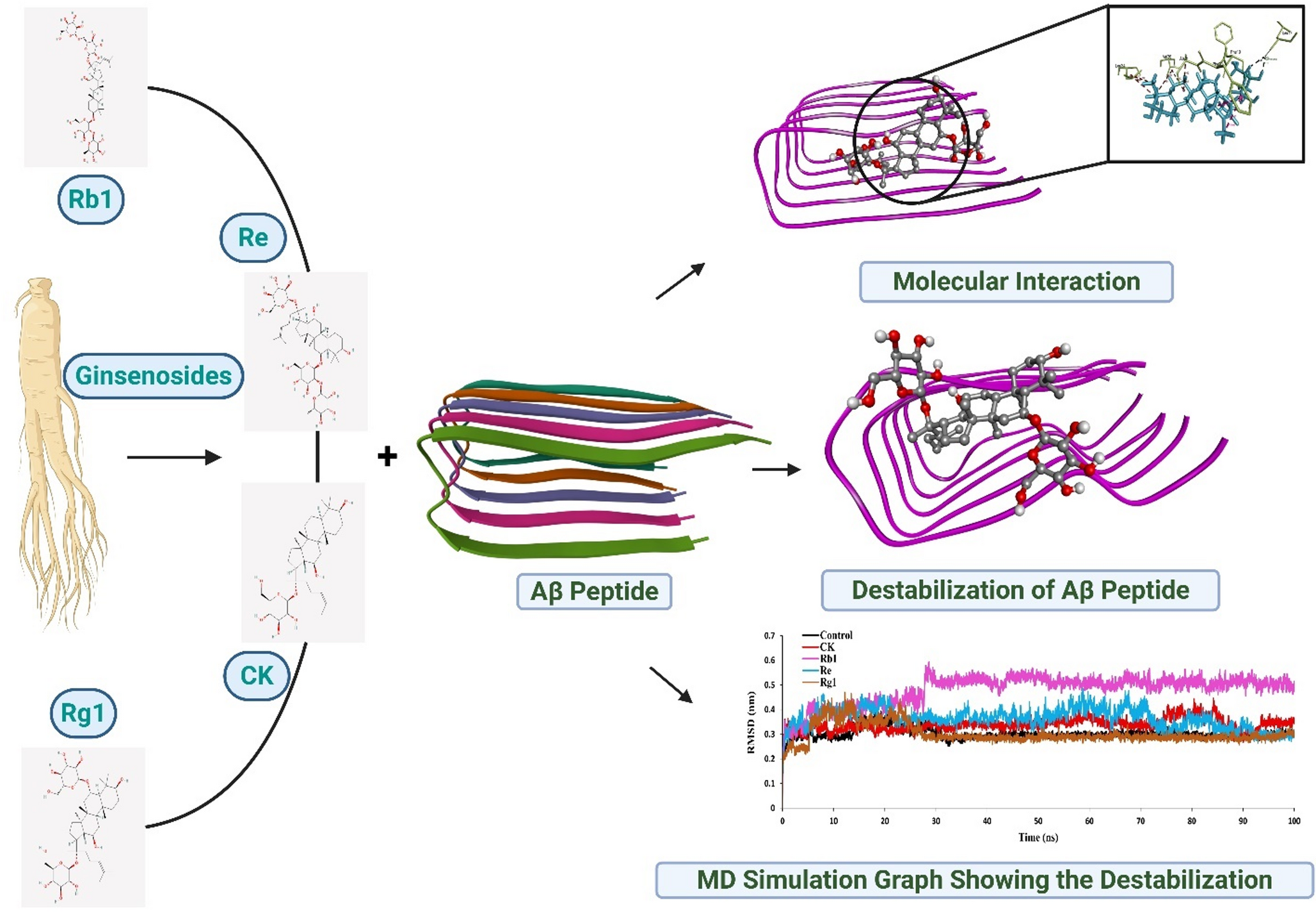
In this study, four well-known ginsenosides—Compound K, Rb1, Re, and Rg1—were examined to see how they interact with amyloid-beta protein clusters. Instead of starting in the lab, the work used computer-based methods that allow researchers to observe molecular interactions in detail.
Figure 1: Visualizing the Molecular Battle Against Alzheimer’s
Watching Molecules in Motion
Using molecular docking, the researchers first tested how well each ginsenoside could attach to amyloid-beta clusters. All four showed promising binding, suggesting they could interact with the protein.
The next step was to observe what happened over time. Molecular dynamics simulations—essentially virtual “movies” at the atomic level—were used to see whether these compounds could actually disturb the structure of amyloid-beta clusters.
One Compound Stands Out
Among the four compounds, ginsenoside Rb1 consistently showed the strongest effect. In the simulations, amyloid-beta clusters became less stable and more disorganized when Rb1 was present. This suggests that Rb1 may weaken the interactions that stabilize these harmful protein structures.
The other compounds showed milder effects, and one caused partial disruption—but none matched the consistent impact of Rb1.
Why This Matters
This study does not claim to offer a treatment for Alzheimer’s disease. Instead, it provides early-stage insight into how natural compounds might influence disease-related proteins at the molecular level.
By identifying ginsenoside Rb1 as a particularly promising candidate, the research helps guide future laboratory and experimental studies. It also highlights the value of computational tools in narrowing down potential therapeutic leads before moving to more complex and costly experiments.
While the work happens quietly on computers rather than in visible experiments, it contributes an important piece to the larger effort to understand—and eventually address—Alzheimer’s disease.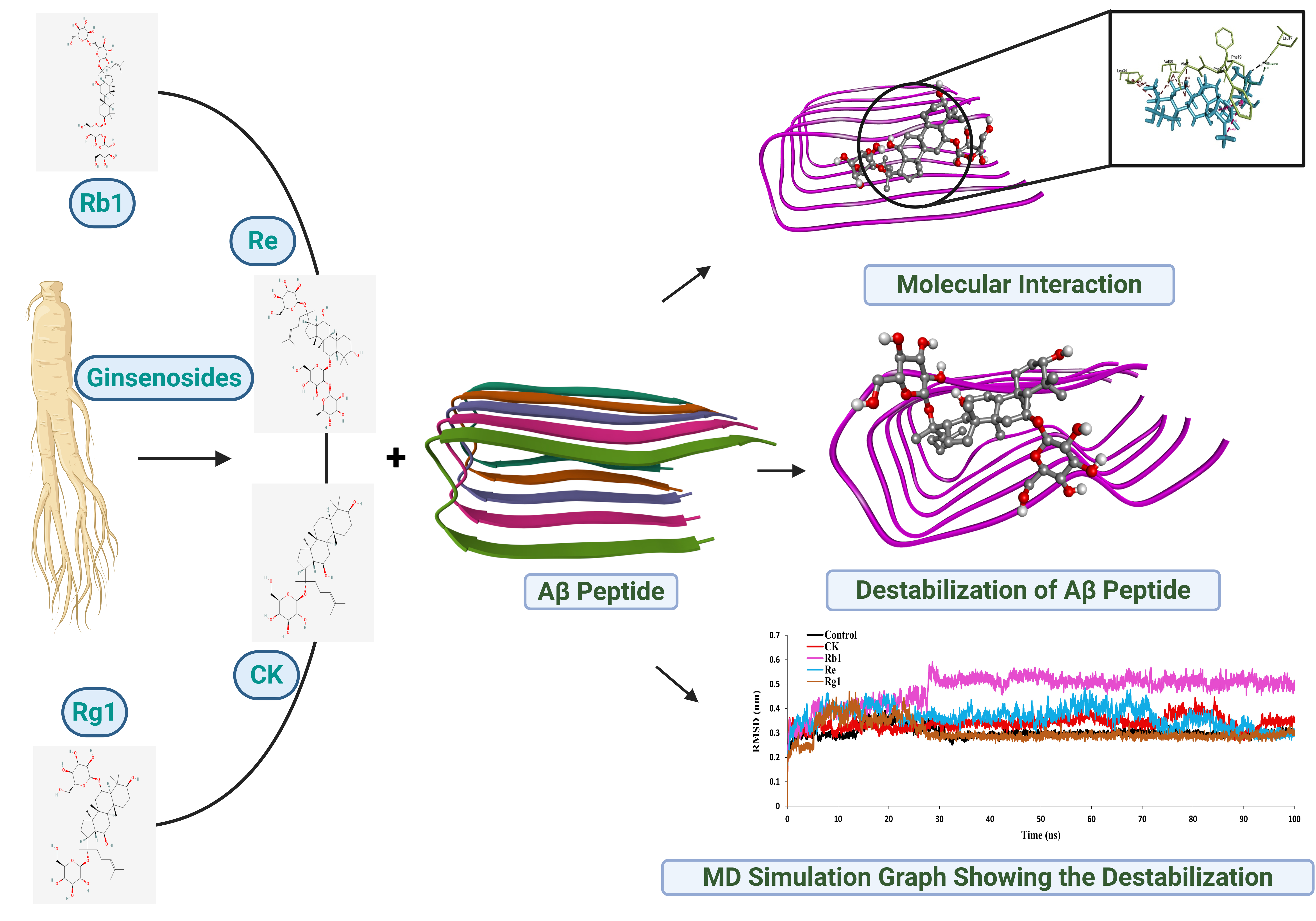

Dr. Abdullah Mohammad Shohael is a distinguished Plant Biotechnologist, Educator, and Translational Scientist. He currently serves as a Professor in the Department of Biotechnology and Genetic Engineering at Jahangirnagar University in Savar, Dhaka, Bangladesh. Bridging the gap between academic research and industrial application, Dr. Shohael is the Co-founder and Chief Technology Officer (CTO) of PCell Bio Inc., a biotech startup where he drives technological strategy and innovation to translate scientific discoveries into commercial solutions.
Research Focus and Impact Dr. Shohael’s research addresses critical agricultural challenges in vulnerable regions. As a Visiting Research Fellow at the International Rice Research Institute (IRRI) (2022–2023), he worked within the Rice Genetic Design and Validation Unit. His pivotal work includes
-
Drought Tolerance: Collaborating with New York University (NYU) to validate candidate genes and evaluate transgenic rice plants under severe drought conditions.
-
Food Safety: Developing arsenic-safe rice varieties via genome editing (CRISPR/Cas9) to reduce arsenic accumulation in grains without compromising yield, specifically tailored for farmers in Bangladesh.
Global Academic Journey Dr. Shohael holds a Ph.D. in Agricultural/Plant Biotechnology from Chungbuk National University, South Korea (2006). His expertise is bolstered by extensive international postdoctoral experience:
-
USA: As a Research Associate at the University of Florida (2009–2011), he cloned pathogen-related genes to develop citrus plants resistant to HLB and canker.
-
Japan: Through a JSPS Postdoctoral Fellowship at Tsukuba University (2007–2009), he successfully cloned the miraculin gene from miracle fruits to produce taste-modifying proteins in lettuce.
Scholarly Contributions and Leadership An active academic leader, Dr. Shohael mentors students and develops curricula to foster innovation in biotechnology. He is a prolific author with recent publications in 2024 and 2025 covering plant molecular farming, biofortification, and public perspectives on genetically engineered crops.
He maintains active memberships in prestigious organizations, including the American Society for Microbiology, the American Society of Plant Biologists, and the International Society for Biosafety Research. Through his dual roles in academia and PCell Bio Inc., Dr. Shohael continues to advance the frontiers of plant biotechnology, ensuring that scientific progress translates into sustainable solutions for a changing world.
Follow the Topic
-
Network Modeling Analysis in Health Informatics and Bioinformatics
NetMAHIB publishes original research articles and reviews reporting how graph theory, statistics, linear algebra and machine learning techniques can be effectively used for modelling and analysis in health informatics and bioinformatics.