Behind the Paper: A Bioinspired Journey to Needle-Free Drug Delivery
Published in Bioengineering & Biotechnology and Biomedical Research




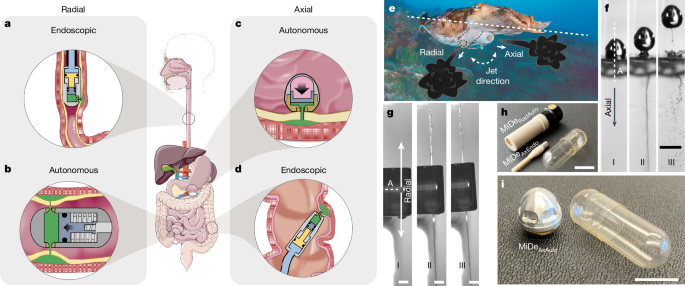

The project originated from Graham Arrick's Master's thesis work in the Traverso Lab at MIT's Department of Mechanical Engineering, in collaboration with a team from Novo Nordisk.
The Quest for Better Drug Delivery Solutions
Traditional needle-based injections have long been the standard for administering many medications, especially large biomolecules like insulin and vaccines. While effective, needles present several drawbacks:
-
Pain and discomfort: Injections can be unpleasant, particularly for individuals with needle phobia or those requiring frequent injections, such as people with diabetes.
-
Risk of infection: Improper needle use can lead to infections.
-
Sharps disposal: Used needles require careful handling and disposal to prevent accidental needlesticks and the spread of bloodborne diseases.
-
Adherence challenges: The inconvenience and discomfort of injections can lead to reduced adherence to treatment regimens, potentially compromising the effectiveness of therapies, particularly for chronic conditions.
These limitations highlight the pressing need for alternative, patient-friendly drug delivery methods. Oral administration, being the most convenient and preferred route for patients, has been a long-sought goal for medications typically delivered via injection.
Exploring Nature's Toolkit: The Cephalopod Framework
Our initial exploration focused on various nature-inspired actuation systems, seeking a mechanism suitable for needle-free drug delivery. We were particularly drawn to rapid actuation found in nature and later the efficient fluid jetting systems employed by cephalopods like squid and octopuses. These marine creatures demonstrate remarkable control over their movement by rapidly expelling water through a tubular organ called the siphon, modulating both the force and direction of the jet to achieve desired speed and direction. They also use the siphon organ to expel jets of ink, creating smoke screens and decoy clouds to confuse predators. While the cephalopod inspiration wasn't our initial focus, it ultimately provided a compelling framework for our developments.
Engineering Cephalopod-Inspired Drug Delivery: MiDe Systems
Drawing upon the cephalopod model, we engineered MiDe systems designed to mimic this jet propulsion mechanism, adapting it for delivering drugs directly into the walls of the gastrointestinal tract. This posed several engineering challenges, including miniaturizing the system while maintaining sufficient power to penetrate the GI tract tissues.
Two main jetting approaches were developed:
-
Axial jets: Designed for larger, globular organs like the stomach and colon, these jets are directed perpendicular to the tissue surface.
-
Radial jets: Suited for smaller, tubular organs like the small intestine and esophagus, these jets are oriented to penetrate the side walls of these organs.
This design strategy enabled targeted drug delivery to various segments of the GI tract.
Bridging the Gap: From Ex Vivo Studies to Animal Trials
The development of MiDe systems involved a rigorous process of testing and refinement:
- Extensive ex vivo studies using animal tissues helped determine the optimal jetting pressure and nozzle dimensions for successful drug delivery across different sections of the GI tract.
- These studies, which involved meticulous measurements of volumetric delivery efficiency, guided the design and optimization of the MiDe prototypes.
- The culmination of this research involved in vivo animal trials where MiDe systems were used to deliver various macromolecules.
The results were impressive, demonstrating the system's potential to deliver insulin, GLP-1 analogues, and siRNA with bioavailability comparable to subcutaneous injections.
The Promise of MiDe: A Future Without Needles?
The development of MiDe systems represents a significant stride toward needle-free drug delivery. These devices have the potential to transform the lives of individuals who rely on frequent injections, making drug administration more convenient and less daunting. This could lead to improved patient adherence to treatment regimens, enhancing the effectiveness of therapies for chronic conditions.
Future research will focus on advancing MiDe systems closer to clinical use in humans, ensuring their safety and efficacy. This includes:
- Optimizing device design
- Exploring biodegradable materials
- Broadening the range of deliverable medications
The ultimate vision is to make this innovative technology widely accessible, offering a future where needle-free drug delivery becomes a reality for millions of patients worldwide.
Follow the Topic
-
Nature
A weekly international journal publishing the finest peer-reviewed research in all fields of science and technology on the basis of its originality, importance, interdisciplinary interest, timeliness, accessibility, elegance and surprising conclusions.

Related Collections
With Collections, you can get published faster and increase your visibility.
Carbon Dioxide Removal
Publishing Model: Hybrid
Deadline: Jan 16, 2027
Cancer Neuroscience: from mechanisms to therapy
Publishing Model: Hybrid
Deadline: Jan 30, 2027