

This research work is an extension of our previous successes on designing heme binding multi-stranded beta sheet mini-proteins. Heme-proteins form an essential part of several biological reactions, such as oxidation-reduction, electron transfer, energy harvesting, and gaseous exchange. Therefore, designing mini proteins (<50 amino acids) that can encapsulate the features of these complex proteins would have great applications in developing new catalysts and novel functions.
The ultimate goal of our work is to design multi-heme protein conduits. In nature, protein conduits like the cytochromes contain several heme groups coupled together to facilitate an efficient electron transport and enzymatic activity. Inspired by this, several groups have attempted to create the common coiled-coil motif by designing multi-heme alpha-helical proteins. In contrast, there are lesser known naturally occurring heme binding β-sheet proteins. Beta-sheet design also presents challenges due to aggregation and insolubility in aqueous solutions.
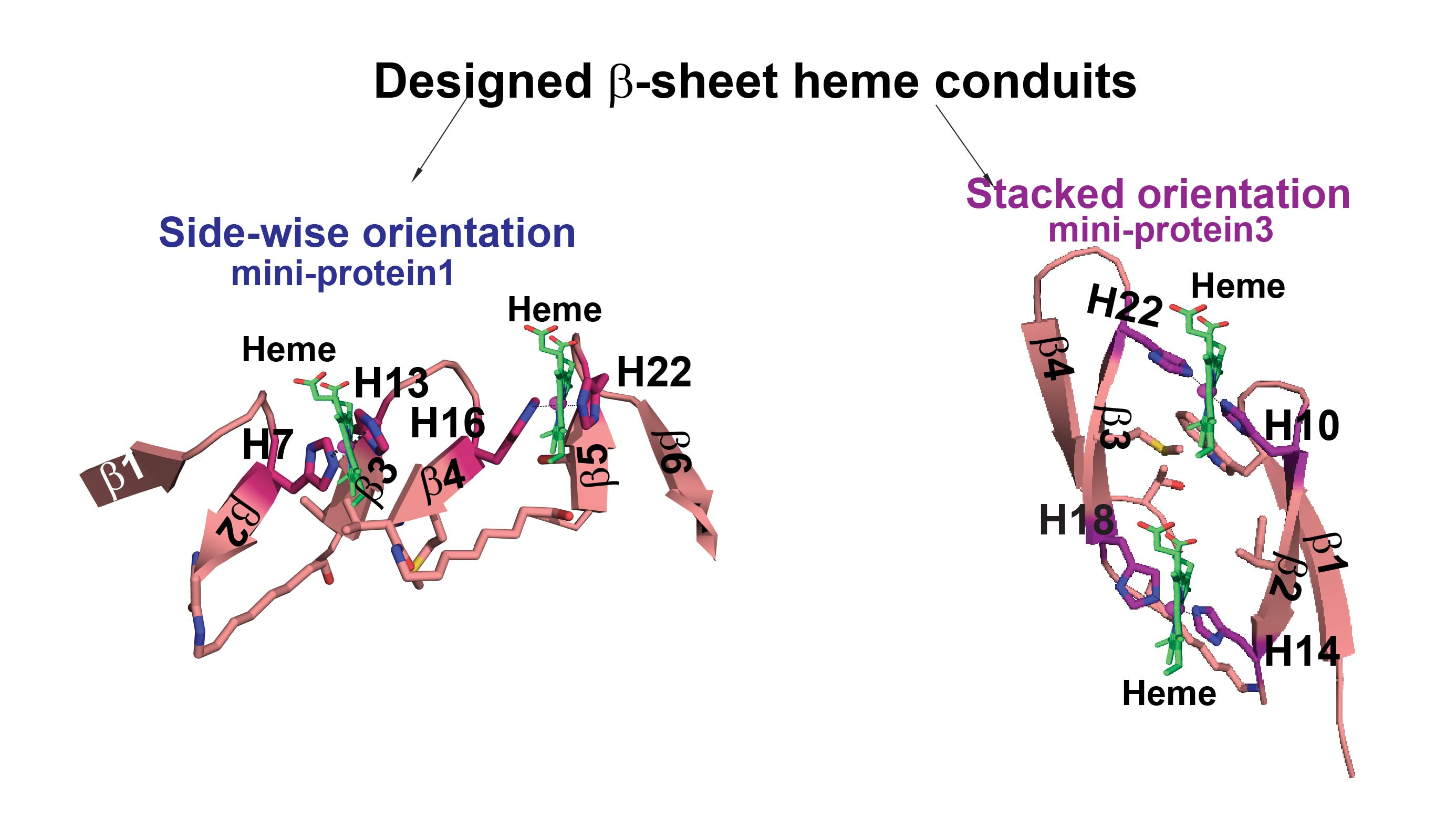
Here, we demonstrate the design of multi-stranded beta-sheet mini-proteins that are able to coordinate di and tetra heme with high affinities. These beta-sheet mini-proteins can attach in a versatile orientation either by stacking or sidewise mimicking naturally occuring multi-heme protein conduits.
The research article, published in Communications Chemistry, can be downloaded from here: https://www.nature.com/articles/s42004-018-0078-z

Follow the Topic
-
Communications Chemistry
An open access journal from Nature Portfolio publishing high-quality research, reviews and commentary in all areas of the chemical sciences.

Related Collections
With Collections, you can get published faster and increase your visibility.
Peptide drug design
Publishing Model: Hybrid
Deadline: Jan 28, 2027
Synthetic approaches to carbon nanomaterials
Publishing Model: Open Access
Deadline: Nov 30, 2026