Discovering Rapid Microbiome Changes from Arhatic Yoga Practices
Published in Microbiology

Why This Research Matters
As both a life sciences researcher and practitioner of Pranic Healing, I've long sought to bridge these two worlds. For years, I wondered if we could scientifically document the physiological effects of spiritual practices like Arhatic Yoga—a higher spiritual form built on the foundation of Pranic Healing that integrates meditation, breathing exercises, and universal energy harnessing techniques.
This research question gained momentum through my collaboration with medical faculty colleagues at the National University Hospital in Singapore. We had previously studied microbiome shifts during pregnancy related to gestational diabetes and breast milk changes after delivery. Through this work, I realized that tens of thousands of microbiome members could serve as independent markers for tracking physiological responses to spiritual practices.
The opportunity to conduct this study came when Master Glenn Mendoza, MD, MPH, one of the senior disciples of Master Choa Kok Sui, suggested we collect data during a nine-day spiritual retreat in upstate New York. This setting was scientifically invaluable—participants followed identical routines, performed the same practices, followed identical dietary intake, and shared the same environment, effectively removing variables that might confound our results.
This represents the first study tracking human physiological responses to Arhatic Yoga practices over such a short timeframe. Previous meditation studies typically observed participants over several months, not days. Our study included 44 participants ranging from 18-70 years old, with varying levels of experience in Arhatic Yoga practices, making it a diverse cohort for investigating these effects.
Our Approach and Findings
We designed a single-arm pilot trial, where we tracked individuals at day zero, day three, and day nine of the retreat. Each participant served as their own control, allowing us to identify patterns emerging across different individuals over time. We collected both oral and fecal samples for microbiome analysis using 16S rRNA gene sequencing to identify bacterial taxonomic profiles.
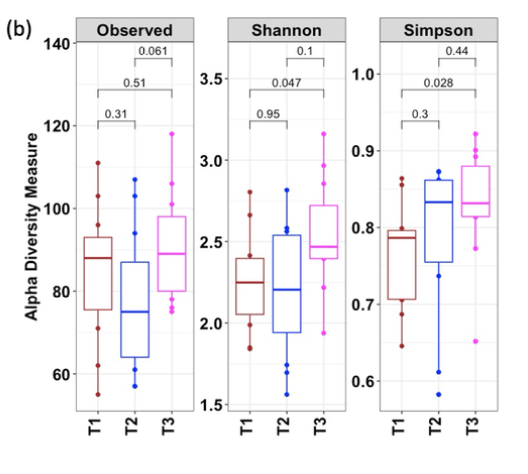
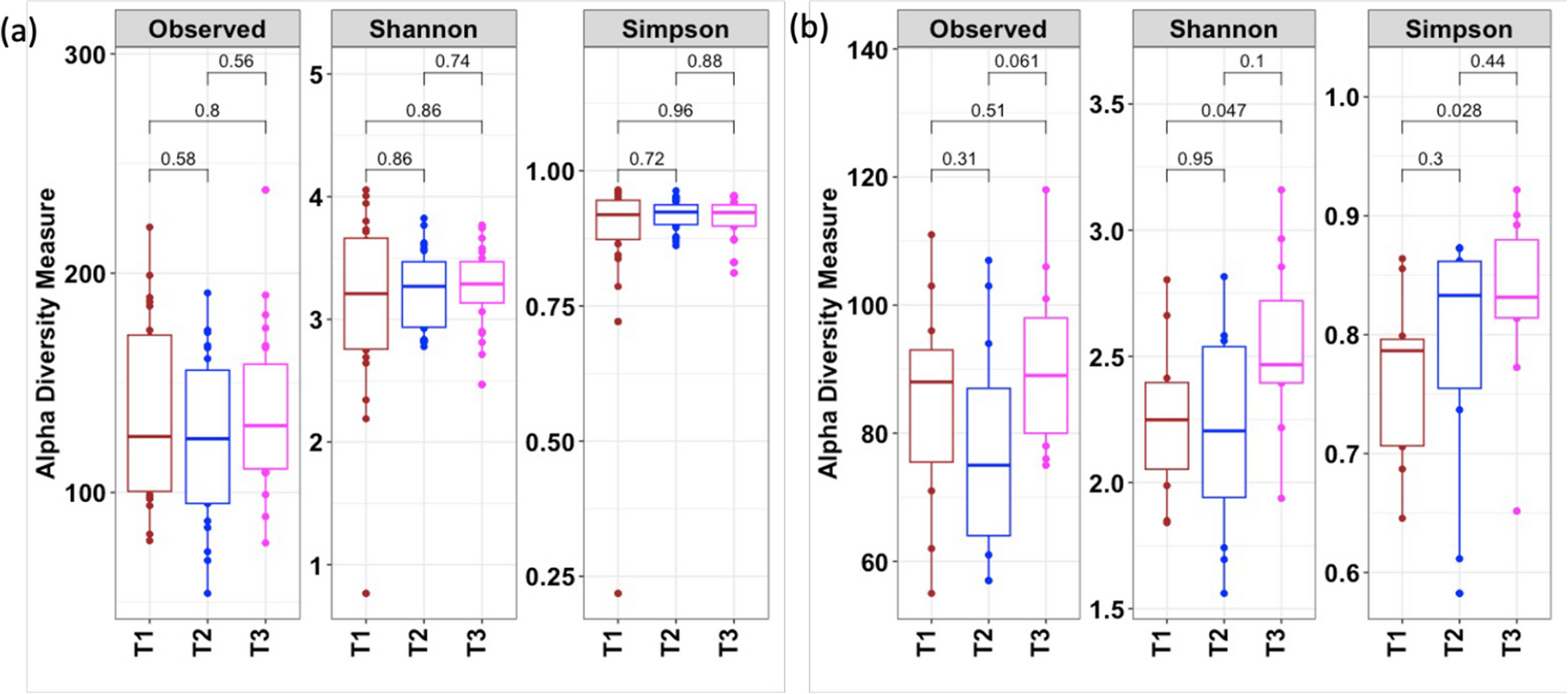
Alpha diversity measures of the fecal and oral microbiome. Timepoint variations in
the alpha diversity measures of (a) fecal and (b) saliva samples. Pairwise-Wilcox test was
performed to assess the significant difference in the alpha diversity parameters over time
What surprised us most was how quickly significant changes appeared. Within just three days—a mere matter of hours of combined practices—we observed clear, statistically significant signatures of microbial shifts in both oral and gut samples. As researchers and practitioners, we were amazed that these biological changes manifested so rapidly, rather than requiring weeks or months of practice.
The data revealed significant increases in beneficial bacteria associated with anti-inflammatory properties and improved metabolic health. Particularly noteworthy was the enrichment of Faecalibacterium in the gut microbiome, which is known for its anti-inflammatory properties and production of butyrate, a short-chain fatty acid that supports gut barrier function. In the oral microbiome, we observed increases in genera like Streptococcus and Haemophilus, which have been associated with oral health when in proper balance. Most noteworthy Corynebacterium, Rothia, and Neisseria, also shifted which are known to promote cardiovascular and metabolic health through nitric oxide signaling molecules.
Another unexpected finding was the fascinating linkages between oral and gut microbiome signatures. Our data suggested benefits for the gut-brain axis, as well as potential connections between oral and heart health. Network analysis revealed coordinated changes between specific oral and gut bacteria, suggesting a systemic response to the Arhatic Yoga practices that could potentially bring profound changes to core human functions in both brain and heart, key determinants of health and longevity.
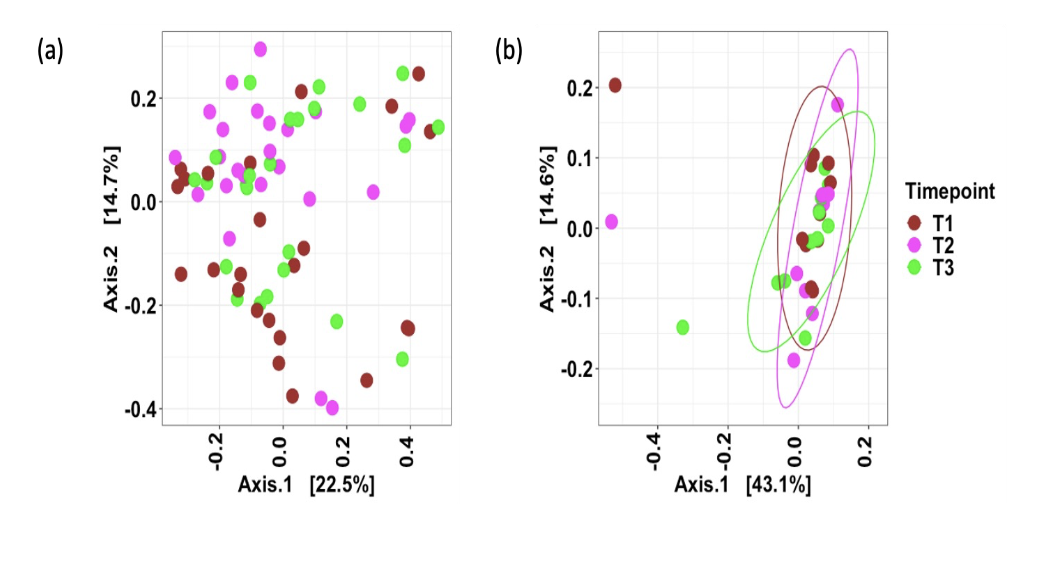
Changes in microbiome profile of fecal and saliva samples over time. Principal
coordinate axis (PCoA) ordination plot based on a Bray-Curtis dissimilarity matrix on
microbiome profile of fecal (a) and oral (b) samples with time.
Broader Implications
This study offers several valuable insights. First, it demonstrates that even beginning practitioners can experience tangible benefits within a remarkably short timeframe. While experienced practitioners may perceive deeper emotional and mental benefits, newcomers can observe physical and physiological changes almost immediately. The practices performed during the retreat included specific meditation techniques, breathing exercises (pranayama), and gentle physical movements, all conducted within a structured daily routine. One limitation of this study was that the lifestyle effects of diet and exercise could not be separated, as Arhatic Yoga involves a combination of these factors.
Second, our work establishes microbiomes as reliable markers for both short-term and long-term studies of meditation and spiritual practices. This opens doors for more logistically manageable research designs that can further explore the scientific basis of yoga and other spiritual practices. The rapid changes we observed suggest that short-duration studies involving microbiome profiling could be viable for investigating many mind-body interventions, potentially reducing research costs and participant burden.
Third, we found similar microbiome responses across participants with different ethnicities and varying levels of experience with Arhatic Yoga. Whether someone was an experienced practitioner or a beginner, the microbiome profiles we observed during the nine-day period were statistically very similar, suggesting that responses converge toward a common endpoint. This points to possible universal biological mechanisms that transcend individual differences.
Looking forward, this research could help identify beneficial microbes that might be developed into probiotics to enhance the combined effects of spiritual and healthy lifestyle practices on human health. The specific bacterial signatures we identified could potentially serve as biomarkers for wellness or as targets for therapeutic interventions. We're already planning further studies along these lines to deepen our understanding of how ancient wisdom practices transform our biology, including longer-term follow-up and investigation of functional outcomes related to immune function and stress response.
Connecting Ancient Wisdom with Modern Science
This journey from hypothesis to discovery has been both scientifically rewarding and personally inspiring. Our findings bridge ancient wisdom and modern science, demonstrating that practices developed thousands of years ago have measurable, rapid effects on our biology. As we continue to explore these connections, we hope our work encourages both scientific investigation of spiritual practices and informed integration of these practices into healthcare approaches. The microbiome may be just the beginning of understanding how these ancient techniques create profound changes in human physiology, potentially opening new pathways for enhancing health and well-being in our modern world.

Sanjay Swarup, MSc, PhD, is an internationally recognized scientist with over 30 years of expertise in sustainable agriculture and ecosystem restoration, contributing over 150 publications and major international collaborations. He serves as Director of the National University of Singapore Environmental Research Institute and Deputy Research Director at the Singapore Centre of Excellence for Environmental Life Science Engineering. He is Research Director at Pranic Healing Research Institute, an Associate Certified Pranic Healer and Arhatic Yoga practitioner for more than 10 years and active member of the Centre for Inner Studies in Singapore.
Follow the Topic
-
BMC Complementary Medicine and Therapies
An open access journal publishing original peer-reviewed research articles on interventions and resources that complement or replace conventional therapies, with a specific emphasis on research that explores the biological mechanisms of action, efficacy, safety, costs and/or implementation.

Related Collections
With Collections, you can get published faster and increase your visibility.
Complementary medicine for diabetes
BMC Complementary Medicine and Therapies is calling for submissions to our Collection on Complementary medicine for diabetes.
The management of diabetes is an increasingly important field of study, as global prevalence rates continue to rise. In addition to life-saving conventional treatments, complementary therapies have broad potential to contribute to glycemic control, disease management, and patient well-being. The isolation and characterization of bioactive compounds from natural products and traditional medicine also contain vast potential for therapeutic intervention.
This collection seeks to deepen our understanding of the use of complementary medicine, including the use of herbal remedies, traditional dietary practices, and lifestyle strategies, to contribute to the management of diabetes, with the goal of examining the patterns of use and mechanisms of action behind these therapies. Additionally, this collection seeks to evaluate holistic approaches to treatment, addressing not just the physiological but also the emotional and psychological aspects of disease management, as potential complements to standardized therapies to support patient health.
Continued research in this area holds promise for the development of more effective, patient-centered treatment strategies that combine conventional and complementary approaches. As our understanding deepens, we may see innovations in personalized medicine that allow for tailored interventions based on individual preferences and health profiles, ultimately improving diabetes care and prevention strategies.
Topics of interest include, but are not limited to:
- Herbal remedies for blood sugar control
- Naturopathy in diabetes management
- Traditional diet practices for glycemic regulation
- Lifestyle practices for diabetes management
- Diabetes prevention strategies through complementary medicine
- Molecular and cellular mechanisms of complementary therapies for diabetes
- Pharmacokinetics and pharmacodynamics of herbal compounds
- Safety, toxicity, and effects between conventional drugs and complementary therapies
This Collection supports and amplifies research related to SDG 3 (Good Health and Well Being).
All manuscripts submitted to this journal, including those submitted to collections and special issues, are assessed in line with our editorial policies and the journal’s peer-review process. Reviewers and editors are required to declare competing interests and can be excluded from the peer review process if a competing interest exists.
Publishing Model: Open Access
Deadline: Dec 21, 2026
Somatic therapies
BMC Complementary Medicine and Therapies is calling for submissions to our Collection entitled Somatic therapies.
Somatic therapies have emerged as a valuable approach to healing that emphasizes the connection between the body and mind. These therapies include techniques such as somatic experiencing therapy, trauma release exercises, and body awareness practices that aim to address trauma and emotional distress by engaging with the body’s sensations and experiences. By focusing on the body, somatic therapies offer an alternative to traditional talk therapy, enabling individuals to process and release traumatic experiences in a holistic manner.
The topics of interest for this Collection include research on the efficacy of somatic therapies and the underlying neurophysiological mechanisms, as well as the role of somatic therapies in stress reduction, trauma healing, chronic pain management, and nervous system regulation. The Collection also aims to examine how somatic therapies can support individuals with conditions such as PTSD, anxiety, musculoskeletal disorders, and neurological impairments.
Looking ahead, continued research in somatic therapies could lead to further refinement of therapeutic techniques, greater integration into conventional healthcare settings, and more comprehensive training for practitioners. As we deepen our understanding of the mechanisms behind somatic therapies, we may uncover innovative approaches to address trauma, ultimately transforming how we engage with mental health care.
All manuscripts submitted to this journal, including those submitted to collections and special issues, are assessed in line with our editorial policies and the journal’s peer-review process. Reviewers and editors are required to declare competing interests and can be excluded from the peer review process if a competing interest exists.
Publishing Model: Open Access
Deadline: Nov 12, 2026


