Distinct contributions of suspended and sinking prokaryotes to mesopelagic carbon budget
Published in Earth & Environment






1. Exploring the Twilight Zone
Between the sunlit surface and the abyssal dark lies the mesopelagic zone - a vast, dimly lit layer stretching from 100 to 1000 meters deep. Often called the ocean’s "twilight zone", this layer is far from lifeless. While organic matter rains down from above, microorganisms here also produce new carbon in the dark, converting inorganic carbon into organic matter without sunlight. This process, dark carbon fixation, challenges the traditional view that carbon production in the ocean is confined to the sunlit surface. How much this hidden production contributes to the ocean’s carbon budget, and how it varies across regions, remains largely unknown.
Most studies of ocean carbon cycling have focused on surface productivity or deep-sea carbon storage. Yet the mesopelagic zone is where these two worlds intersect - and where much of the carbon budget is reshaped. The transformation of sinking organic matter and the production of new organic carbon in the dark are carried out by prokaryotic communities both directly attached to sinking particles and suspended in the surrounding water column. Together, these two microbial compartments form a tightly connected consortium, but their respective contributions to carbon consumption and carbon production remain poorly quantified. As a result, both dark carbon fixation and prokaryotic respiration are still largely missing from global carbon models.
Ocean dynamics add another layer of complexity. Mesoscale features such as eddies - large rotating water masses spanning tens to hundreds of kilometers - modulate nutrients and biological activity at the surface. Whether they also shape microbial metabolism in the twilight zone has been largely unexplored. Our study set out to link physical heterogeneity with microbial activity to better understand carbon production and transformation in this key ocean layer.
2. At sea with the APERO cruise
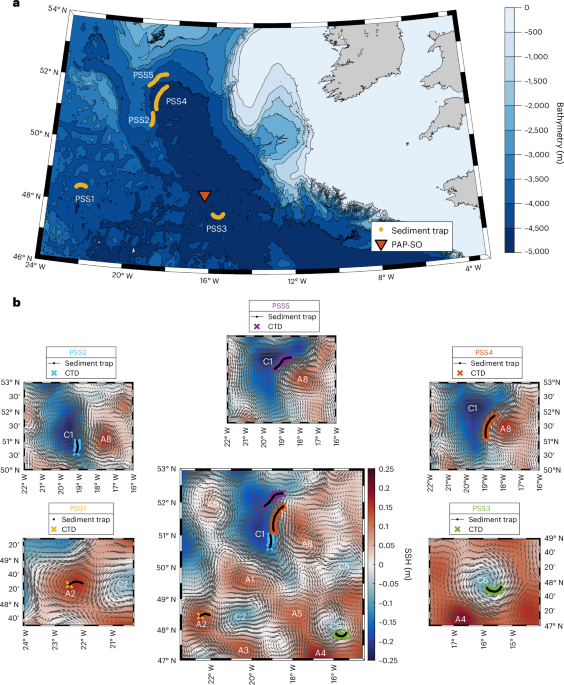
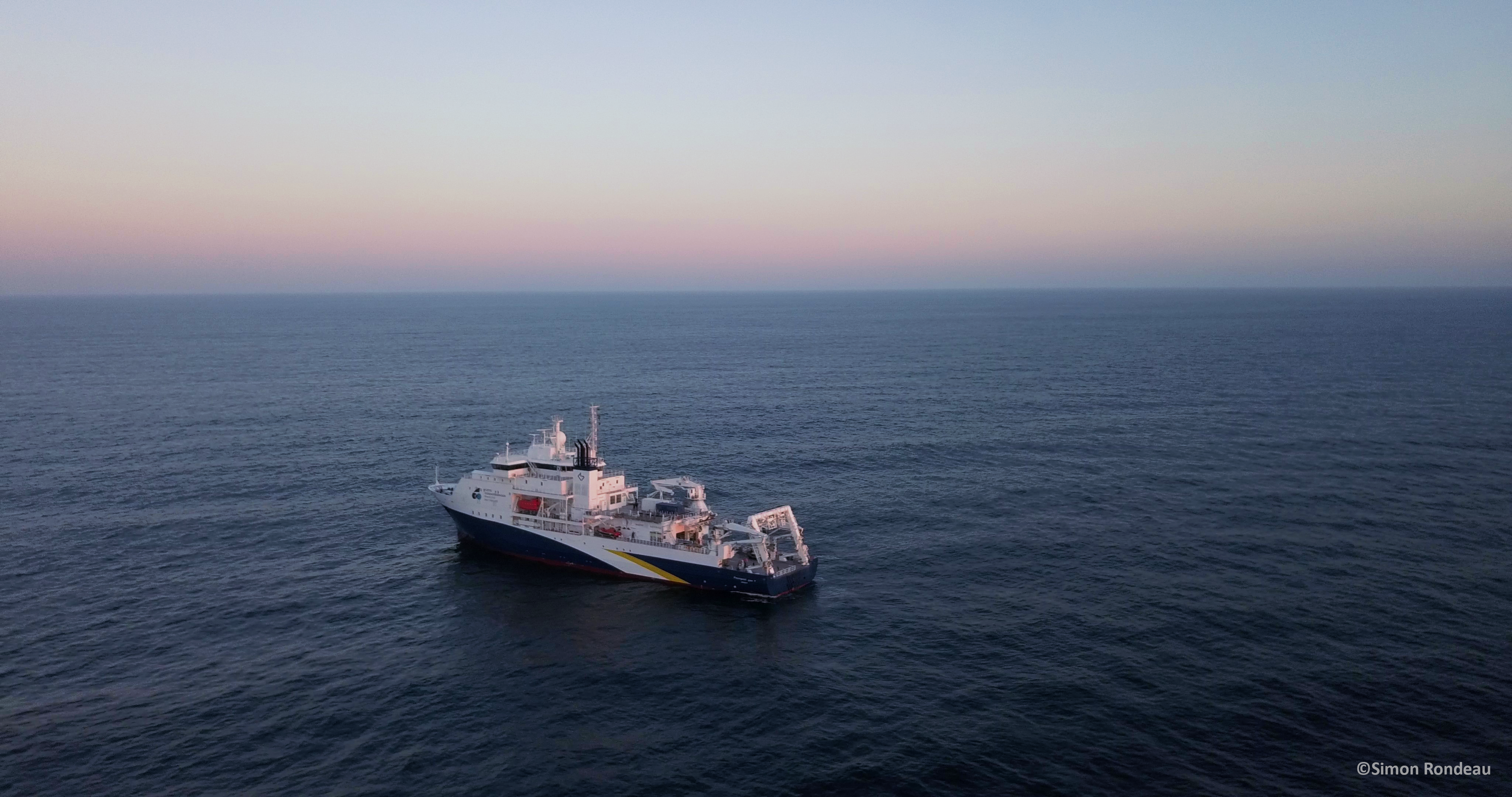
To unravel these mysteries, we launched the APERO cruise (Assessing marine biogenic matter Production, Export, and Remineralization: from the surface to the dark Ocean) in the Northeast Atlantic, near the Porcupine Abyssal Plain observatory. Over 45 days, two research vessels - the R/V Le Pourquoi Pas? and the R/V Le Thalassa - worked in tandem, the R/V Le Pourquoi Pas? sampled five contrasting stations influenced by cyclonic and anticyclonic eddies while the R/V Le Thalassa carried out a regional survey around Le Pourquoi Pas?.
Methodological Innovation
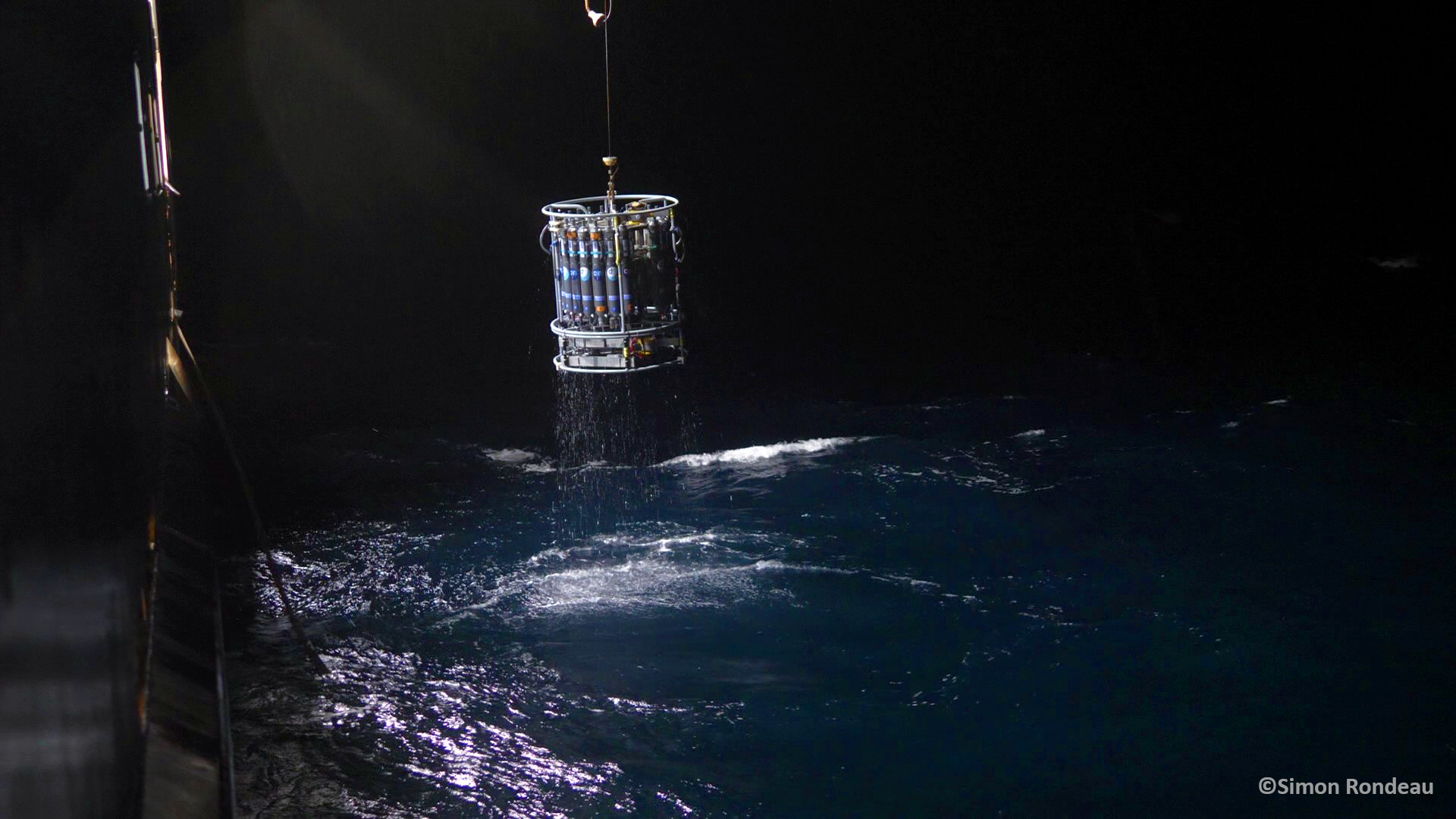
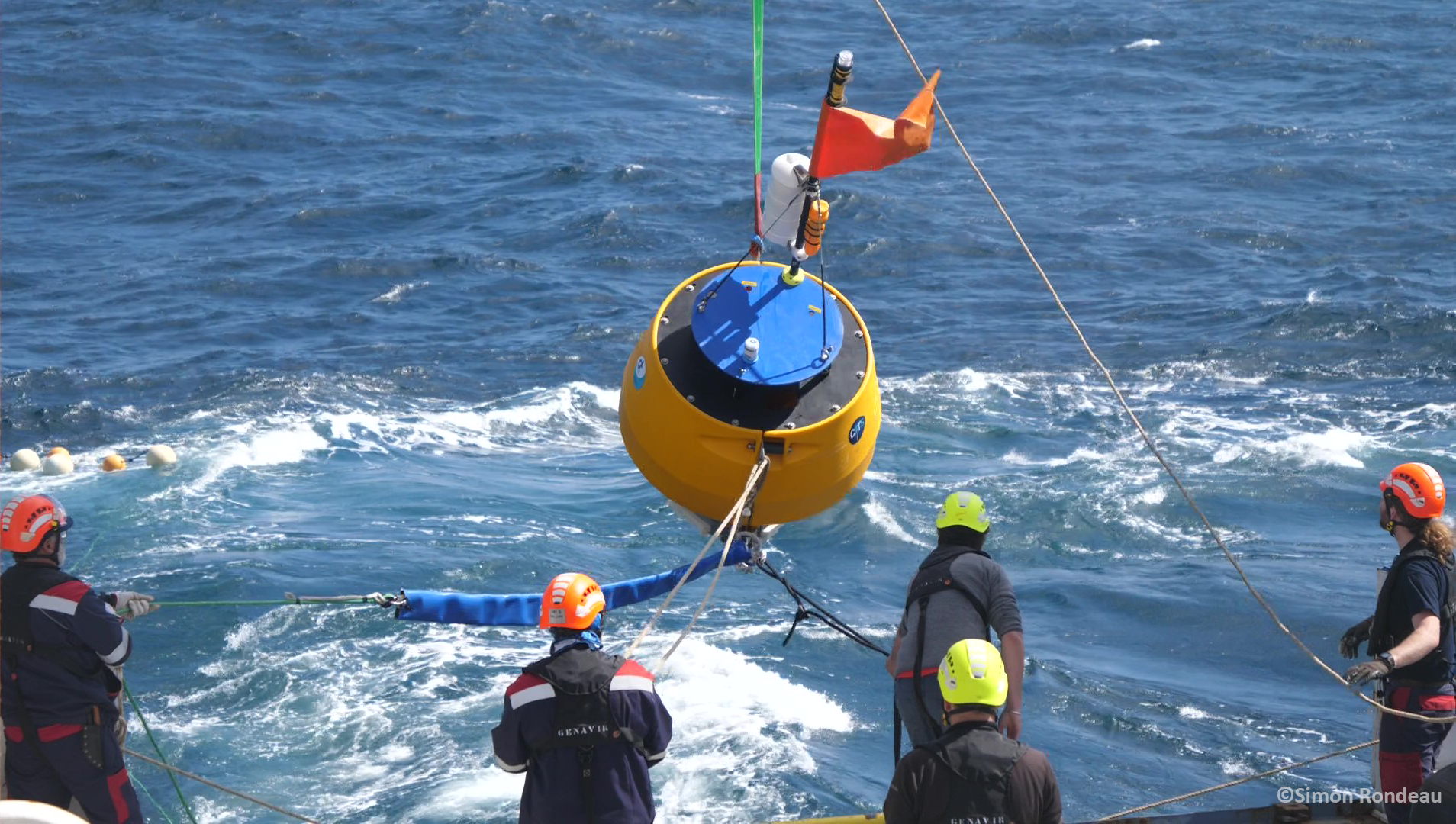
Sampling the mesopelagic zone is a logistical challenge. At each station, we deployed drifting sediment traps at ten depths (50-1000 meters) to collect sinking particles over four days. Some traps measured particulate organic carbon fluxes, while others preserved living prokaryotes attached to particles. Meanwhile, CTD rosettes allowed us to sample seawater for dissolved organic matter, nutrients, and suspended microbes. We combined isotopic tracer incubations (14C-bicarbonate and ³H-leucine) with molecular analyses (qPCR) and single-cell imaging (nanoSIMS). This allowed us to quantify microbial activity and metabolic potential in both particle-attached and free-living prokaryotes - a first in mesopelagic research.
A Human Endeavor
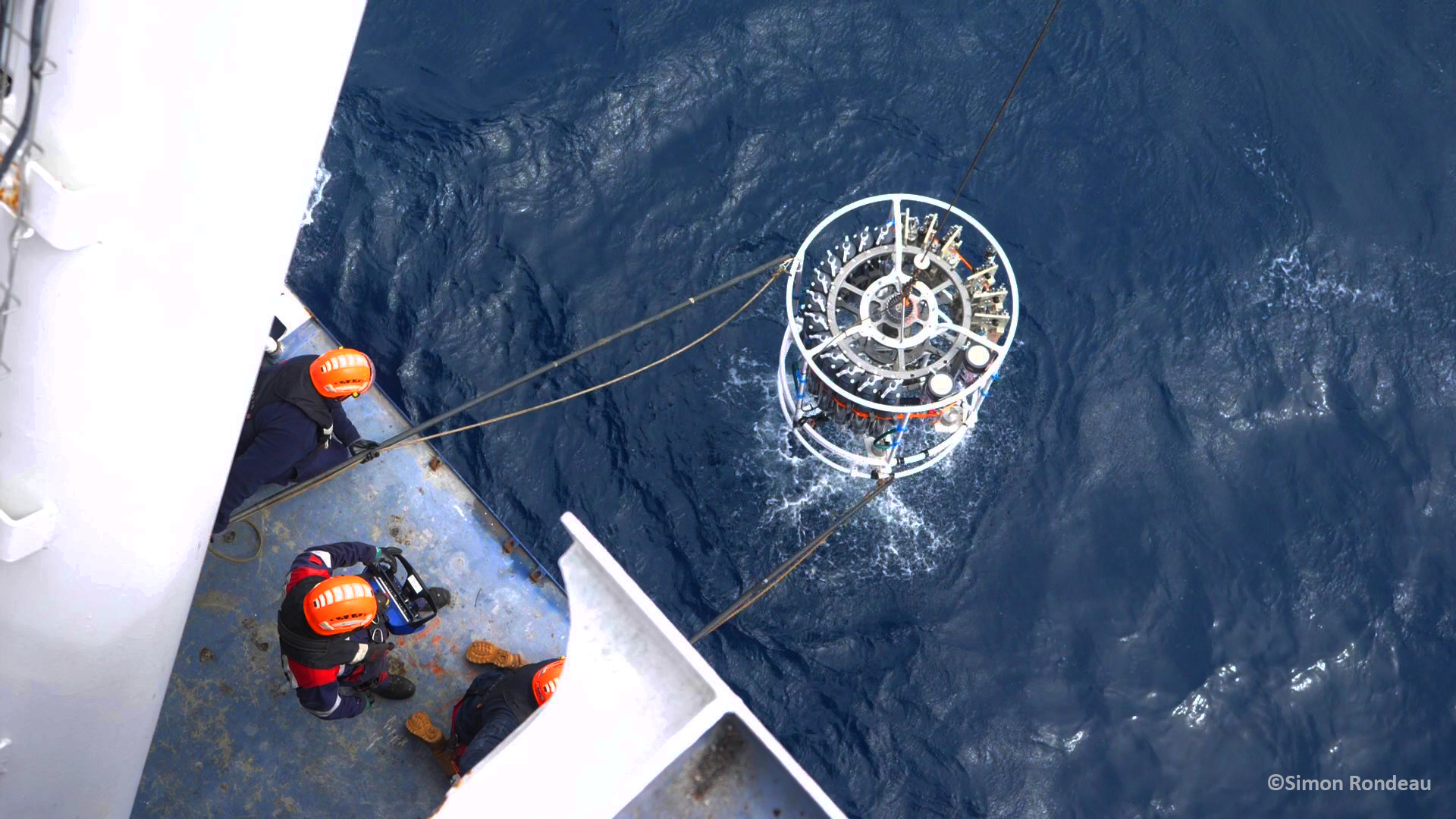
Deploying and recovering instruments from great depths requires precision and coordination; the skill and experience of the seamen were essential for safely handling these complex devices and ensuring the success of the sampling campaign. Life at sea is full of surprises. Near the eddy fronts, strong currents nearly swept away one of our 1km-long mooring lines. After a tense recovery effort - with scientists, technicians, and crew working together - we managed to secure it just in time. The data from that trap later proved essential, revealing how eddies drive carbon fixation in the ocean’s twilight zone.
3. Uncovering microbial carbon in the Twilight Zone
By separating sinking particle-attached and suspended microbial fractions, we were able to quantify their distinct contributions to the mesopelagic carbon budget. Our measurements revealed that under eddy fronts, sinking particle-attached prokaryotes can contribute up to 21% of prokaryotic carbon demand, whereas within cyclonic eddies, dark carbon fixation by suspended prokaryotes can account for up to half of the carbon input at these depths. This highlights the importance of considering sinking particle-attached and suspended microbes separately, as their respective metabolic roles differ substantially depending on local conditions.
Why It Matters
These results challenge the assumption of uniformity in mesopelagic carbon cycling. Integrating eddy-driven microbial processes into climate models could refine predictions of oceanic CO₂ sequestration - a critical step as our planet warms.
4. Looking Ahead
Our findings highlight the need for sustained, interdisciplinary fieldwork to reduce uncertainties in ocean carbon budgets. The APERO dataset, now openly available, offers a foundation for future studies on microbial carbon cycling in the twilight zone.
As climate change alters ocean currents and chemistry, understanding these processes becomes ever more urgent, before we attempt to engineer them. We hope our work inspires further exploration to deepen our knowledge of ocean processes.
APERO (Assessing marine biogenic matter Production, Export and Remineralization : from the surface to the dark Ocean) is a four year project focusing on the biological carbon pump (export of surface production of biogenic carbon and fate in the water column between 100 and 1000m). APERO aims at reducing the gap between the quantity of organic carbon produced by photosynthesis transferred to the deep ocean and the carbon demand in the water column.

OceanICU is a five year project that seeks to gain a new understanding of the biological carbon pump and its processes in order to provide fundamental knowledge and tools to help policy makers, regulators and Ocean industry-fishing and mining, along with the wider blue economy - manage and understand the impact of their actions on Ocean carbon. This will ultimately lead to a better approach for addressing climate change in alignment with the EU Green Deal to reduce the net emissions of greenhouse gases to Zero by 2050.
Follow the Topic
-
Nature Geoscience
A monthly multi-disciplinary journal aimed at bringing together top-quality research across the entire spectrum of the Earth Sciences along with relevant work in related areas.





Please sign in or register for FREE
If you are a registered user on Research Communities by Springer Nature, please sign in