Flavors of wildfire preconditions
Published in Earth & Environment




Wildfires are diverse
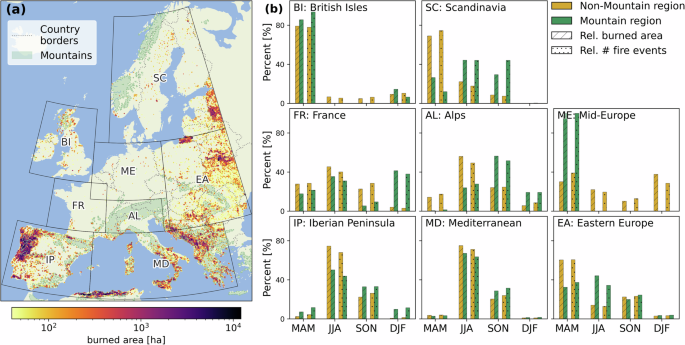
Wildfires in Europe occur on vastly different scales in both intensity and size. In southern and central Europe wildfires rage in summer and fall, while in northern and eastern Europe, spring marks the peak fire season.
Because wildfire activity varies so widely across Europe, we assume that their preconditions are equally diverse. Yet, common compound indices like the Canadian Fire Weather Index (FWI) simplify how vegetation and soil moisture affect fuel availability and mask which individual meteorological factors truly drive fire weather. In our study, we deliberately set aside the FWI to understand what specific combinations of preconditions favor wildfires.
Extracting flavors of wildfire preconditions
Different combinations of preconditions lead to different flavours in wildfires. To understand these variations, we combined high resolution satellite observations for fire and vegetation with meteorological and land-surface reanalysis data. For each of the almost 90,000 recorded wildfires between 2001 and 2020, we examined the conditions on the day of ignition and compared them to days without wildfires burning, using seven key metrics:
- Maximum Temperature
- Vapor pressure deficit (VPD) - a measure of atmospheric dryness
- Wind speed
- Gross primary production (GPP) - a measure of vegetation productivity and fuel
- Three-month drought index (SPEI-3M)
- Soil moisture
- Snow depth
Dominance of dryness
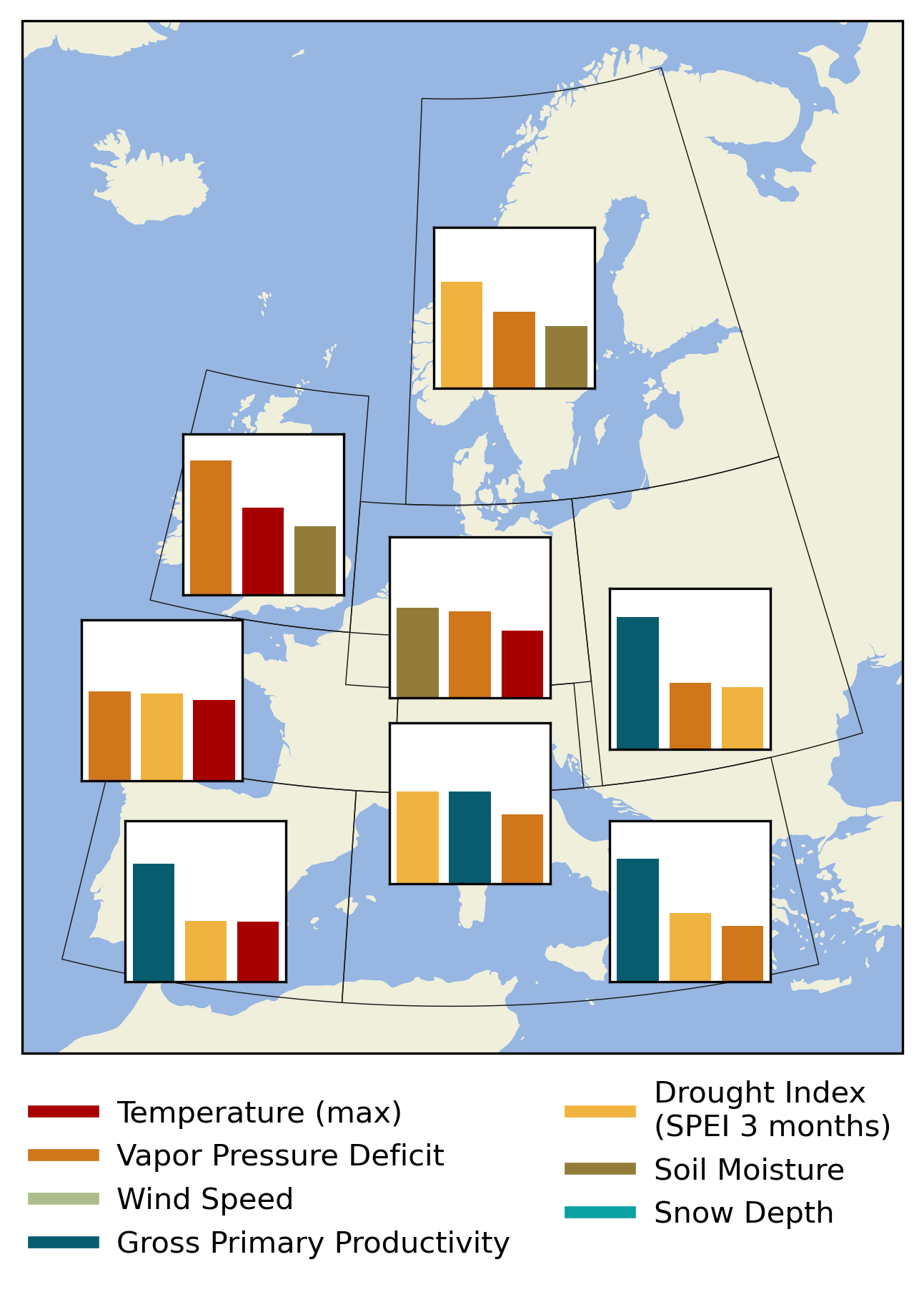
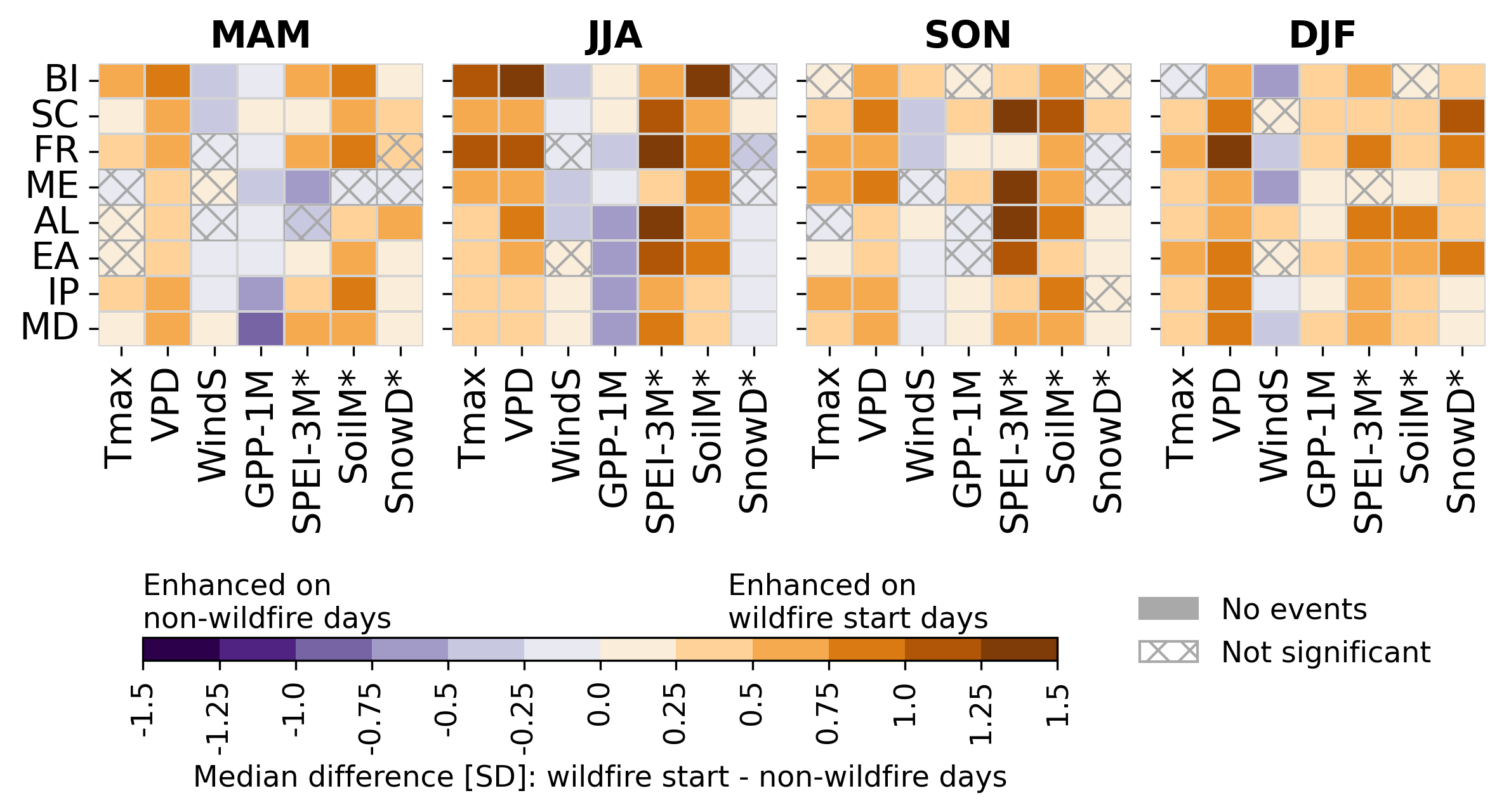
Our results challenge the common assumption that it needs to be unusually hot for wildfires to occur. Instead, we find that persistent drought conditions (negative SPEI-3M) and atmospheric dryness (high VPD) are the most important drivers of wildfires using random forest models (see Figure 1). Temperatures are still higher than usual on wildfire ignition days in comparison to non-wildfire days, but drought anomalies are much stronger pronounced than temperature anomalies (see Figure 2).
Seasonal variations
On wildfire days, nearly all variables shift towards conditions that promote fire: It is hotter, drier and vegetation productivity is altered (see Figure 2). However, gross primary productivity (GPP) anomalies reveal distinct seasonal patterns:
- In spring and summer, GPP is lower on wildfire days, indicating vegetation stress and drying.
- In autumn and winter, GPP is higher on wildfire days, suggesting greater fuel availability in comparison to non-wildfire conditions.
This seasonal contrast highlights the dynamic relationship between fuel conditions and wildfire. During warm seasons, active vegetation becomes stressed and dries into flammable fuel under prolonged drought conditions. During cold seasons, accumulated but inactive biomass from previous seasons provides readily available fuel waiting to burn.
Wildfire preconditions cook slow
Wildfire preconditions build up gradually, and their cooking times vary as much as their compositions. Our “time of precondition emergence” method measures this build up by identifying how long before a wildfire event individual variables begin to deviate from normal seasonal conditions.
In southern and central Europe, drought and atmospheric dryness often persist for months before the wildfires occur. In northern Europe, by contrast, preconditions emerge within just a few weeks, showing that shorter but more intense anomalies are enough to trigger wildfires.
Why differences matter
Our findings show that wildfires in Europe are not bound to a single region or season. Given the right mix of dryness, fuel, and weather, they occur year-round from Mediterranean to Scandinavian forests. The growing, cross-regional wildfire hazard forces us to rethink ecosystem resilience, public safety, and the limits of adaptation under climate change.
Understanding the different flavors of wildfire preconditions and knowing for how long they build up is key to anticipating and mitigating future risk. By pinpointing when and where preconditions emerge, we move closer to predicting and potentially preventing the moment ignition becomes inevitable.
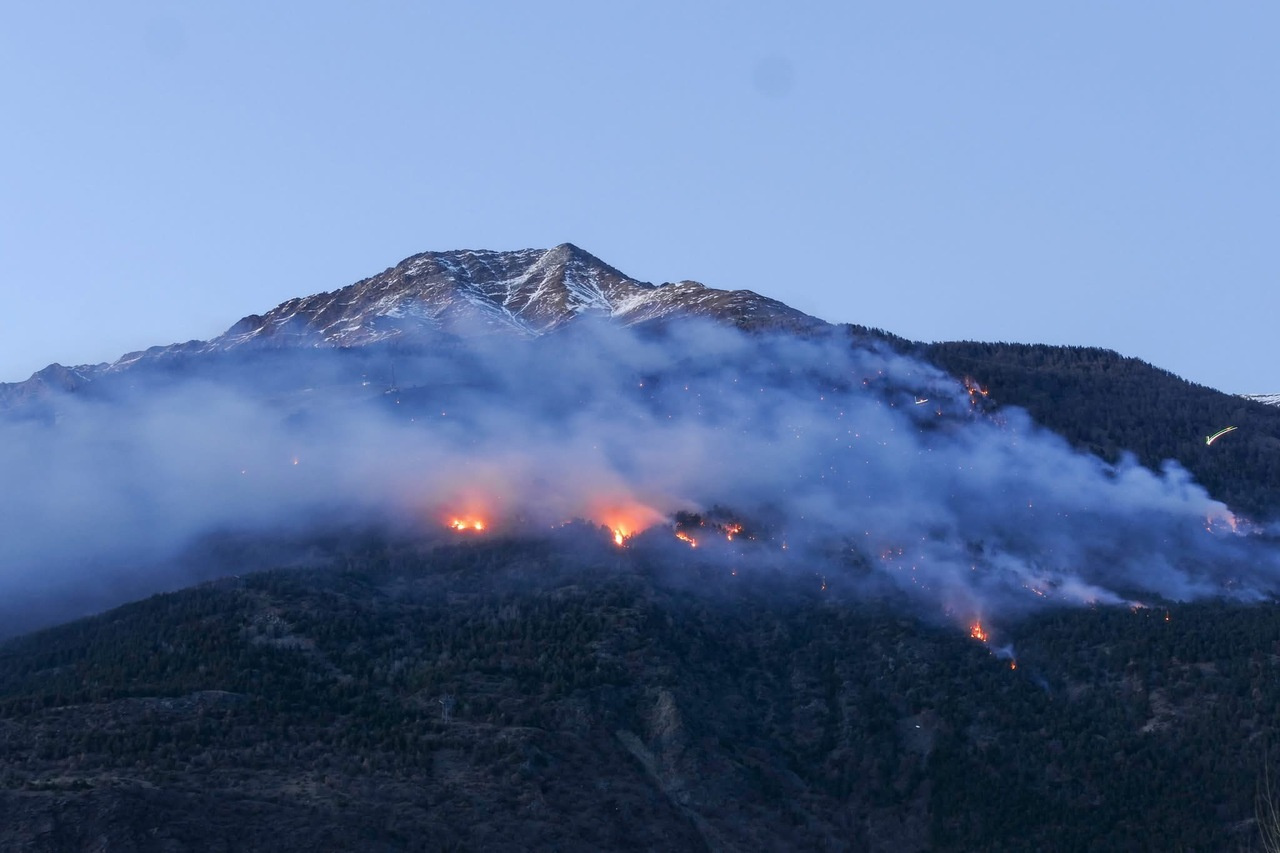
Poster picture credits: LFV Südtirol, Forest Fire in Latsch (06.03.2025)

Julia Miller is a PhD candidate at the WSL Institute for Snow and Avalanche Research SLF and ETH Zurich in Switzerland. She works on understanding preconditions and drivers of wildfire extremes in Europe, using satellite observations and climate model data. Her goal is to disentangle the compounding drivers of wildfires and assess how climate change will impact them.
Follow the Topic
-
Communications Earth & Environment

An open access journal from Nature Portfolio that publishes high-quality research, reviews and commentary in the Earth, environmental and planetary sciences.
Related Collections
With Collections, you can get published faster and increase your visibility.
Archaeology & Environment
Publishing Model: Hybrid
Deadline: Mar 31, 2026
Drought
Publishing Model: Hybrid
Deadline: Mar 31, 2026

Please sign in or register for FREE
If you are a registered user on Research Communities by Springer Nature, please sign in