How Twitter Revealed Tehran’s Emotional Landscape During the Pandemic
Published in Social Sciences and Earth & Environment
Explore the Research
Redirecting
Introduction
The COVID-19 pandemic didn’t just disrupt our physical lives—it also reshaped our digital emotions. In my recent study published in Cities, co-authored with Mahsa Najarsadeghi, we explored how Tehran’s residents expressed their feelings on Twitter during the pandemic’s peak (March–September 2020). Using artificial intelligence and text mining, we uncovered patterns of urban emotions that could redefine how cities plan for crises.
Key Findings
-
Four Waves of Emotional Reactions:
-
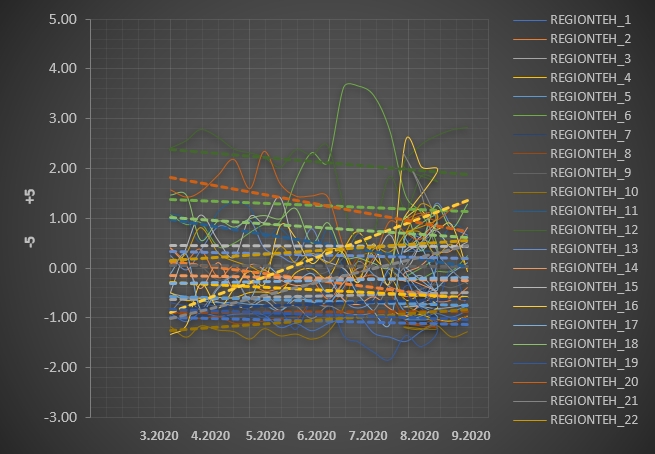
The onset of COVID-19 triggered a dominant negative emotional wave across Tehran, followed by three smaller, cross-sectional reactions. As the pandemic’s peak declined, so did the intensity of these emotions.
-
Negative sentiments (e.g., fear, sadness) spread faster and lasted longer than positive ones, especially through retweets.
-
-
District-Level Insights:
-
Affluent areas (e.g., District 1) showed sustained negative emotions, while less privileged districts (e.g., District 11) exhibited resilience, briefly reverting to positivity.
-
Districts 6, 12, 16, and 21 had the highest tweet volumes, reflecting heightened engagement during crises.
-
-
AI as an Urban Planning Tool:
-
We used Latent Dirichlet Allocation (LDA) to classify emotions from tweets, mapping keywords like “lockdown” or “hope” to scores (−5 to +5).
-
The Geographically Weighted Regression (GWR) model confirmed that retweets amplified negative emotions spatially (p < 0.05).
-
Why This Matters
-
Hidden Urban Layers: Social media exposes a city’s “emotional undercurrents,” helping planners address psychological impacts during disasters.
-
Global Relevance: Our method is scalable for developing countries lacking traditional data infrastructure.
Challenges & Future Work
While Twitter data offers real-time insights, biases (e.g., demographic skew) and algorithmic limitations remain. Future studies could integrate multi-platform data or focus on post-pandemic recovery.
Conclusion
Tehran’s Twitter activity during COVID-19 revealed a city grappling with fear but also pockets of resilience. By treating social media as a planning tool, we can design more emotionally intelligent cities—ones that listen to their citizens, not just traffic flows.
Read the full study: Cities, 2022
#UrbanPlanning #SocialMediaAnalysis #COVID19 #Tehran #AI
What emotions did your city express during the pandemic? Share your thoughts below!
Follow our research on Twitter | LinkedIn.