Stress, Plasticity and Psychedelics: What a Primate Brain Can Teach Us
Published in Neuroscience and General & Internal Medicine
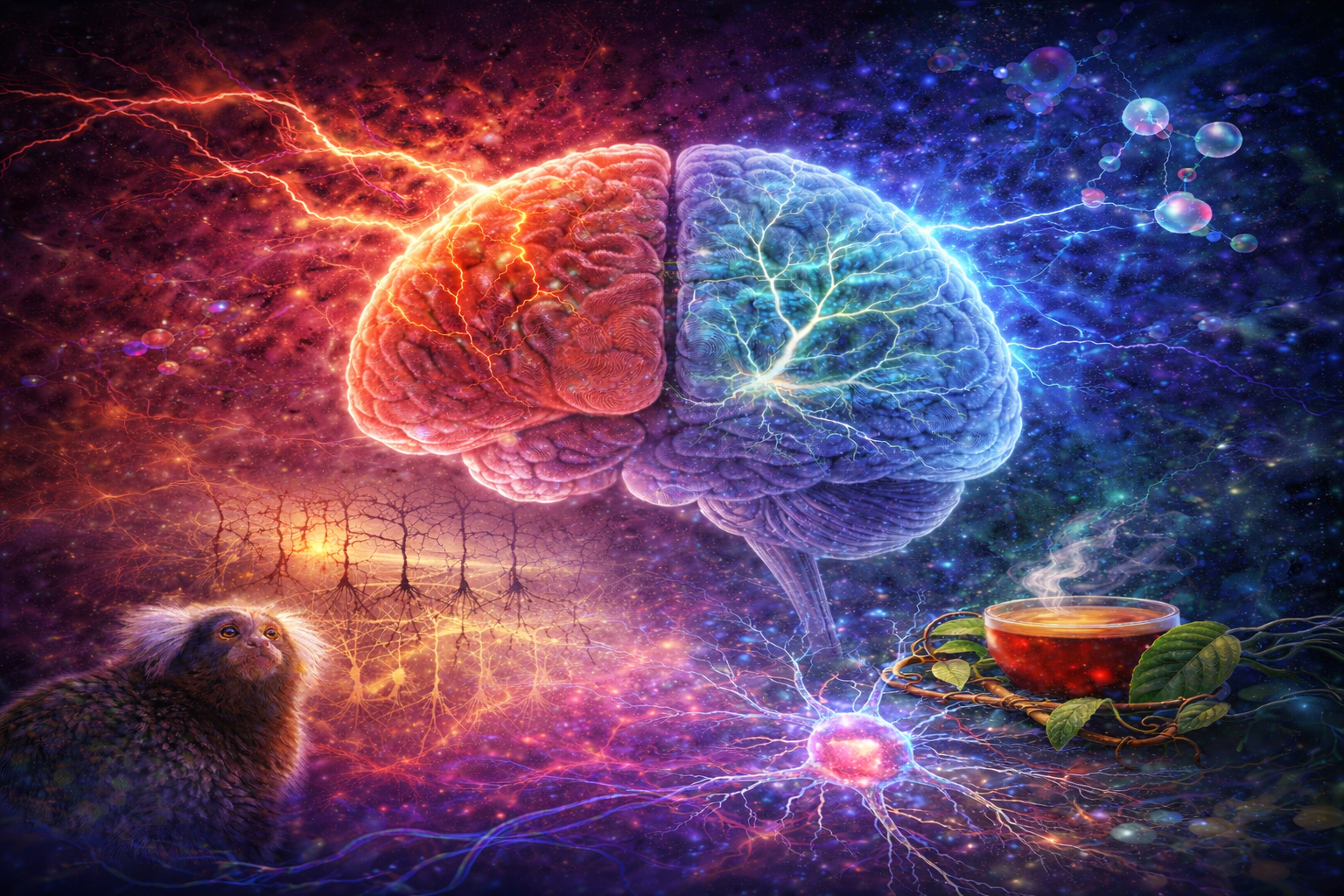


Our study was not designed overnight. It represents the culmination of a research trajectory that began nearly four years ago within a different research group. At that time, juvenile common marmosets were exposed to chronic social stress as part of a translational model developed to mimic behavioral and physiological features of human depression. This model reproduces not only behavioral alterations but also hormonal changes that closely resemble depressive symptoms in humans.

The common marmoset (Callithrix jacchus) is a non-human primate that is phylogenetically closer to humans than traditional rodent models. Its lissencephalic brain, free of gyri and sulci, allows precise identification of cortical layers and facilitates detailed investigation of cortical and subcortical structures. These characteristics make the species particularly valuable for translational neuroanatomical research.
After the behavioral phase of the original project was completed, the animals’ brains became available for further investigation. Rather than allowing this material to remain unused, we recognized an opportunity to explore structural aspects of brain regions potentially affected by chronic stress. The present study emerged from that decision. The brains that once helped us understand behavioral responses under stress became the foundation for detailed neuroanatomical analyses.
In this work, we focused on structural alterations in the somatosensory cortex following chronic stress exposure. Although this region is not traditionally considered a primary target in depression research, growing evidence suggests that sensory processing areas may also undergo structural remodeling under prolonged stress. Investigating these changes broadens our understanding of how stress affects distributed brain networks rather than isolated regions.
An important dimension of this research involves the use of ayahuasca, a traditional Amazonian psychedelic brew that has attracted increasing scientific interest. Ayahuasca contains N,N-dimethyltryptamine (DMT), a serotonergic psychedelic compound, combined with beta-carboline alkaloids that act as monoamine oxidase inhibitors, enabling DMT to become orally active. Classic psychedelics have re-emerged as promising tools in psychiatric research. Unlike conventional antidepressants such as selective serotonin reuptake inhibitors, which often require three to four weeks to produce clinically significant effects, psychedelic compounds have demonstrated rapid antidepressant responses in both clinical and preclinical studies.
Ayahuasca in particular has been associated with fast reductions in depressive symptoms following a single administration in human studies. Previous experimental work, including studies conducted in marmosets, has also reported rapid behavioral effects consistent with antidepressant-like responses. These observations raise important questions about whether psychedelics may influence not only functional brain activity but also structural plasticity.
Our study does not claim to provide definitive answers. It offers preliminary anatomical observations within a primate model in which ayahuasca was administered prior to the full consolidation of stress-induced alterations, allowing us to explore its potential modulatory effects within a preventive framework. By examining structural parameters in a phylogenetically relevant species, we contribute to a growing body of research exploring whether early psychedelic exposure may influence neural plasticity and resilience in the context of stress.
Beyond the specific findings, this work underscores the importance of detailed neuroanatomical investigation in translational psychiatry. Structural brain alterations are central to understanding vulnerability, resilience, and long-term outcomes in neuropsychiatric disorders such as depression. Building precise anatomical knowledge in models that are closer to humans strengthens the bridge between experimental neuroscience and clinical psychiatry.
For future generations of researchers and clinicians, establishing a solid neuroanatomical foundation remains essential. Understanding how chronic stress shapes the developing brain may ultimately inform improved preventive strategies, more targeted therapeutic approaches, and a deeper comprehension of the biological substrates underlying mental health conditions. In this context, careful morphological investigation remains a fundamental pillar of neuroscience and psychiatric research, particularly as it intersects with emerging therapeutic perspectives such as psychedelic-assisted interventions.
Link: https://www.nature.com/articles/s41398-026-03887-w

Follow the Topic
-
Translational Psychiatry
This journal focuses on papers that directly study psychiatric disorders and bring new discovery into clinical practice.

Related Collections
With Collections, you can get published faster and increase your visibility.
Moving Towards Mechanism, Causality and Novel Therapeutic Interventions in Translational Psychiatry: Focus on the Microbiome-Gut-Brain Axis
Publishing Model: Open Access
Deadline: Nov 15, 2026