Unveiling the Hidden Burden of Pertussis in Adults
Published in Chemistry, Biomedical Research, and General & Internal Medicine







The Untold Story of Pertussis in Adults
Pertussis isn’t just a childhood disease. Adults with respiratory conditions like asthma or COPD are particularly vulnerable, yet pertussis often goes undiagnosed. My own experience as a pediatric resident exemplifies this: I endured months of a relentless cough that wasn’t identified as pertussis.
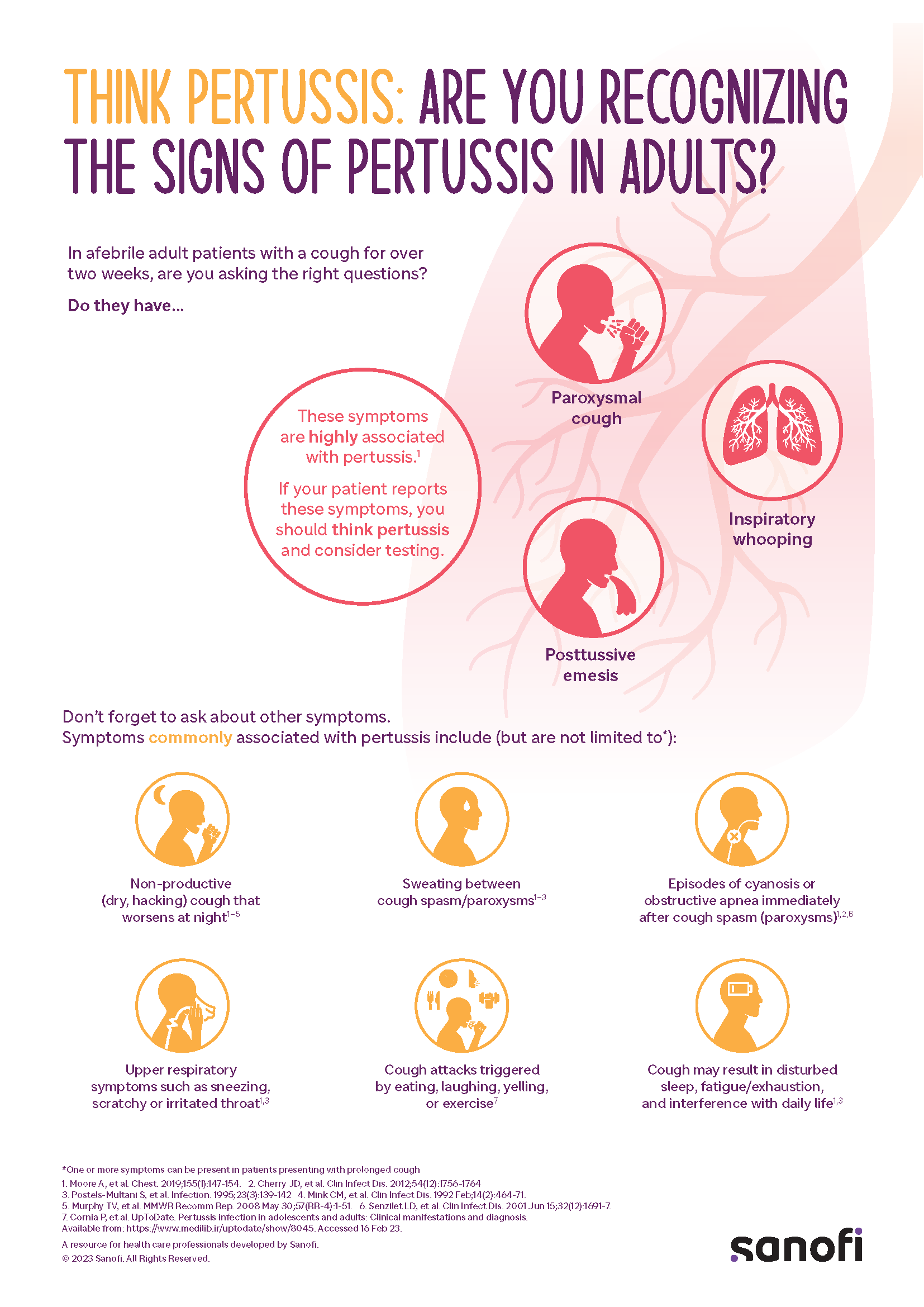
When I began working on pertussis at Sanofi, I quickly realized that most prevention efforts focus on children, especially young infants who are most vulnerable to severe complications. Yet, as a pediatric resident years ago, I experienced firsthand the devastating impact of pertussis in adults—though I didn’t know it at the time.
I vividly recall the ordeal: a relentless, hacking cough that lasted over three months, making sleep impossible and causing me to vomit after coughing fits. The doctors I consulted never considered pertussis as a diagnosis. Instead, I endured a battery of tests, including chest X-rays and arterial blood gases (a procedure I wouldn’t wish on anyone), without any answers. At one point, I was convinced I had contracted PPD negative tuberculosis.
It wasn’t until much later, as I learned more about pertussis in my work, that I realized I had been battling whooping cough all along. This revelation fueled my mission to ensure that pertussis is recognized as a significant health threat—not just for infants, but for people of all ages. Like many adults then and now, I had no idea that pertussis could affect me, and neither did the doctors treating me.
The Motivation Behind the Study
This gap in awareness is why our recently published study on pertussis vaccination in adults felt so personal. We surveyed over 800 physicians across the U.S., France, and Germany to understand their attitudes and practices around adult pertussis vaccination. What we found was disheartening: while physicians acknowledged the risks for certain high-risk groups, they ranked pertussis vaccination for adults as less important than tetanus.
When was the last time anyone saw a case of tetanus?
Overcoming Barriers to Vaccination
Physicians in our study highlighted a range of barriers to vaccination, including patients’ low perception of risk. Many adults simply don’t see themselves as vulnerable to pertussis, even though they’ve likely been vaccinated against tetanus—a disease far less common than pertussis.
Logistical hurdles also create challenges. In some countries, like France, patients must navigate a multi-step process to receive a vaccine, creating delays and missed opportunities. Even in places where access is easier, vaccine fatigue and competing health priorities can still impact uptake.
For healthcare providers, lack of educational tools and reminders can make it harder to integrate pertussis vaccination into routine care. Addressing these barriers is essential to improving vaccination rates and protecting adults from pertussis.
The Path Forward
This study underscores the need for greater awareness and education about pertussis in adults. We must empower physicians to recognize pertussis as a potential diagnosis in adult patients with persistent cough and to prioritize vaccination—not only to protect individuals but also to reduce community transmission.
For me, this isn’t just about data; it’s about ensuring that no one has to endure what I went through. Violently coughing for 100 days is more than a nuisance—it’s a public health issue that deserves our attention.

I am a global medical brand lead at Sanofi, focusing on vaccine strategies for pertussis, polio, and Hib, as well as transversal initiatives like Vaccination in Pregnancy & Beyond. My work centers on advancing vaccine confidence, increasing uptake, and shaping global medical strategy.
As a physician specializing in adolescent medicine and a former academic at the University of Pennsylvania and The Children’s Hospital of Philadelphia, I bring a unique perspective to vaccine development. My passion for public health stems from my clinical and research background, which includes addressing barriers to vaccination and improving health equity.
In addition to leading global vaccine initiatives, I continue to advocate for adolescents as Chair of the Society for Adolescent Health and Medicine’s Vaccination Committee. My devotion to adolescents as a unique patient group—one requiring specialized care and attention—drives much of my work and keeps me focused on their specific healthcare needs.
Outside of work, I enjoy creative pursuits like knitting and photography and am committed to empowering women to lead authentically and confidently.
Follow the Topic
-
BMC Primary Care
Previously known as BMC Family Practice, this is an open access, peer-reviewed journal that considers articles on all aspects of primary health care research.

Related Collections
With Collections, you can get published faster and increase your visibility.
Sleep health and primary care
Sleep health is a critical yet often overlooked aspect of overall well-being, particularly in the context of primary care. Sleep disorders, including insomnia and obstructive sleep apnea, can significantly impact patients' physical and mental health, leading to complications that may complicate primary care management. Sleep issues are becoming increasingly recognized for their chronicity, widespread prevalence, and influence on other chronic conditions. Therefore, understanding the relationship between sleep health and primary care practices is vital. This Collection aims to explore the intersection of sleep health and primary care, shedding light on innovative approaches to assessment and treatment.
Continued exploration in this area could pave the way for groundbreaking advancements in the management of sleep health care within primary care settings. As more research is conducted, we may see innovative approaches to screening and treating sleep disorders that can assist primary care providers in addressing these issues more effectively and efficiently. Future studies may also illuminate the impact of sleep health on chronic disease prevention and management, ultimately leading to a more holistic approach to patient care. By enhancing sleep health awareness among primary care providers, we can promote comprehensive care that acknowledges the crucial role of sleep.
We invite submissions on a range of topics that include, but are not limited to:
- Management of insomnia in primary care
- Management of obstructive sleep apnea in primary care
- The intersection between sleep disturbances and chronic disease
- Integrated behavioral health approaches to the management of sleep disorders
- Screening tools for sleep disorders in primary care
- Implementation of new models of care for sleep disorders
This Collection supports and amplifies research related to SDG 3: Good Health and Well-being.
All manuscripts submitted to this journal, including those submitted to collections and special issues, are assessed in line with our editorial policies and the journal’s peer review process. Reviewers and editors are required to declare competing interests and can be excluded from the peer review process if a competing interest exists.
Publishing Model: Open Access
Deadline: Jan 07, 2027
Ethics and regulation of AI in primary care
The integration of artificial intelligence (AI) into primary care is rapidly transforming healthcare delivery, enabling more personalized, efficient, and effective patient care. However, the ethical and regulatory challenges associated with the deployment of AI technologies in this context are multifaceted and require thorough examination. Issues such as patient privacy, data protection, informed consent, and the potential for algorithmic bias are at the forefront of discussions surrounding AI's role in healthcare. As AI systems increasingly influence clinical decision-making, understanding the ethical frameworks and regulatory requirements governing their use is essential for safeguarding patient rights and ensuring equitable access to healthcare services.
The significance of addressing the ethical and regulatory dimensions of AI in primary care lies in its potential to enhance patient trust and ensure that AI applications are developed and implemented responsibly. Recent advancements in AI have demonstrated its capabilities in improving diagnostic accuracy and streamlining administrative tasks; however, these benefits must be balanced with robust protections for patient data and ethical considerations regarding decision-making. Furthermore, the lack of comprehensive regulations can lead to inconsistencies in AI application and misuse, which could undermine public confidence in these technologies.
In this Collection, we welcome submissions that span a wide array of topics, including but not limited to:
- Ethical considerations in AI applications
- Data protection and patient privacy in AI
- Informed consent processes for AI use
- Regulatory frameworks for AI in primary care
All manuscripts submitted to this journal, including those submitted to collections and special issues, are assessed in line with our editorial policies and the journal’s peer review process. Reviewers and editors are required to declare competing interests and can be excluded from the peer review process if a competing interest exists.
Publishing Model: Open Access
Deadline: Jan 28, 2027