A single-domain bispecific antibody targeting CD1d and the NKT T-cell receptor induces a potent anti-tumor response
Published in Cancer



While anti-tumor activity was noted in several studies results were not consistent and robust enough for broad clinical use. In an effort to generate novel therapeutic tools we generated a panel of lama-derived single domain antibodies (VHHs) specific for CD1d, a monomorphic molecule not only critical for presentation of α-GalCer to type 1 NKT cells but also for the activity of other CD1d-restricted T cell subsets including (protumor) type 2 NKT cells.
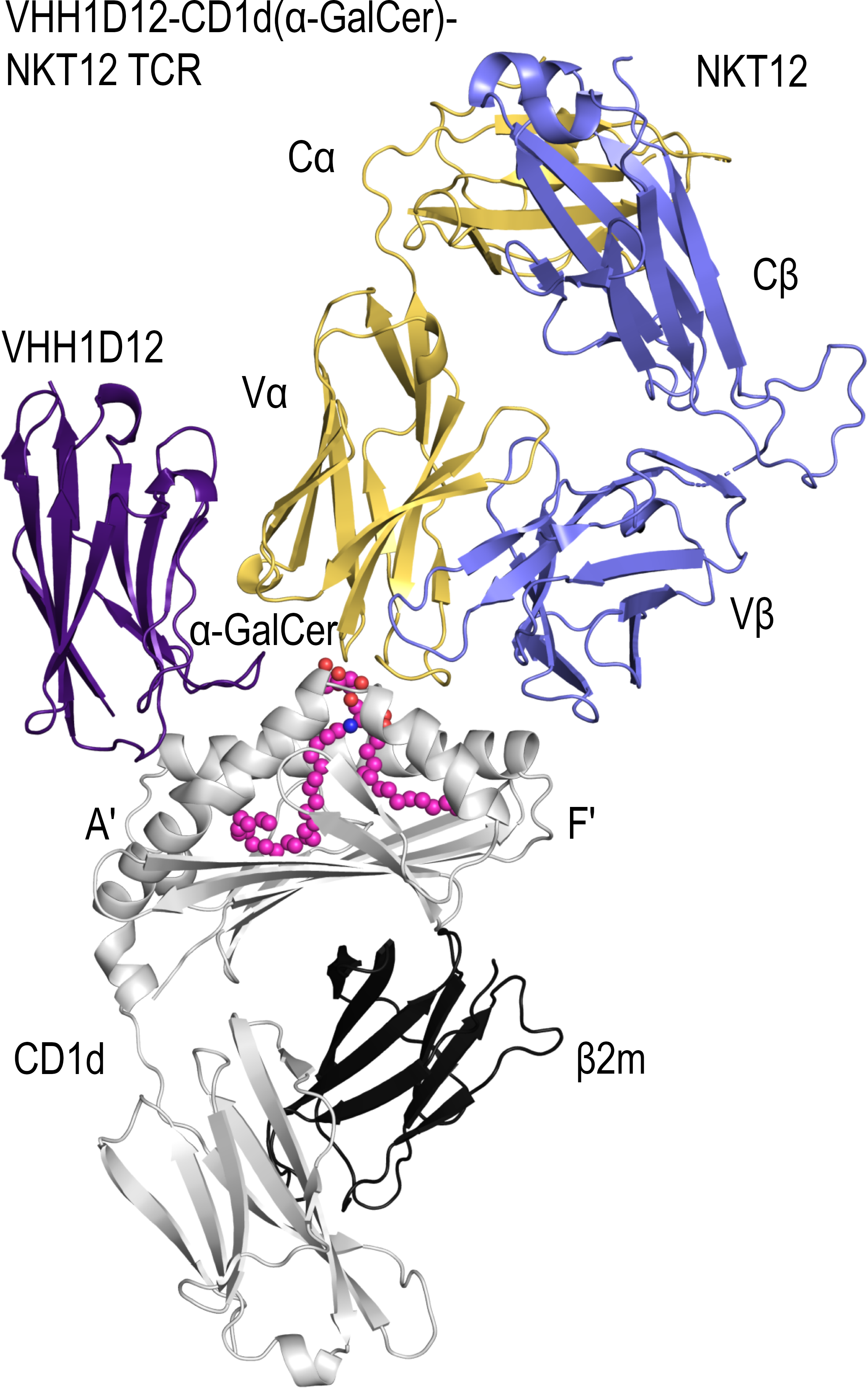
In our recently published paper in Nature Cancer we report that distinct CD1d specific VHHs can selectively block the activity of individual CD1d- restricted T cell subsets and identified VHH1D12 to be particularly unique as it combined blocking of type 2 NKT cell activation with the potent induction of type 1 NKT cell activation, the latter even in the absence of normally required exogenous glycolipid antigens such as α-GalCer. Using crystallography co-first authors Roeland Lameris and Adam Shahine elucidated that VHH1D12 simultaneously contacted CD1d and the type 1 NKT TCR and thereby stabilized this interaction through intrinsic bispecificity (see Figure). VHH1D12 not only outperformed α-GalCer in multiple assays but may also trigger more tumor specific activity as it especially promoted type 1 NKT cell reactivity when CD1d contained (endogenous) low-affinity glycolipid antigens that are common in cancer cells. The unique features of CD1d specific VHHs that we describe have the potential to advance NKT cell based therapies and provide a first example of what may develop into a more broadly applicable novel cancer immunotherapy approach.
Follow the Topic
-
Nature Cancer
This journal aims to provide a unique forum through which the cancer community will learn about the latest, most significant cancer-related advances across the life, physical, applied and social sciences.

Related Collections
With Collections, you can get published faster and increase your visibility.
Cancer Immunometabolism
Publishing Model: Hybrid
Deadline: May 14, 2027
Cancer vaccines in the immunotherapy era
Publishing Model: Hybrid
Deadline: Jan 17, 2027