Entrepreneurs’ Competency, Marketing Innovation, and Enterprise Growth
Published in Business & Management

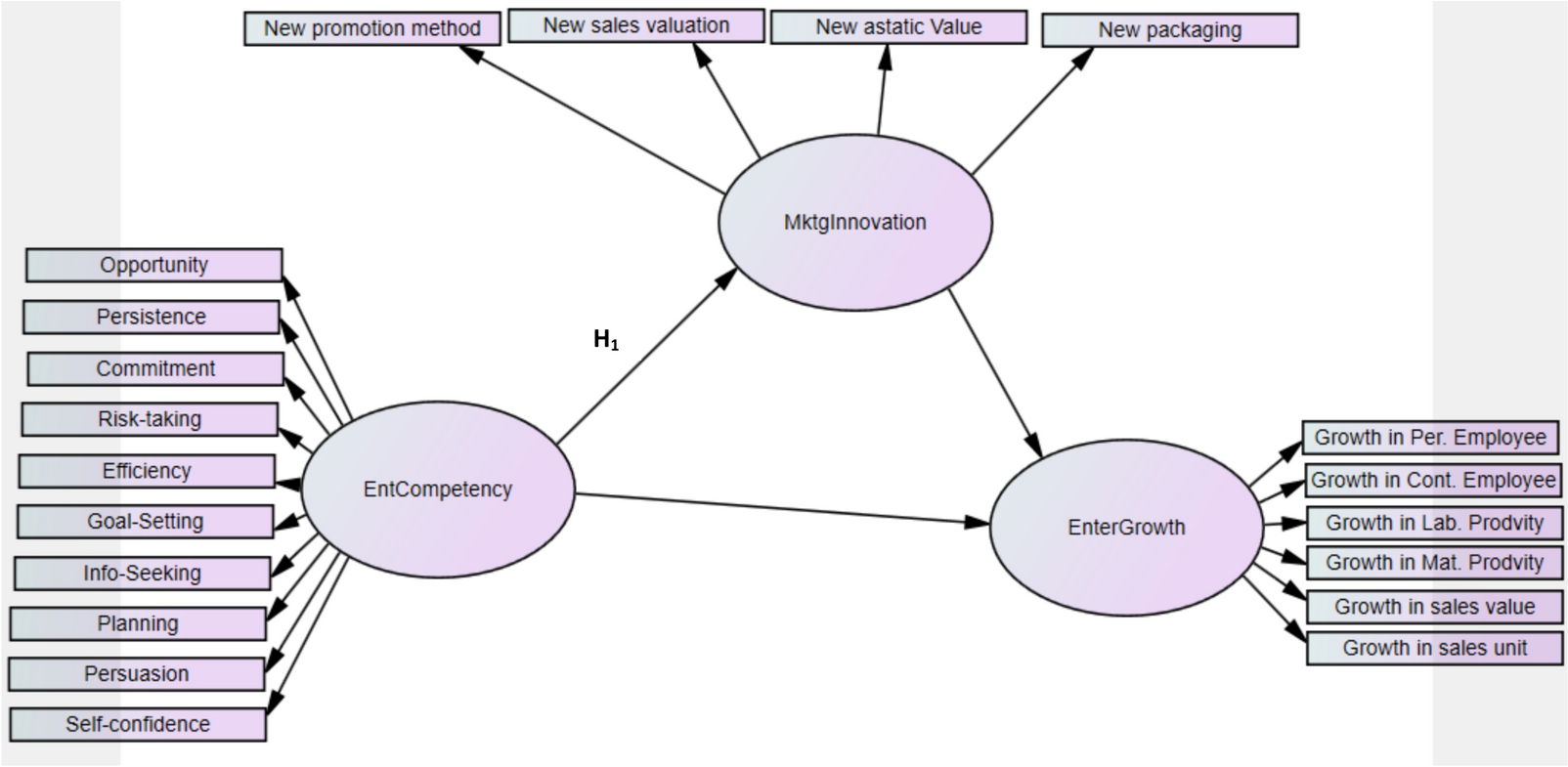
A recent study, "Entrepreneurs' Competency, Marketing Innovation, and Enterprise Growth: Uncovering the Mediating Role of Marketing Innovation," delves into the intricate relationship between entrepreneurial competency, innovation, and MSMEs growth.
Using data from MSMEs managers in Ethiopia, the study revealed that an entrepreneur's competencies directly influence their enterprise's growth trajectory. Furthermore, the study examined the mediating role of marketing innovation in this process. While researchers hypothesized that competency would influence innovative activities, the study found that entrepreneurs were not giving sufficient attention to marketing innovation as a key factor in enhancing their enterprise's performance.
Marketing innovation serves as a bridge between entrepreneurial capability and enterprise performance. It involves applying creative thinking to marketing processes, strategies, and practices. This can include developing new marketing methods or significantly improving existing ones.
The study hypothesized that when entrepreneurs apply their competencies to innovate in marketing, they can unlock new levels of growth for their enterprises. This is because marketing innovation was assumed to lead to better market penetration, higher customer satisfaction, and increased sales and profits.
The study's findings indicate that an entrepreneur's competency significantly contributes to business growth. However, the research also highlights that the influence of competency on innovation and the impact of innovation on business growth did not show significant evidence. This suggests that while competency directly drives business expansion, the role of innovation in this process is not as clear-cut. The limited influence of competency on marketing innovation and the limited impact of marketing innovation itself implies that entrepreneurs may be overlooking the integration of innovative marketing techniques, assuming their current products will continue to sell. This mindset may be myopic and could potentially expose their business to future risks. For entrepreneurs on the ground, this means focusing on honing their entrepreneurial skills is commendable and engaging in continuous innovation as their marketing strategies should not be ignored. It's about creating a culture where innovation is not an afterthought but a fundamental aspect of the marketing approach to serve the purpose of enterprises in the long run.
In conclusion, the research emphasizes the critical role of entrepreneurs' competencies in supporting enterprise growth. It also serves as a call to action for entrepreneurs to incorporate innovation into every aspect of their business operations if they aim to scale new heights in today's competitive market landscape.
Follow the Topic
-
Future Business Journal
This is an open access, peer-reviewed journal publishing theoretical and empirical research papers covering the major aspects of management, accounting, economics, management information systems and finance.

Related Collections
With Collections, you can get published faster and increase your visibility.
Agentic AI in Marketing: Delegated Consumer Agency, Brand Stewardship, Algorithmic Contestability, and Sustainable Market Value
Generative artificial intelligence is progressing beyond content generation and decision support toward increasingly agentic systems. These systems can interpret goals, decompose tasks, evaluate alternatives, coordinate actions, negotiate conditions, and execute authorized marketplace decisions with limited human intervention (Bilgihan et al., 2026; Alabed et al., 2024).
In marketing, this transition from recommendation to delegated execution is particularly consequential. Brand-controlled agents may manage targeting, personalization, pricing, customer service, relationship development, and service recovery. Consumer-side agents may search markets, compare offerings, negotiate transactions, and purchase on behalf of individuals (Arya V., 2026; Frank et al., 2025; Raja et al., 2026). These developments are redefining the boundaries between assistance and persuasion, preference fulfilment and commercial steering, delegated agency and autonomy displacement, and human choice and machine-mediated consumption (Song & Shin, 2024; Shahbaznezhad et al., 2021).
This Collection seeks to advance theoretically rigorous and managerially relevant research on generative and agentic AI. Its focus encompasses delegated consumer agency, customer experience, brand stewardship, market exchange, and sustainable market value. Agentic systems may reduce information-processing costs, enhance decision quality, improve marketplace accessibility, strengthen service responsiveness, and enable adaptive customer journeys (Arya, Purohit et al., 2026; Arya, Saraf et al., 2026). However, these systems may also restrict consideration sets, infer preferences without authorization integrity, privilege commercially advantageous alternatives, and intensify behavioural steering. They may further conceal the institutional incentives embedded within automated marketplace decisions (Kuanr et al., 2025; Shahbaznezhad & Rashidirad, 2021).
The central concern is not whether agentic AI is inherently beneficial or harmful. Rather, it concerns when, how, and for whom agentic marketing produces agency augmentation, algorithmic dependence, marketplace manipulation, or value erosion. This Collection encourages research that moves beyond conventional technology-adoption models and generalized trust measures. It seeks deeper analysis of how agentic intermediation redistributes decision rights, informational power, and market accountability. Relevant actors include consumers, brands, platforms, marketers, service employees, and autonomous AI agents.
Research should examine how agentic AI reshapes delegated consumer agency, decision authorship, brand stewardship, customer journeys, and multi-agent market ecologies. Although such systems can reduce cognitive burden and translate preferences into action (Gelbrich et al., 2026; Hassan et al., 2026), they may obscure alternative curation, sponsored influence, and the contestability or reversibility of decisions (Kuanr et al., 2025). Key issues include preference fidelity, autonomy displacement, commercial steering, algorithmic recourse, brand legitimacy, customer-based brand equity (Li et al., 2026), and algorithmic legibility across human and machine audiences.
Indicative Topics
- Agentic AI, delegated consumer agency, and the redistribution of marketplace decision rights
- AI-mediated personalization, synthetic persuasion, behavioral targeting, and commercial steering
- Consumer vulnerability, digital inclusion, accessibility, algorithmic discrimination, and marketplace fairness
- Agentic AI across customer journeys, omnichannel ecosystems, and phygital service environments
- Brand-controlled, platform-controlled, and consumer-controlled AI agents
- Brand authenticity, anthropomorphism, and emotional sensitivity in AI-mediated interactions
- Multi-agent market ecologies and autonomous brand–consumer negotiation
- Agentic AI in retailing, services, luxury, healthcare, tourism, B-2-B services, and quick-commerce platforms
- Sustainable customer experience, responsible innovation, and AI-enabled value co-creation
- Consumer autonomy, preference fidelity, decision authorship, and algorithmic contestability
- Trust calibration, automation bias, over-delegation, verification behavior, and post-error reliance
- Autonomous customer-journey orchestration, predictive service intervention, and agentic relationship management
- Machine-facing branding, algorithmic legibility, and brand discoverability in AI-mediated marketplaces
- Agent-to-agent commerce, automated price discovery, dynamic negotiation, and algorithmic market coordination
- New behavioral theories, computational methods, and societal metrics for evaluating agentic marketing, brand value, consumer well-being, and market legitimacy
The Collection welcomes conceptual, qualitative, quantitative, experimental, mixed-method, research. Studies integrating consumer responses, marketing strategy, AI governance, brand outcomes, and societal implications are particularly encouraged.
This Collection primarily supports and amplifies research related to SDG 12—Responsible Consumption and Production—by examining how agentic marketing can promote informed consumer choice, responsible brand stewardship, marketplace fairness, and sustainable value creation. It also contributes to SDG 9 through responsible AI innovation and to SDG 8 through sustainable productivity and human-centred customer-facing work.
References:
Alabed, A., Javornik, A., Gregory-Smith, D., & Casey, R. (2024). More than just a chat: A taxonomy of consumers’ relationships with conversational AI agents and their well-being implications. European Journal of Marketing, 58(2), 373-409.
Arya, V. (2026). When reality meets intelligence: Integrating ARIx attributes with spatial immersion, self-brand connection, and aesthetic experience to influence retail brand equity. Journal of Retailing and Consumer Services, 90, 104693.
Arya, V., Purohit, S., & Frau, M. (2026). Navigating Brand Conscientiousness in the Metaverse: A Qualitative Study to Analyse the Ethical Dimensions for Virtual Stakeholders. Journal of Business Ethics, 1-43.
Arya, V., Saraf, A., Chichkanov, N., Papa, A., & Romano, M. (2026). AI-enhanced competency transfer hubs: a conceptual framework for university-industry engagement and knowledge sharing. The Journal of Technology Transfer, 51(2), 682-712.
Bilgihan, A., Ostinelli, M., Lorenz, M., & Zhang, Y. (2026). The AI Agent in the Room: Rethinking Consumer Decision-Making in the Age of Autonomous AI. Psychology & Marketing. https://doi.org/10.1002/mar.70165
Frank, D. A., Folwarczny, M., & Otterbring, T. (2025). Consumer acceptance of high-autonomy AI assistants is driven by perceived benefits in online shopping settings characterized by scarcity. Psychology & Marketing, 43, 538–555.
Gelbrich, K., Roschk, H., Miederer, S., &Kerath, A. (2026). Automated versushuman agents: A meta-analysis of customer responses to robots, chatbots, and algorithms and their contingencies. Journal of Marketing, 90(2), 1-26.
Hassan, N., Abdelraouf, M., & El-Shihy, D. (2025). The moderating role of personalized recommendations in the trust–satisfaction–loyalty relationship: An empirical study of AI-driven e-commerce. Future Business Journal, 11, 66.
Kuanr, A., Moharana, T. R., Yan, M., Pradhan,D., & El-Manstrly, D. (2025). When chatbots cause trouble: how agent type andconversation style shape consumer responses to service failures. European Journal of Marketing, 59(12), 2788-2839.
Li, Y., Lin, S., Gong, H., Wang, X., & Janiszewski, C. (2026). Time is shrinkingin the eye of AI: AI agents influence intertemporal choice. Journal of Consumer Psychology, 36(1), 59-77.
Raja, S. V. S., Orazi, D. C., Cheng, Y., & Belli, A. (2026). A meta-analysis of the effects of AI agent implementation on customer-level outcomes. Journal of Business Research, 210, 116172.
Shahbaznezhad, H., Dolan, R., & Rashidirad, M. (2021). The role of social media content format and platform in users’ engagement behavior. Journal of interactive marketing, 53(1), 47-65.
Shahbaznezhad, H., & Rashidirad, M. (2021). Exploring firms’ fan page behavior and users’ participation: evidence from airline industry on Twitter. Journal of Strategic Marketing, 29(6), 492-513.
Song, S. W., & Shin, M. (2024). Uncanny valley effects on chatbot trust, purchase intention, and adoption intention in the context of e-commerce: The moderating role of avatar familiarity. International Journal of Human–Computer Interaction, 40, 441–456.
Publishing Model: Open Access
Deadline: Dec 30, 2026
Social Commerce, Influencers and Brand Community Dynamics
This Collection aims to advance our understanding of the roots of social commerce, the influential role of digital creators, and the interactions within brand communities. It emphasises the collective impact of these factors on consumer engagement, brand loyalty, and the evolving landscape of online interactions.
Social commerce has become an increasingly important aspect of the digital marketplace, creating new forms of interaction between consumers, brands, and online communities. As commercial activity becomes more integrated into social media platforms, understanding the roles of influencer marketing, electronic word-of-mouth (eWOM), and brand communities remains an important area of inquiry for business and management research.
A growing body of research highlights the influence of eWOM and online engagement on consumer attitudes and behaviours, including purchase intention and brand loyalty. Influencers play a prominent role in these processes by shaping brand perceptions, facilitating information exchange, and fostering relationships between brands and consumers. At the same time, brand communities provide spaces where consumers share experiences, generate content, and contribute to the development of brand meaning and value.
Important questions remain regarding the conditions under which social commerce initiatives are effective, how consumer trust is established and maintained, and how community dynamics influence customer experience and marketplace outcomes. The continued evolution of social media platforms, alongside emerging technologies such as artificial intelligence and augmented reality, provides further opportunities to examine changing patterns of consumer interaction and engagement.
This Collection also welcomes research that considers the broader economic implications of social commerce. By enabling new forms of digital entrepreneurship, creator-led business activity, and market participation, social commerce may contribute to United Nations Sustainable Development Goal 8 (Decent Work and Economic Growth). Research examining these opportunities, as well as the challenges associated with equitable participation in digital marketplaces, is encouraged.
This Collection welcomes conceptual, empirical, and review articles that advance understanding of social commerce, influencer marketing, and brand community dynamics. We encourage contributions that offer theoretical insight, methodological innovation, or practical relevance for researchers and practitioners.
Topics of interest include, but are not limited to:
- The impact of eWOM on brand perception
- Influencer authenticity and consumer trust
- Strategies for building resilient brand communities
- Measuring the ROI of social commerce initiatives
- The role of customer experience in brand loyalty
- Psychological drivers of online engagement
- Digital storytelling in influencer marketing
By bringing together diverse perspectives on social commerce, influencers, and brand communities, this Collection aims to advance understanding of how social interactions shape contemporary consumer behaviour, brand-consumer relationships, and digital economic activity.
Publishing Model: Open Access
Deadline: Jun 08, 2027


