Single cell snapshot analyses under proper representation reveal that epithelial-mesenchymal transition couples at G1 and G2/M
Published in Protocols & Methods, Biomedical Research, and Mathematics





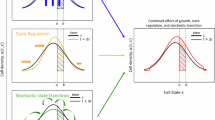

Most approaches first require projecting high-dimensional data onto a low-dimensional representation; however, this can distort the dynamics of the system. Consider a swarm of ants crawling along the surface of an intact soda can standing on the ground. Perception of the movement would be very different if one represents the can as being crumpled into a two-dimensional sheet--- that is, one projects the ant movements on the opposite sides of the can together. In this projected view, one can't tell the circular motion of individual ants along the can surface, and may even conclude there is no net motion of the ants.
To address the above issue, we had two suggestions. One is to directly study the dynamics in a sufficiently high-dimension, aided with some techniques we borrowed from chemical physics in studying chemical reactions. Another is to include dynamics and biology information into dimension reduction.
Another lesson we learned is that experimental validation is seriously needed in this field, given the exploding number of computational papers. For this project we finished computational analyses several years ago, but waited until the results inferred from scRNA-seq data were validated with proteomic measurements.
What mechanistic insights have we learned for the specific process of epithelial-to-mesenchymal transition (EMT) coupled to cell cycle progression? Influenced by the term "cell cycle checkpoints", I originally had the picture that cells proceed along a cell cycle coordinate, stop at specific narrow regions (i.e., the checkpoints), and undergo EMT. The data revealed a different picture. Instead, one should view that EMT and cell cycle progression are initially two largely decoupled processes until the EMT program reaches a threshold to suppress cell cycle progression. Consequently, cells are stopped at broad regions along the cell cycle coordinate, contributing to cell cycle-related heterogeneity in the EMT process. Think of a mechanical picture where gears are initially disengaged and only get engaged after being pulled sufficiently close. Since the two gears are not synchronized initially, there is a distribution on the phase difference and so the exact location (teeth) they get engaged. Biologically, it provides a source of heterogeneity.
This observation is consistent with our previous study (Wang et al., PRX Life 2024, 2, 043009) about a universal property of cell regulatory networks, as summarized in the abstract of the PRX Life paper:
"Biological networks are modularized to contain perturbation effects locally, our analyses... likely reveal a general principle: during a cell phenotypic transition, intercommunity interactions increase to concertedly coordinate global gene expression reprogramming and canalize to specific cell phenotype, as Waddington visioned."

Follow the Topic
-
Communications Biology
An open access journal from Nature Portfolio publishing high-quality research, reviews and commentary in all areas of the biological sciences, representing significant advances and bringing new biological insight to a specialized area of research.

Related Collections
With Collections, you can get published faster and increase your visibility.
Healthy Aging
Publishing Model: Open Access
Deadline: Dec 31, 2026
DNA repair and human disease
Publishing Model: Hybrid
Deadline: Oct 31, 2026