💡Celebrating the International Day of Light: Highlights from the Research Communities





On May 16, the world celebrated the International Day of Light, taking a moment to reflect on the critical role light plays in science, culture, and everyday life. This date marks the anniversary of the first successful operation of a laser in 1960 by physicist and engineer Theodore Maiman. The laser is a powerful symbol of how fundamental research can spark innovations that transform industries, from healthcare and communications to energy and technology.
We’ve seen a range of exciting content and activities across our Communities that celebrate the science of light in different ways. Here are a few highlights:
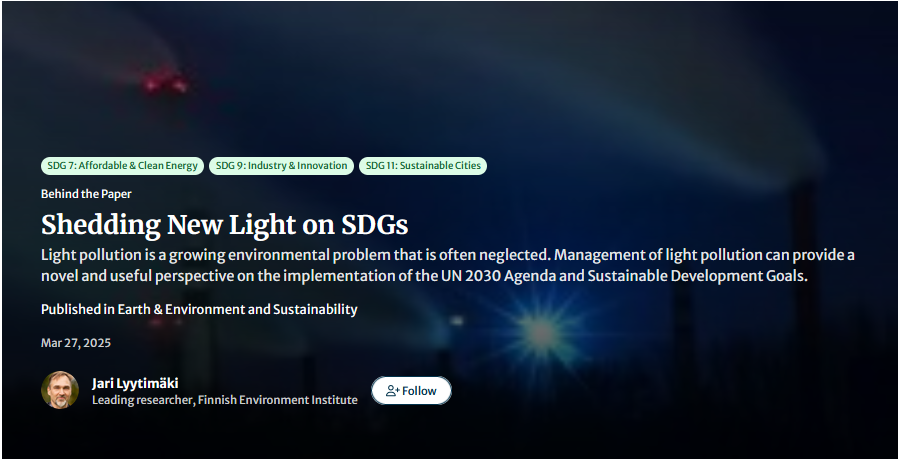
Illuminating the Overlooked: Light Pollution and the SDGs
How often do we think about the cost of our ever-brighter world? @Jari Lyytimäki explores how light pollution is often overlooked in global sustainability efforts, which affects human health, ecosystems, and energy use. The research, published in Discover Sustainability, highlights surprising risks within current SDG strategies and makes the case for smarter lighting and the restoration of natural darkness as essential parts of sustainable development. This Behind the Paper post invites us to rethink what progress looks like under artificial lights.
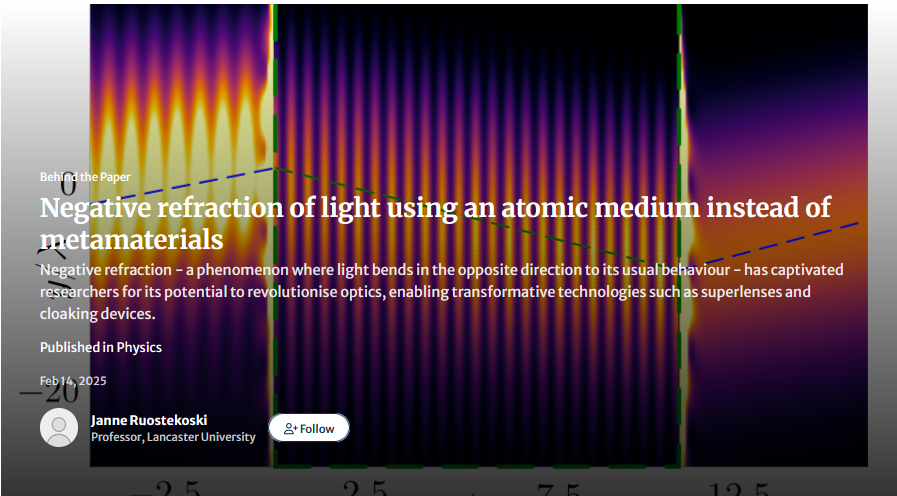
How Atoms Could Bend Light Backwards
What if we could achieve negative refraction without complex metamaterials? In a paper published in Nature Communications, @Janne Ruostekoski shared how carefully arranged atomic systems can collectively bend light in unexpected ways, offering a new path toward powerful lenses and optical innovation. Discover more in this Behind the Paper post.
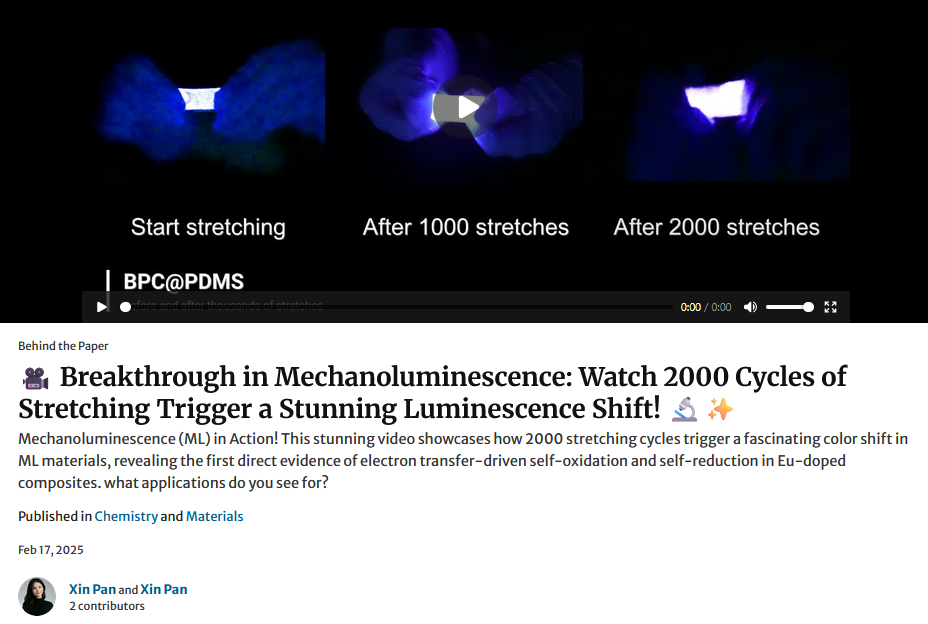
Lighting Up Science with Every Stretch
What happens when you stretch a material two thousand times? In this captivating visual demonstration, @Xin Pan revealed how mechanoluminescence, which is light emitted through mechanical action, undergoes a remarkable transformation as the material is repeatedly stretched. The video captures the evolving emission in real time and offers a compelling view into the physics behind it, along with potential applications in sensors, smart materials, and more. Watch the transformation in this Behind the Paper video post complementing the research published in Nature Communications!
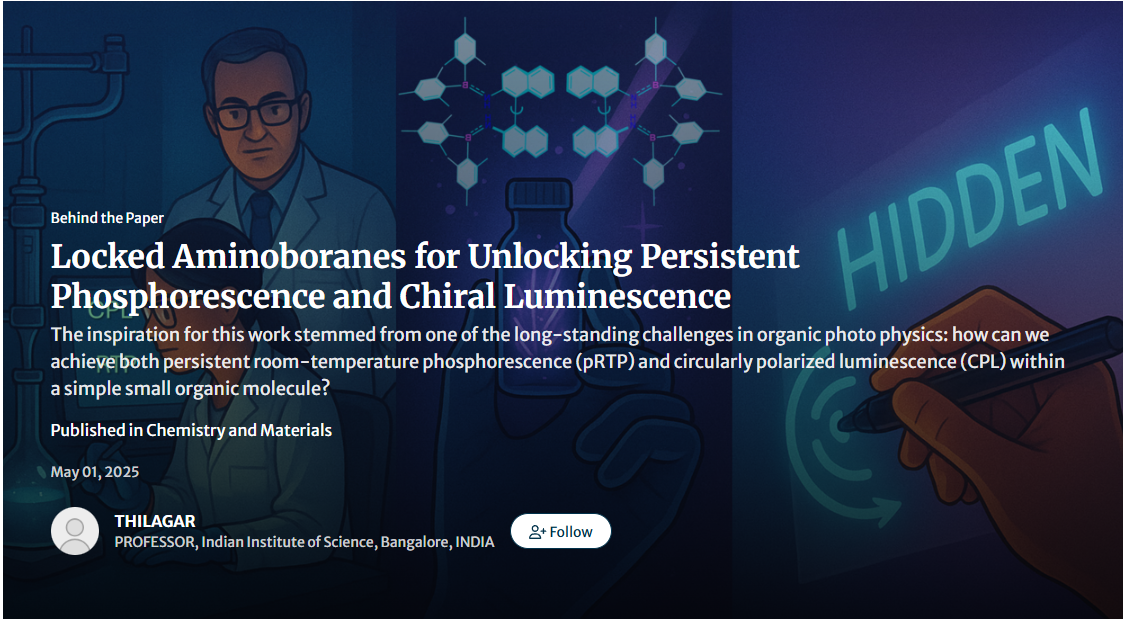
Unlocking Phosphorescence and Chirality in Aminoboranes
@THILAGAR explores how locked aminoboranes can unlock rare optical phenomena like persistent phosphorescence and chiral luminescence published in Communications Chemistry. These fascinating properties open possibilities in next-generation materials, from optical sensors to advanced display technologies. By carefully designing the molecular structure, it becomes possible to achieve both a long-lived glow and chiral light interactions. Learn more in this Behind the Paper post.
From lasers and luminescence to light pollution and optical breakthroughs, the International Day of Light reminds us how discoveries in light science continue to shape our world. We’ve loved highlighting the diverse and inspiring stories shared across our Communities, and now it’s your turn to join the discussion!
What did you find most fascinating? What questions would you ask the researchers behind these studies? Add a comment to spark conversation or tag a researcher who might enjoy diving into these illuminating posts.
For more stories that shine a light on research, head to the Behind the Paper channel. Curious to explore further? Discover more highlights from across our Communities:
Let’s celebrate the power of light to inspire, innovate, and connect.
Passionate about connecting researchers and amplifying their voices through digital engagement. As Manager for the Research Communities by Springer Nature, I work with researchers to showcase their discoveries and experiences. With a strong interest in public engagement and creative science communication, I’m dedicated to making research more accessible and inspiring wider conversations around scientific discovery and innovation.
Follow the Topic
-
Nature Communications

An open access, multidisciplinary journal dedicated to publishing high-quality research in all areas of the biological, health, physical, chemical and Earth sciences.
-
Communications Chemistry

An open access journal from Nature Portfolio publishing high-quality research, reviews and commentary in all areas of the chemical sciences.
-
Discover Sustainability

A multi-disciplinary, open access, community-focussed journal publishing results from across all fields relevant to sustainability research whilst supporting policy developments that address all 17 of the United Nations Sustainable Development Goals (SDGs).
Your space to connect: The Polarised light Hub
A new Communities’ space to connect, collaborate, and explore research on Light-Matter Interaction, Optics and Photonics, Quantum Imaging and Sensing, Microscopy, and Spectroscopy!
Continue reading announcementRelated Collections
With Collections, you can get published faster and increase your visibility.
Women's Health
Publishing Model: Hybrid
Deadline: Ongoing
Advances in neurodegenerative diseases
Publishing Model: Hybrid
Deadline: Mar 24, 2026


Please sign in or register for FREE
If you are a registered user on Research Communities by Springer Nature, please sign in